Параллель пластиналы конденсатор

Definition of the parallel plate capacitor

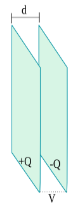
Parallel plate capacitor 1The parallel plate capacitor is a capacitor that consists of two parallel conductor plates, each plate having an equal cross-sectional area (A) and two plates separated by a certain distance (d), as shown in the figure left. One of the conductor plates is positively charged (+Q) while the other conductor plate is negatively charged (-Q), where the amount of электр заряды on each plate is equal. So that the charge does not move to the air molecule, the capacitor is isolated from the environment, and between the two plates, there is a vacuum.

Ары қарай оқу

Кеплер заңы

Article about Кеплер заңы

Do you still remember the memories of first riding a car? When in a moving car, you see as if a tree or building is moving. At that time, you might think the trees or buildings are moving, while you and the car are in rest. In fact, you and the car move, while the trees or buildings are rest. This experience of fake motion is actually experienced every day. Every morning, “sunrises” on the eastern horizon then move west and “sets” on the western horizon in the afternoon.

Likewise, at night, you often see the moon moving from east to west. Have you ever thought or guessed that the sun and moon moved around the earth, while the earth was in rest?

Ары қарай оқу

Күш моменті

Article about Moment of force

1. Lever arm

Review an object that rotates, such as the door of a room. When the door is opened or closed, the door rotates. The hinges that connect the door to the wall act as the axis of rotation.

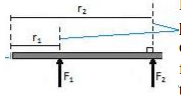
Moment of force 1The door image is seen from above. Review an example where the door is pushed in the same two forces that have the same magnitude and direction, where the direction of the force is perpendicular to the door. At first, the door is pushed with a force of F1, р1 from the axis of rotation. Subsequently, the door is pushed with the force of F2, р2 away from the axis of rotation. Although the magnitude and direction of the force F1 =F2, the force of F2 causes the door to rotate faster than the force of F1. In other words, the force of F2 causes a greater angular acceleration compared to the force of F1. You can prove this.

Ары қарай оқу

Ньютонның айналмалы қозғалыс туралы екінші заңы

Ньютонның айналмалы қозғалыс туралы екінші заңы туралы мақала

4.1 Күш моменті, инерция моменті және бұрыштық үдеу арасындағы байланыс

Егер массасы (m) болатын денеге әсер ететін қосынды күш (ΣF) болса, онда дене белгілі бір үдеумен (a) сызықтық қозғалады. Қосынды күш, масса және ... арасындағы байланыс жеделдету теңдеуімен өрнектеледі:

ΣF = ma

Бұл теңдеу Ньютонның екінші заңы.

Сызықтық қозғалыстағы нәтижелік күшке (ΣF) тең болатын айналмалы қозғалыс шамалары нәтижелік күш моменті (Στ) болып табылады. Сызықтық қозғалыстағы массаға (m) тең болатын айналмалы қозғалыс шамалары инерция моменттері (I) болып табылады. Сызықтық қозғалыстағы үдеумен (a) тең болатын айналмалы қозғалыс шамалары бұрыштық үдеу (α) болып табылады.

Ары қарай оқу

Ауырлық орталығы

1. Анықтамасы ауырлық орталығы

Қатты дене көптеген бөлшектерден тұрады; сондықтан гравитациялық күш осы бөлшектердің әрқайсысына әсер етеді. Басқаша айтқанда, әрбір бөлшектің өз салмағы бар. Нысанның ауырлық центрі - бұл нысанның барлық бөліктерінің салмағы сол нүктеде шоғырланған деп саналатын нысандағы нүкте.

Ары қарай оқу

Қатты дененің тепе-теңдік түрлері

Article about the Types of equilibrium of the rigid body

Not all things we find in everyday life always rest. Maybe at first the object rest, but if it is moved (for example by the wind) objects can move. The problem is, whether after moving, objects return to their original position or not. This depends on the type of balance of the object. After moving, there will be three possibilities, namely:

(1) the object returns to its original position,

(2) the object moves away from its original position,

(3) the object remains in its new position.

Ары қарай оқу

Қатты дененің тепе-теңдігі

Қатты дененің тепе-теңдігі туралы мақала

1. Бірінші шарт

Ньютонның екінші заңы егер затқа (бір бөлшек ретінде қарастырылатын затқа) әсер ететін күш нөлге тең болмаса,

онда дене тұрақты үдеумен қозғалады, мұндағы дененің қозғалыс бағыты жалпы күштің бағыты. Егер пайда болған күш нөлге тең болса, онда дене тыныштықта немесе тұрақты жылдамдықпен қозғалады.

ΣF = ma

Дене тыныштықта болғанда немесе тұрақты жылдамдықпен қозғалғанда, оның үдеуінің мәні болмайды (a). Үдеу (a) = 0 болғандықтан, жоғарыдағы теңдеу келесідей өзгереді:

Ары қарай оқу

Серіппелерді тізбектей және параллель қосу

Мақала туралы Серіппелерді тізбектей және параллель қосу

1. Серіппелер тізбегі

Егер серіппе бүйірдегі суреттегідей тізбектей жалғанған болса, онда:

1. Серіппе ұзындығының артуы = ұзындықтың 1 артуы + ұзындықтың 2 артуы

Δу = Δy1 + Δy1

2. Балама серіппе әсер ететін күш = 1-серіппе әсер ететін күш = 2-серіппе әсер ететін күш

Fs =F1 =F2

Ары қарай оқу

Гук заңы

1. Hooke’s law for springs

If the spring is pulled to the right, the spring will stretch and increase in length (figure 1). If the pull force is not huge, it is found that the increase in spring length (Δx) is proportional to the magnitude of the pull force (F). In other words, the greater the pull force, the greater the length of the spring. Comparison of the magnitude of the pull force (F) and the increase in the spring length (Δx) is constant.

Ары қарай оқу

Ом заңы

Ом заңының анықтамасы

Барлық дерлік металл өткізгіштерде электр өрісі электр тогының тығыздығына пропорционалды, мұндағы электр өрісінің электр тогының тығыздығына қатынасы тұрақты. Математикалық түрде келесі теңдеу арқылы өрнектеледі:

ρ = E / J

E = электр өрісі, ρ = қарсылық, J = ток тығыздығы

Тұрақты ρ кедергі деп аталады, оның мәні тұрақты және электр тогын тудыратын электр өрісіне тәуелді емес.

Ары қарай оқу