1. Osoba je ve výtahu, který se pohybuje konstantní rychlostí nahoru . Hmotnost osoby je 800 N. Lano výtahu se okamžitě přetrhne, takže výtah spadne. Určete normálovou sílu , kterou působí na osobu podlaha výtahu těsně před a po přetržení lana.
A. 800 N a 0
B. 800 N a 800 N
cca 1600 N a 0
D. 1600 N a 800 N
Známý:
Hmotnost (w) = 800 Newtonů
Hledá se: Normálová síla (N)
Řešení:
Než se lano výtahu přetrhne
Když osoba stojí na podlaze výtahu, působí na ni tíha směrem dolů. Tato osoba je v klidu, takže na ni musí působit normálová síla, kde směr normálové síly směřuje nahoru a velikost normálové síly je stejná jako velikost tíhy.
 Protože osoba je ve výtahu v klidu a výtah se pohybuje konstantní rychlostí (ne zrychlení), takže na osobu nepůsobí žádná celková síla.
∑F = 0
S – š = 0
N = w
N = 800 Newtonů
Poté, co se přetrhlo lano výtahu
Poté, co se lano výtahu přetrhne, výtah a osoba volně padají společně, přičemž velikost a směr jejich zrychlení jsou stejné jako zrychlení v důsledku gravitace. Na osobu nepůsobí žádná normálová síla.
Správná odpověď je A.
2. Kvádr o hmotnosti 20 gramů se pohybuje konstantní rychlostí po drsné vodorovné podlaze konstantní rychlostí, pokud na něj působí vnější síla 2 N. Určete velikost třecí síly , kterou kvádr působí.
A. 0.3 N
B. 1.4 N
C. 2.0 N
D. 3.6 N
Známý:
Hmotnost (m) = 20 gramů
Síla (F) = 2 Newtony
Hledá se: Velikost třecí síly působící na blok.
Řešení:
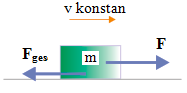 Na základě prvního Newtonova pohybového zákona, pokud se blok pohybuje konstantní rychlostí, pak blok nemá žádné zrychlení. Blok se pohybuje konstantní rychlostí a nemá žádné zrychlení, pokud:
– Velikost třecí síly ( Ffric ) je stejná jako velikost vnější síly (F)
– Třecí síla ( Ffric ) má opačný směr než vnější síla (F)
Aplikujte Newtonův první pohybový zákon:
∑ F = 0
F – F friction = 0
F = F fric
F fric = 2 Newtony
Správná odpověď je C.
3. Hladká nakloněná rovina o délce 0.6 m a výšce 0.4 m. Blok o hmotnosti 1350 N se bude pohybovat vzhůru po nakloněné rovině. Určete velikost síly potřebné k pohybu bloku.
A. 100 N
B. 300 N
C. 600 N
D. 900 N
Známý:
Hmotnost bloku (w) = 1350 Newtonů
hyp = 0.6 m
vzdálenost = 0.4 m
Hledá se: Minimální síla
Řešení:
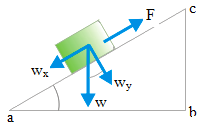 hyp = ac = 0.6 m
opp = bc = 0.4 m
Sin θ = bc / ac = 0.4 / 0.6 = 4/6 = 2/3
Na základě prvního Newtonova pohybového zákona se kvádr začne pohybovat nahoru, když je vnější síla (F) alespoň stejná jako vodorovná složka hmotnosti (w x ).
∑ F = 0
F – w x = 0
F = w x
Pokud F = wx , pak se objekt začne pohybovat vzhůru konstantní rychlostí.
w x = w sin θ = (1350)(2/3) = (2)(450) = 900 Newtonů
Správná odpověď je D.
4. Na kvádr působí tři síly, F1 = 22 N, F2 = 18 N a F3 = 40 N. Který obrázek popisuje první Newtonův zákon?
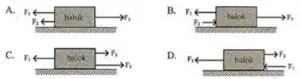
Řešení:
Newtonův první zákon: Čistá síla (ΣF) = 0.
A. F1 + F2 – F3 = 22 N + 18 N – 40 N = 40 N – 40 N = 0
B. F2 + F3 – F1 = 18 N + 40 N – 22 N = 58 N – 22 N = 36 N (doprava)
C. F2 + F3 – F1 = 18 N + 40 N – 22 N = 58 N – 22 N = 36 N (doprava)
D. F1 + F3 – F2 = 22 N + 40 N – 18 N = 62 N – 18 N = 44 N (doleva)
