It-teorema ta' Torricelli – problemi u soluzzjonijiet
1. Tubu b'għoli ta' 100 ċm mimli bl-ilma. Toqba Q tinsab 10 ċm 'il fuq mill-art. X'inhi d-distanza orizzontali (x)?
Magħruf: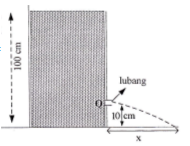
Distanza bejn it-toqba u l-wiċċ tal-ilma (h) = 100 ċm – 10 ċm = 90 ċm = 0.9 m
Aċċelerazzjoni minħabba l-gravità (g) = 10 m/ s²
Meħtieġa: Distanza ta' x
Soluzzjoni:
Il-veloċità tal-fluss tal-ilma fit-toqba
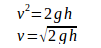
v = veloċità , g = aċċelerazzjoni minħabba l-gravità , h = distanza bejn it-toqba u l-wiċċ tal-ilma
Il-veloċità tal-fluss tal-ilma fit-toqba:

Ħin fl-arja
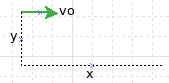 Il-moviment tal-ilma mit-toqba sal-art huwa l- moviment tal-projettiliIl-moviment tal-projettili jista' jinftiehem billi jiġu analizzati l-komponenti orizzontali u vertikali tal-moviment separatament. Il-moviment x iseħħ b'veloċità kostanti u l-moviment y iseħħ b'aċċelerazzjoni kostanti tal-gravità.
F'din il-problema, il-moviment vertikali huwa analizzat bħala moviment ta' waqgħa ħielsa.
Ikkalkula l-ħin fl-arja billi tuża l-ekwazzjoni tal- moviment tal-waqgħa ħielsa.
Magħruf:
L-għoli tat-toqba (y) = 10 ċm = 0.1 m
Aċċelerazzjoni minħabba l-gravità (g) = 10 m/ s²
Meħtieġ: Intervall ta' ħin (t)
Soluzzjoni:
y = 1/2 gt 2
0.1 = 1/2 (10) t2
0.1 = 5 t²
t2 = 0.1 / 5
t2 = 0.02
t = √0.02 sekondi
Id-distanza orizzontali (x):
Magħruf:
Il-veloċità inizjali (v o = v ox ) = 3√2 m/s
Ħin fl-arja (t)= √0.02 sekondi
Meħtieġa: Id-distanza orizzontali (x)
Soluzzjoni:
v = x / t
x = vt = (3√2)(√0.02) = (3)(1.41)(0.14) = 0.59 = 0.6 metri
2. Tank li fih ilma b'għoli ta' metru. Fil-punt P, hemm toqba. X'inhi l-veloċità tal-fluss tal-ilma fit-toqba? L-aċċelerazzjoni minħabba l-gravità hija 10 m/ s².
Magħruf:
Distanza bejn it-toqba u l-wiċċ tal-ilma (h) = 100 ċm – 80 ċm = 20 ċm = 0.2 m 
Aċċelerazzjoni minħabba l-gravità (g) = 10 m/ s²
Meħtieġa: Veloċità tal-fluss tal-ilma fit-toqba (v)
Soluzzjoni:
Il-veloċità tal-fluss tal-ilma fit-toqba:
 3. Kbirbanju elettroniku fih ilma u hemm vit kif muri fl-istampa t'hawn taħt. Jekk g = 10 ms-2, allura l-veloċità tal-ilma 'l barra mill-vit hija...
Magħruf: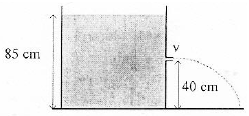
Għoli (h) = 85 ċm – 40 ċm = 45 ċm = 0.45 metri
Aċċelerazzjoni minħabba l-gravità (g) = 10 m/ s²
Meħtieġa: Veloċità tal-ilma (v)
Soluzzjoni:
It -teorema ta' Torricelli tgħid li l-veloċità tal-ilma minn ġo toqba 'l bogħod h mill-wiċċ tal-ilma hija ugwali għall- veloċità tal- waqgħa ħielsa tal -ilma minn għoli ta' h.
Il-veloċità tal-ilma hija kkalkulata bl-użu tal-formula tal-moviment tal-waqgħa ħielsa a v t 2 = 2 gh
v t 2 = 2 gh = 2(10)(0.45) = 9
vt = √9 = 3 m/s
4. Banju mimli bl-ilma u fuq ħajt hemm toqba (ara l - figura hawn taħt ). Il-veloċità tal-ilma li joħroġ mit-toqba hija… (g = 10 ms -2 )
Magħruf: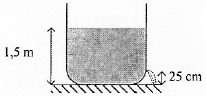
Għoli (h) = 1.5 m – 0.25 m = 1.25 metri
Aċċelerazzjoni minħabba l-gravità (g) = 10 m/ s²
Meħtieġa: Veloċità tal-ilma (v)
Soluzzjoni:
v t 2 = 2 gh = 2(10)(1.25) = 25
vt = √25 = 5 m/s
5. Tank li fih ilma sa metru għoli (g = 10 ms -2 ) u mal-ħajt hemm toqba ta' tnixxija (ara l-figura hawn taħt ). Il-veloċità tal-ilma li joħroġ mit-toqba hija...
Magħruf:
Għoli (h) = 1 m – 0.20 m = 0.8 metri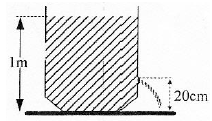
Aċċelerazzjoni minħabba l-gravità (g) = 10 m/ s²
Meħtieġa: Veloċità tal-ilma (v)
Soluzzjoni:
v t 2 = 2 gh = 2(10)(0.8) = 16
vt = √16 = 4 m/s
- X'tiddeskrivi t-teorema ta' Torricelli?
- Tweġiba: It-teorema ta' Torricelli tirrelata l-veloċità tal-fluwidu li joħroġ minn orifizju mal-għoli tal-kolonna tal-fluwidu 'l fuq mill-ftuħ, jekk wieħed jassumi fluss stabbli, mhux viskuż (mingħajr viskożità), u inkompressibbli.
- Kif tiġi espressa matematikament it-teorema ta' Torricelli?
- Tweġiba: It-teorema hija espressa bħala , Fejn hija l-veloċità tal-effluss, hija l-aċċelerazzjoni minħabba l-gravità, u ℎ huwa l-għoli tal-kolonna tal-fluwidu 'l fuq mill-orifizju.
- Taħt liema suppożizzjonijiet ġiet derivata t-teorema ta' Torricelli?
- Tweġiba: It-teorema tassumi li l-fluwidu huwa inkompressibbli u mhux viskuż, il-fluss huwa kostanti, u m'hemm l-ebda enerġija addizzjonali miżjuda jew meħuda mill-fluwidu.
- Jekk kontenitur għandu żewġ toqob f'fond differenti, kif se jitqabblu l-veloċitajiet tal-fluwidi li joħorġu mit-toqob?
- Tweġiba: Il-fluwidu li joħroġ mit-toqba eqreb lejn il-bażi se jkollu veloċità akbar mill-fluwidu mit-toqba ogħla. Dan għaliex il-pressjoni (u għalhekk l-enerġija potenzjali) hija akbar f'fond aktar profond.
- Għaliex il-veloċità tal-effluss ma tiddependix fuq il-forma jew l-erja trasversali tal-kontenitur?
- Tweġiba: It-teorema ta' Torricelli tikkunsidra biss l-enerġija potenzjali minħabba l-għoli tal-kolonna tal-fluwidu 'l fuq mill-orifizju. Il-forma tal-kontenitur ma tbiddilx dan l-għoli, għalhekk il-veloċità tal-effluss tibqa' l-istess.
- Kif inhi differenti l-veloċità attwali tal-fluwidu li joħroġ minn orifizju mit-tbassir magħmul mit-teorema ta' Torricelli f'sitwazzjonijiet tad-dinja reali?
- Tweġiba: F'sitwazzjonijiet tad-dinja reali, fatturi bħall-viskożità tal-fluwidu, it-turbolenza, u l-forma tal-orifizju jistgħu jaffettwaw il-veloċità attwali, u ħafna drabi jagħmluha inqas minn dak li tbassar it-teorema ta' Torricelli.
- X'inhi r-relazzjoni bejn it-teorema ta' Torricelli u l-konservazzjoni tal-enerġija?
- Tweġiba: It-teorema ta' Torricelli hija derivata mill-konservazzjoni tal-enerġija mekkanika. Din tqabbel l-enerġija potenzjali fil-wiċċ tal-fluwidu mal-enerġija kinetika fl-orifizju.
- Jekk ikun hemm orifizju fil-parti ta' fuq nett ta' kontenitur mimli fluwidu, it-teorema ta' Torricelli kif tiddeskrivi l-veloċità tal-effluss?
- Tweġiba: L-għoli ℎ 'Il fuq mill-orifizju tkun żero, għalhekk skont it-teorema ta' Torricelli, il-veloċità tal-effluss tkun żero.
- Kif il-preżenza tal-pressjoni atmosferika taffettwa t-tbassir tat-teorema ta' Torricelli?
- Tweġiba: It-teorema ta' Torricelli tassumi li l-kontenitur huwa miftuħ għall-atmosfera, u għalhekk, il-pressjoni atmosferika taġixxi bl-istess mod fuq il-wiċċ tal-fluwidu. Din il-pressjoni titħassar meta tiġi kkunsidrata d-differenza fil-pressjoni tul l-għoli tal-fluwidu, għalhekk it-teorema tibqa' valida.
- X'jiġri mill-veloċità tal-effluss hekk kif il-fluwidu fil-kontenitur tonqos?
- Tweġiba: Hekk kif il-livell tal-fluwidu jonqos, l-għoli ℎ 'il fuq mill-orifizju tonqos. Skont it-teorema ta' Torricelli, il-veloċità tal-effluss tonqos hekk kif .
Dawn il-mistoqsijiet u t-tweġibiet jesploraw il-pedamenti, l-implikazzjonijiet u l-applikazzjonijiet tat-teorema ta' Torricelli fid-dinamika tal-fluwidi.
