סטאַטישע עלעקטריע – פּראָבלעמען און לייזונגען
עלעקטרישע קראַפט
1. פונקט א אין אן עלעקטרישן פעלד . די גרייס פון דעם עלעקטרישן פעלד ביי פונקט א = 0.5 NC -1 . אויב א 0.25-C לאדונג ווערט געשטעלט ביי פונקט א, וואס איז דעמאלט די עלעקטרישע קראפט וואס ווערט אויסגעאיבט אויף דער לאדונג?
באַקאַנט:
עלעקטריש פעלד ביי פונקט A = 0.5 NC -1
עלעקטרישע לאדונג ביי פונקט A = 0.25 C
געוואָלט: עלעקטרישע קראַפט
לייזונג:
פֿ = ק ע
F = (0.25 C)(0.5 NC -1 )
F = 0.125N
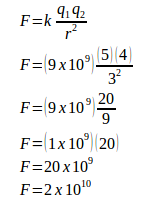
2. צוויי לאדונגען 5C און 4C זענען אפגעטיילט מיט א דיסטאנץ פון 3 מעטער. אויב די קולאמב קאנסטאנט איז 9 × 10⁹ Nm 2 C –2 , וואס איז די מאס פון עלעקטרישער קראפט וואס צוויי לאדונגען דערפארן?
באַקאַנט:
לאַדונג 1 (q² ) = 5C
לאַדונג 2 (q² ) = 4C
דיסטאַנץ צווישן לאָדונג 1 און לאָדונג 2 (r) = 3 מעטער
קולאָמבס קאָנסטאַנט (k) = 9 × 10⁶ Nm² C – 2
געוואָלט: די גרייס פון דער עלעקטרישער קראַפט (F)
לייזונג:
3. עלעקטרישע לאדונג +q1 = 10 μC; +q2 = 20 μC; און q3 זענען אפגעטיילט, ווי געוויזן אין דער בילד אונטן. די עלעקטרישע קראַפט וואָס ווערט אויסגעאיבט אויף לאדונג q2 = 0, וואָס איז דעמאָלט די לאדונג פון q3?

באַקאַנט:
לאַדונג 1 (q² ) = 10 μC = 10 x 10⁻⁶ C
לאַדונג 2 (q² ) = 20 μC = 20 x 10⁻⁶ C
געוואָלט: וואָס איז די לאָדונג פֿון q3?
לייזונג:
עס זענען דא צוויי כוחות וואָס ווירקן אויף + q².
די ערשטע קראַפט איז די אָפּשטויסנדיקע קראַפט צווישן לאָדונג +q1 און לאָדונג +q2 , דאָס איז F12 , רעכטס.
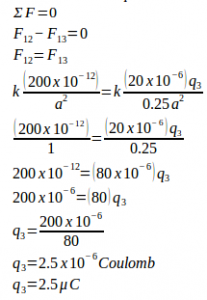
די נעץ עלעקטרישע קראַפט ווירקט אויף q² = 0, דעמאָלט מוז q³ זיין נעגאַטיוו.
די צווייטע קראַפט איז די אַטראַקטיוו קראַפט צווישן לאָדונג +q² און -q³ , דאָס איז F²3 , לינקס.
ביידע פון די כוחות ווירקן אויף q² , האבן די זעלבע גרייס אבער די פארקערטע ריכטונג.
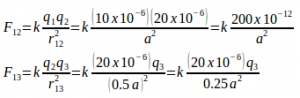
נעץ קראַפט ווירקט אויף +q² = 0.
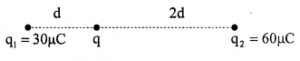
4. דריי לאדונגען q1 , q, און q2 זענען אין א ליניע. אויב q = 5.0 μC און d = 30 cm, וואס איז דעמאלט די גרייס און ריכטונג פון דער עלעקטרישער קראפט וואס ווירקט אויף דער לאדונג q?
באַקאַנט:
לאַדונג 1 (q² ) = 30 μC = 30 x 10-6 C
לאַדונג 2 (q² ) = 60 μC = 60 x 10-6 C
לאָדונג 3 (q) = 5 μC = 5 x 10 -6 C
דיסטאַנץ צווישן q1 און q = d
דיסטאַנץ צווישן q² און q = 2d
ד = 30 ס״מ = 0.3 מעטער
ד² = (0.3) ² = 0.09
קולאָמבס קאָנסטאַנט (k) = 9 x 10⁶ N m² C - 2
געוואָלט: די גרייס און די ריכטונג פון דער עלעקטרישער קראַפט ווירקט אויף דער עלעקטרישער לאָדונג.
לייזונג:
עס זענען דא צוויי כוחות וואָס ווירקן אויף q, וואָס זענען F1 רעכטס (q און q1 זענען פּאָזיטיוו, אַזוי F1 אַוועק פון q און q1 ) און F2 לינקס (q און q2 זענען פּאָזיטיוו, אַזוי F2 אַוועק פון q און q2 ) . ערשט אויסגערעכנט F1 און F2.
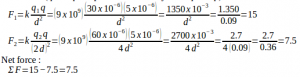 די נעץ קראַפט איז 7.5 ניוטאָן. די ריכטונג פון דער נעץ קראַפט = די ריכטונג פון F1, רעכטס-פונקט צו לאָדן q2.
עלעקטריש פעלד
5. א פונקט לאדונג q איז ביים פונקט P אין דעם עלעקטרישן פעלד וואס ווערט פראדוצירט דורך דער לאדונג (+) אזוי אז עס דערלעבט א קראפט פון 0.05 N אין דער ריכטונג צו דער לאדונג. אויב די גרייס פון דעם עלעקטרישן פעלד ביים פונקט P איז 2 x 10 -2 NC -1 , וואס איז דעמאלט די גרייס און טיפ לאדונג וואס פאראורזאכט דעם עלעקטרישן פעלד?
באַקאַנט:
עלעקטרישע קראַפט (F) = 0.05 N
עלעקטריש פעלד (E) = 2 x 10 –2 NC –1 = 0.02 NC –1
געוואָלט: די מאַגניטוד און טיפּ פון עלעקטרישער אָפּצאָל
לייזונג:
די עלעקטרישע לאדונג ווערט אויסגערעכנט מיט א פארמל וואס אויסדריקט די באציאונג צווישן עלעקטרישע קראפט (F), דעם עלעקטרישן פעלד (E) און עלעקטרישע לאדונג (q):
פֿ = ק ע
q = F / E = 0.05 N / 0.02 NC –1 = 2.5 קולאָמבס
די לאָדונג q דערפאַרט אַן עלעקטרישע קראַפט אין דער ריכטונג צו לאָדן (+) וואָס פּראָדוצירט אַן עלעקטריש פעלד, אַזוי די לאָדונג q איז נעגאַטיוו.
6. לאדונגען A און B זענען אפגעטיילט מיט א דיסטאנץ פון 4 מעטער. פונקט C איז צווישן ביידע לאדונגען, 1 מעטער פון פונקט A. אויב Q A = –300 μC, Q B = 600 μC. 1/4 π ε 0 = 9 × 10 9 N m 2 C– 2, וואס איז דעמאלט די גרייס פון דעם עלעקטרישן פעלד ביי פונקט C וואס ווערט פראדוצירט דורך ביידע לאדונגען?
באַקאַנט:
דיסטאַנץ צווישן די לאָדונגען A און B (r AB ) = 4 מעטער
דיסטאַנץ צווישן פּונקט C און לאָדונג A (rAC ) = 1 מעטער
דיסטאַנץ צווישן פּונקט C און לאָד B (r BC ) = 3 מעטער
לאָדונג A (qA ) = –300 μC = -300 x 10-6 C = -3 x 10⁻⁴ קולאָמב
לאַדונג B (qB ) = 600 μC = 600 x 10-6 C = 6 x 10⁻⁴ קולאָמבס
קאָנסטאַנט (k) = 9 × 10⁶ N m² C –2
געוואָלט: עלעקטריש פעלד ביי פונקט C
לייזונג:
עלעקטריש פעלד געשאפן דורך לאדונג א ביי פונקט C:

לאָדונג א איז נעגאַטיוו, אַזוי אַז די ריכטונג פֿון דעם עלעקטרישן פֿעלד ווײַזט צו לאָדונג א און אַוועק פֿון לאָדונג ב (צו לינקס).
דאס עלעקטרישע פעלד וואס ווערט פראדוצירט דורך לאדונג ב ביי פונקט ג:

לאָדונג ב איז פּאָזיטיוו, אַזוי אַז די ריכטונג פֿון עלעקטרישן פֿעלד איז אַוועק פֿון לאָדונג ב און ווײַזט צו לאָדונג א (צו לינקס).
דער רעזולטאַט פֿון דעם עלעקטרישן פֿעלד בײַ פּונקט A:
E = E A + E B
E = (27 x 10⁻⁶ ) + (6 x 10⁻⁶ )
E = 33 x 10 5 N/C
די ריכטונג פון דעם עלעקטרישן פעלד ווײַזט צו לאָדונג A און אַוועק פון לאָדונג B (צו לינקס).
7. א 1-מ״ג שטויב שוועבט אין דער לופט. אויב די לאדונג פון דעם שטויב איז 0.5 μC און די פארגיכערונג צוליב גראוויטי איז 10 m/s², באשטימט די מאס פון דעם עלעקטרישן פעלד וואס שטיצט דעם שטויב.
באַקאַנט:
מאַסע פון שטויב (מ²) = 1 מג = 1 x 10⁻⁶ ק״ג
שטויב־לאָד (q) = 0.5 μC = 0.5 x 10⁻⁶ C
אַקסעלעראַציע צוליב גראַוויטאַציע (g) = 10 m/ s²
געוואָלט: עלעקטריש פעלד
לייזונג:
וו = מג
w = וואָג פון שטויב, m = מאַסע פון שטויב, g = אַקסעלעראַציע רעכט צו גראַוויטאַציע
די קראַפט פון גראַוויטאַציע ווירקט אויף שטויב:
וו = מג = (1 x 10⁻⁶ ק"ג )(10 מעטער/סעקונדע 2 ) = 10 x 10-6 ק"ג מעטער/סעקונדע 2 = 10 x 10-6 ניוטאנס
די גלייכונג פון דעם עלעקטרישן פעלד:
E = F/q
E = עלעקטריש פעלד, F = עלעקטרישע קראַפט, q = עלעקטרישע לאָדונג
שטעלט איין F אין דער גלייכונג פון עלעקטרישן פעלד מיט w אין דער גלייכונג פון וואָג:
E = F/q = w/q
E = (10 x 10 -6 N) / (0.5 x 10 -6 C)
E = 10 N / 0,5 C
E = 20 N/C
8. צוויי לאדונגען q1 = 32 μC און q2 = -214 μC זענען אפגעטיילט מיט א דיסטאנץ פון x, ווי געוויזן אין דער בילד אונטן. קיין עלעקטריש פעלד ביי פונקט P וואס געפינט זיך 10 ס״מ פון q2 . געפינט x.

באַקאַנט:
לאָדונג 1 (Q1 ) = 32 μC
לאַדונג 2 (Q2 ) = -214 μC
דיסטאַנץ פון פּונקט P פֿון q 1 = x + 10 ס״מ
די דיסטאַנץ פון פּונקט P פֿון q² = 10 ס״מ
געזוכט: x
לייזונג:
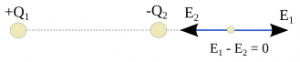
E1 = עלעקטריש פעלד פראדוצירט דורך לאדונג Q1 . די ריכטונג פון דעם עלעקטרישן פעלד איז אוועק פון Q1 ווייל Q1 איז פאזיטיוו. E2 = עלעקטריש פעלד פראדוצירט דורך Q2 . די ריכטונג פון דעם עלעקטרישן פעלד ווייזט צו Q2 ווייל Q2 איז נעגאטיוו.
קיין נעץ קראַפט ביי פונקט p וואָס געפינט זיך 10 ס״מ פון Q2
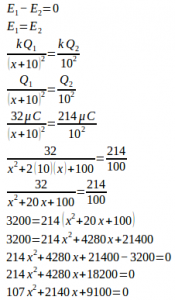
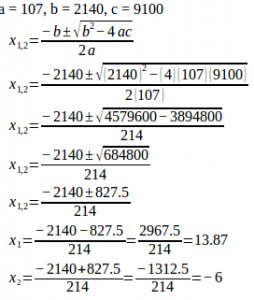
ניצט די קוואַדראַטישע פאָרמולע:
9. א געלאָדענער פּונקט q איז ביים פּונקט P אין דעם עלעקטרישן פעלד וואָס ווערט פּראָדוצירט דורך דער לאָדונג (+), אַזוי האָט עס אַ קראַפט פון 0.05 N. אויב די לאָדונג איז +5 × l0 –6 קולאָמב, וואָס איז דעמאָלט די גרייס פון דעם עלעקטרישן פעלד ביים פּונקט C?
באַקאַנט:
עלעקטרישע קראַפט (F) = 0.05 ניוטאָן
עלעקטרישע לאַדונג (Q) = +5 × l0 –6 קולאָמב = 0.000005
געוואָלט: עלעקטריש פעלד ביי פונקט פּ
לייזונג:
ע = פֿ / ק
E = 0.05 ניוטאן / 0.000005 קולאָמב
E = 5 ניוטאן / 0.0005 קולאָמב
E = 10,000 ניוטאן/קולאם
E = 10 4 N/C
E = 10 4 NC -1
- וואָס איז סטאַטיק עלעקטרע? ענטפערסטאַטישע עלעקטריע באַציט זיך צו דער אויפבוי פון עלעקטרישער לאָדונג אויף דער ייבערפלאַך פון אָביעקטן. עס ווערט גערופן "סטאַטיש" ווייל די לאָדונגען בלייבן אין איין געגנט אַנשטאָט זיך צו רירן אָדער פליסן ווי אין קראַנט עלעקטריע.
- ווי ווערט סטאַטישע עלעקטריע גענערירט? ענטפערסטאַטישע עלעקטריע ווערט אָפט גענערירט דורך דעם פּראָצעס פון טריבאָעלעקטרישע טשאַרדזשינג, וואו געוויסע מאַטעריאַלן ווערן טשאַרדזשד ווען זיי קומען אין רייבנדיקן קאָנטאַקט מיט אַן אַנדער מאַטעריאַל. רייבן אַ באַלאָן קעגן האָר אָדער גיין איבער אַ טעפּיך אין גומע-זאָלן שיך קען פירן צו דער אויפבוי פון סטאַטישע טשאַרדזשעס.
- פארוואס באקומט מען מאנchmal א שאק ווען מען רירט אן א טיר-הענטל נאכן גיין אויף א טעפיך? ענטפערגיין אויף אַ טעפּיך, ספּעציעל אין טרוקענע באדינגונגען, קען פאַראורזאַכן אַן אָנזאַמלונג פון סטאַטישע טשאַרדזשעס אויף דיין גוף. ווען איר רירט אַ טיר קנעפּל אָדער אַן אַנדער קאַנדאַקטער, קענען די טשאַרדזשעס זיך שנעל אַרויסלאָדן, וואָס רעזולטירט אין אַ סטאַטישן שאָק.
- ווי אזוי ווירקט הומידיטי אויף סטאטישע עלעקטריע? ענטפערפייכטקייט טענדירט צו רעדוצירן דעם אויפבוי פון סטאטישע עלעקטריע. די וואסער מאלעקולן אין דער לופט קענען העלפן פארשפרייטן עלעקטרישע לאדונגען. אין טרוקענע טעג איז דא א גרעסערע מעגלעכקייט פון דערפארן סטאטישע אויפבוי און שאקס.
- פארוואס זענען עטלעכע מאַטעריאַלן מער נוטה צו אַנטוויקלען אַ סטאַטישע אָפּצאָל ווי אַנדערע? ענטפערמאַטעריאַלן אַנדערשן זיך אין זייער פיייקייט צו האַלטן אָדער אַריבערפירן עלעקטראָנען. עטלעכע מאַטעריאַלן, ווי גומע אָדער געוויסע פּלאַסטיקס, טענד צו באַקומען אָדער פאַרלירן עלעקטראָנען גרינגער ווי אַנדערע, מאַכנדיג זיי מער פּראָנע צו סטאַטישע אָפּצאָל בילדאַפּ.
- וואָס איז דער פּרינציפּ הינטער אַן עלעקטראָסקאָפּ? ענטפעראן עלעקטראָסקאָפּ איז אַ מיטל געניצט צו דעטעקטירן די אנוועזנהייט פון אַ סטאַטישע לאָדונג. עס באַשטייט טיפּיש פון אַ מעטאַל שטאַנג פארבונדן צו צוויי דין בלעטער פון מעטאַל פאָליע. ווען אַ אָנגעלאָדענער אָביעקט ווערט געבראַכט לעבן דער שטאַנג, ריקן זיך די בלעטער באַזונדער צוליב דעם אָפּשטויסן פון ענלעכע לאָדונגען, וואָס ווײַזט אויף דער אנוועזנהייט פון סטאַטישע עלעקטריע.
- ווי אזוי עלימינירט גראַונדינג סטאַטישע טשאַרדזשיז? ענטפערערדן גיט א וועג פאר איבעריגע לאדונג צו באוועגן זיך צו דער ערד, וואס איז א ריזיקער רעזערוו פון לאדונגען. ווען א סטאטיש געלאדענער אביעקט ווערט געארדנט, ווערן די איבעריגע לאדונגען נויטראליזירט, וואס רעדוצירט אדער עלימינירט די סטאטישע אויפבוי.
- פארוואס קען מען זען פונקען אין א תבואה-זילאָ אדער בעתן אויפטאנקען אן עראפלאן, און פארוואס איז דאס געפערליך? ענטפערקערנער וואָס רירן זיך אָדער רייבן קעגן ייבערפלאַכן קענען דזשענערירן סטאַטישע עלעקטריע, און דאָס זעלבע גילט פֿאַר דעם פֿלוס פֿון ברענשטאָף. אויב עס איז אַן אָנזאַמלונג פֿון סטאַטישע לאָדונג, קען עס זיך אַרויסלאָדן ווי אַ פֿונקען. אין סביבות מיט ברענענדיקע גאַזן, שטויב אָדער פֿליסיקייטן (ווי אין אַ קערנער זילאָ אָדער בעתן אויפֿטפֿילן אַן עראָפּלאַן), קענען די פֿונקען אָנצינדן דאָס ברענענדיקע מאַטעריאַל, וואָס פֿירט צו עקספּלאָזיעס.
- ווי אַרבעטן אַנטיסטאַטישע שפּריץ אָדער פּראָדוקטן? ענטפעראַנטיסטאַטישע שפּריץ און פּראָדוקטן אַנטהאַלטן טיפּיש סאַבסטאַנצן וואָס מאַכן ייבערפלאַכן אַ ביסל קאַנדאַקטיוו. דורך טאן דאָס, פאַרהיטן זיי די אויפבוי פון סטאַטישע טשאַרדזשעס אָדער העלפֿן צו צעשפּרייטן קיין טשאַרדזשעס וואָס בויען זיך אויף.
-
וואָס איז די טריבאָעלעקטרישע סעריע? ענטפער : די טריבאָעלעקטרישע סעריע איז אַ רשימה וואָס ראַנגקט מאַטעריאַלן באַזירט אויף זייער טענדענץ צו ווערן פּאָזיטיוו אָדער נעגאַטיוו טשאַרדזשד ווען זיי ווערן געריבן קעגן אַן אַנדער מאַטעריאַל. מאַטעריאַלן אין דער שפּיץ פון דער רשימה טענד צו ווערן פּאָזיטיוו טשאַרדזשד, בשעת די אין דער דנאָ טענד צו ווערן נעגאַטיוו טשאַרדזשד.
