การเคลื่อนที่เชิงเส้น – ปัญหาและวิธีแก้ไข
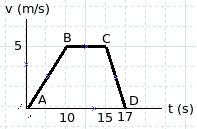
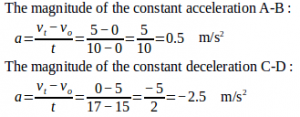
1. กราฟแสดงความเร็ว (v) เทียบกับเวลา (t) ดังแสดงในรูปด้านล่าง จงหาค่าความหน่วงตามกราฟ
Solution
AB = การเคลื่อนที่ด้วยความเร่งคงที่ , BC = การเคลื่อนที่ด้วยความเร็วคงที่ , CD = การเคลื่อนที่ด้วยความหน่วงคงที่
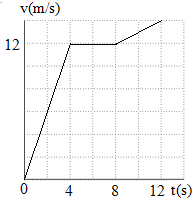
2. กราฟแสดงการเคลื่อนที่เชิงเส้นดังแสดงในรูปด้านล่างวัตถุเคลื่อนที่ได้ระยะทาง เท่าใดในช่วงเวลา 0 วินาที – 8 วินาที
Solution
พื้นที่ 1 = พื้นที่สามเหลี่ยม = ½ (4-0)(12-0) = ½ (4)(12) = (2)(12) = 24
พื้นที่ 2 = พื้นที่สี่เหลี่ยมผืนผ้า = (8-4)(12-0) = (4)(12) = 48
ระยะทางที่เดินทางใน 8 วินาที = 24 เมตร + 48 เมตร = 72 เมตร
3. กราฟแสดงความเร็ว (v) เทียบกับเวลา (t) สำหรับการเคลื่อนที่เชิงเส้นดังแสดงในรูปด้านล่าง ระยะทางที่เคลื่อนที่ได้ในเวลา 12 วินาทีคือเท่าใด
Solution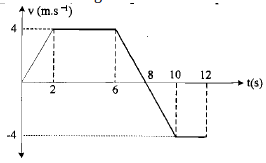
พื้นที่ 1 = พื้นที่ของสามเหลี่ยม = ½ (2-0)(4-0) = ½ (2)(4) = 4
พื้นที่ 2 = พื้นที่ของสี่เหลี่ยมผืนผ้า = (6-2)(4-0) = (4)(4) = 16
พื้นที่ 3 = พื้นที่ของสามเหลี่ยม = ½ (8-6)(4-0) = ½ (2)(4) = 4
พื้นที่ 4 = พื้นที่ของสามเหลี่ยม = ½ (10-8)(4-0) = ½ (2)(4) = 4
พื้นที่ 5 = พื้นที่ของสี่เหลี่ยมจัตุรัส = (12-10)(4-0) = (2)(4) = 8
ระยะทางที่เดินทางใน 12 วินาที = 4 + 16 + 4 + 4 + 8 = 36 เมตร
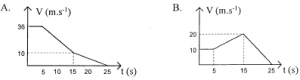
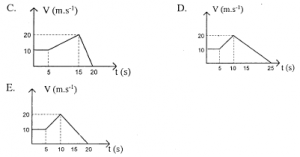
4. วัตถุเคลื่อนที่ด้วยความเร็วคงที่ 36 กิโลเมตรต่อชั่วโมง เป็นเวลา 5 วินาที จากนั้นเร่งความเร็ว 1 เมตร/วินาที²เป็นเวลา 10 วินาที แล้วลดความเร็วลง 2 เมตร/วินาที²จนหยุดนิ่ง กราฟใด (vt) แสดงการเคลื่อนที่ของวัตถุ
เป็นที่รู้จัก :
การเคลื่อนที่ 1 = ความเร็วคงที่
ความเร็วคงที่ (v) = 36 กม./ชม. = 36 (1000 ม.) / 3600 วินาที = 36,000 ม. / 3600 วินาที = 10 ม./วินาที
ช่วงเวลา (t) = 5 วินาที
การเคลื่อนที่ 2 = ความเร่งคงที่
ความเร็วเริ่มต้น (v o ) = ความเร็วในการเคลื่อนที่ 1 = 10 ม./วินาที
ความเร่ง (a) = 1 m/ s²
ช่วงเวลา (t) = 10 วินาที
การเคลื่อนที่ 3 = การลดความเร็วคงที่
ความหน่วง (a) = -2 ม./วินาที²
ความเร็วสุดท้าย (v t ) = 0 ม./วินาที
ต้องการทราบ: กราฟใดแสดงการเคลื่อนที่ของวัตถุ
วิธีการแก้ปัญหา:
ความเร็วสุดท้ายของการเคลื่อนที่ 2 :
v t = v o + at
v t = 10 + (1)(10) = 10 + 10 = 20 m/s
ความเร็วสุดท้ายของการเคลื่อนที่ 2 (v t ) = ความเร็วเริ่มต้นของการเคลื่อนที่ 3 (v o ) = 20 m/s
ช่วงเวลาการเคลื่อนที่ 3:
v t = v o + at
0 = 20 + (-2)(t)
0 = 20 – 2t
20 = 2t
เสื้อ = 20 / 2
t = 10 วินาที
การเคลื่อนที่ 1: วัตถุเคลื่อนที่ด้วยความเร็วคงที่ 10 เมตร/วินาที ในเวลา 5 วินาที
การเคลื่อนที่ 2: วัตถุถูกเร่งความเร็วใน 10 วินาที จนกระทั่งมีความเร็วเท่ากับ 20 เมตร/วินาที
การเคลื่อนที่ที่ 3: วัตถุชะลอความเร็วลงจนหยุดนิ่งภายใน 10 วินาที
กราฟ B แสดงการเคลื่อนที่ของวัตถุ
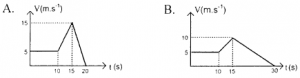
5. รถยนต์คันหนึ่งเคลื่อนที่ด้วยความเร็วคงที่ 5 เมตร/วินาที ในเวลา 10 วินาที จากนั้นเร่งความเร็วขึ้น 1 เมตร/วินาที²ในเวลา 5 วินาที แล้วลดความเร็วลงจนหยุดนิ่งหลังจากเคลื่อนที่ไปได้ 137.5 เมตร กราฟใด (vt) แสดงการเคลื่อนที่ของวัตถุ

เป็นที่รู้จัก :
การเคลื่อนที่ 1 = การเคลื่อนที่ด้วยความเร็วคงที่
ความเร็วคงที่ (v) = 5 ม./วินาที
ช่วงเวลา (t) = 10 วินาที
การเคลื่อนที่ 2 = การเคลื่อนที่ด้วยความเร่งคงที่
ความเร็วเริ่มต้น (v o ) = ความเร็วในการเคลื่อนที่ 1 = 5 ม./วินาที
ความเร่ง (a) = 1 m/ s²
ช่วงเวลา (t) = 5 วินาที
ความเร็วสุดท้าย (v t ) = 0 ม./วินาที
ระยะทางรวม (วินาที) = 137.5 เมตร/วินาที
ต้องการ: กราฟแสดงระยะทางการเดินทางของรถยนต์
วิธีการแก้ปัญหา:
ระยะทางสำหรับการเคลื่อนที่ 1 :
s = vt = (5)(10) = 50 เมตร
ระยะทางสำหรับการเคลื่อนที่ 2 :
s = v o t + ½ at 2 = (5)(5) + ½ (1)(5) 2 = 25 + ½ (25) = 25 + 12.5 = 37.5 เมตร
ระยะทางสำหรับการเคลื่อนที่ 3 :
137.5 – (50 + 37.5) = 137.5 – 87.5 = 50 เมตร
ความเร็วสุดท้ายของการเคลื่อนที่ 2 :
ความเร็วสุดท้ายของการเคลื่อนที่ 2 คำนวณโดยใช้ข้อมูลของการเคลื่อนที่ 2 :
v t = v o + at
v t = 5 + (1)(5) = 5 + 5 = 10 m/s
ความเร็วสุดท้ายสำหรับการเคลื่อนที่ 2 (v t ) = ความเร็วเริ่มต้นสำหรับการเคลื่อนที่ 3 (v o ) = 10 m/s
ช่วงเวลาสำหรับการเคลื่อนที่ครั้งที่ 3 :
ช่วงเวลาที่คำนวณหลังจากพบค่าความหน่วง ค่าความหน่วง (a) และช่วงเวลา (t) คำนวณโดยใช้ข้อมูลการเคลื่อนที่ 3
การชะลอตัวของวัตถุที่กำลังเคลื่อนที่ 3 :
v t 2 = v o 2 + 2 ad
0 2 = 10 2 + 2 a (50)
0 = 100 + 100 a
100 = -100 ก
a = – 100 / 100
a = – 1 ม./วินาที²
ช่วงเวลาการเคลื่อนที่ 3:
v t = v o + at
0 = 10 + (-1) t
0 = 10 – t
t = 10 วินาที
การเคลื่อนที่ 1: วัตถุเคลื่อนที่ด้วยความเร็วคงที่ 5 เมตร/วินาที ในเวลา 10 วินาที
การเคลื่อนที่ 2: วัตถุเคลื่อนที่เป็นเวลา 5 วินาที จนกระทั่งความเร็วเท่ากับ 10 เมตร/วินาที
การเคลื่อนที่ที่ 3: วัตถุชะลอตัวลงเป็นเวลา 10 วินาทีจนหยุดนิ่ง
6. รถยนต์หนัก 800 กิโลกรัม เคลื่อนที่ไปตามเส้นตรงด้วยความเร็วเริ่มต้น 36 กิโลเมตรต่อชั่วโมง หลังจากเคลื่อนที่ไปได้ 150 เมตร ความเร็วของรถยนต์เท่ากับ 72 กิโลเมตรต่อชั่วโมง จงหาช่วงเวลา
เป็นที่รู้จัก :
v o = 36 กม./ชั่วโมง = 36,000 เมตร / 3600 วินาที = 10 เมตร/วินาที
v t = 72 กม./ชั่วโมง = 72,000 เมตร / 3600 วินาที = 20 เมตร/วินาที
d = 150 เมตร
ต้องการทราบ: ช่วงเวลา (t)
วิธีการแก้ปัญหา:
สามสมการการเคลื่อนที่ที่ความเร่งคงที่:
v t = v o + at
d = v o t + ½ at 2
v t 2 = v o 2 + 2 ad
ความเร่ง:
v t 2 = v o 2 + 2 ad
20 2 = 10 2 + 2 a (150)
400 = 100 + 300 a
400 – 100 = 300 ก.
300 = 300 ก.
a = 300 / 300
a = 1 ม./วินาที²
ช่วงเวลา :
v t = v o + at
20 = 10 + (1) t
20 – 10 = t
t = 10 วินาที
7. รถยนต์คันหนึ่งเคลื่อนที่ด้วยความเร็วคงที่ 20 เมตร/วินาที รถหยุดนิ่งหลังจากชะลอความเร็วลงใน 5 วินาที รถยนต์คันนี้เคลื่อนที่ไปได้ไกลเท่าใด
เป็นที่รู้จัก :
ความเร็วเริ่มต้น (v o ) = 20 ม./วินาที
ความเร็วสุดท้าย (v t ) = 0 ม./วินาที
ช่วงเวลา (t) = 5 วินาที
ต้องการทราบระยะทาง (d)
วิธีการแก้ปัญหา:
การลดความเร็ว :
v t = v o + at
0 = 20 + a 5
-20 = 5a
a = -20/5
a = -4 ม./วินาที²
ระยะทางที่เดินทางโดยรถยนต์:
d = v o t + 1/2 at 2
d = (20)(5) + 1/2 (-4)(5) 2 = (20)(5) + (-2)(25)
d = 100 – 50
d = 50 เมตร
8. ตารางด้านล่างแสดงระยะทางและช่วงเวลาของการเคลื่อนที่ของวัตถุ
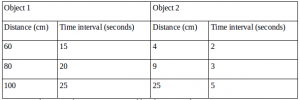
จงระบุประเภทของการเคลื่อนที่ที่วัตถุ 1 และ 2 ประสบ...
Solution
วัตถุที่ 1 :
วี = ส / ที
v = ความเร็ว, s = ระยะทาง, t = ช่วงเวลา
v = 60/15 = 4 ซม./วินาที
v = 80/20 = 4 ซม./วินาที
v = 100/25 = 4 ซม./วินาที
ความเร็วคงที่ = การเคลื่อนที่เชิงเส้นสม่ำเสมอ
วัตถุที่ 2 :
วี = ส / ที
v = ความเร็ว, s = ระยะทาง, t = ช่วงเวลา
v = 4/2 = 2 ซม./วินาที
v = 9/3 = 3 ซม./วินาที
v = 25/5 = 5 ซม./วินาที
ความเร็วเพิ่มขึ้น = การเคลื่อนที่เชิงเส้นที่ไม่สม่ำเสมอและมีความเร่ง
- คำถาม: อะไรคือสิ่งที่ทำให้การเคลื่อนที่เชิงเส้นแตกต่างจากการเคลื่อนที่ประเภทอื่น? คำตอบ: การเคลื่อนที่เชิงเส้นหมายถึงการเคลื่อนที่ของวัตถุไปตามเส้นทางตรงในทิศทางเดียว แตกต่างจากการเคลื่อนที่แบบหมุนหรือแบบแกว่ง การเคลื่อนที่เชิงเส้นจะไม่เปลี่ยนทิศทางการเคลื่อนที่ของวัตถุ
- คำถาม: ในการเคลื่อนที่เชิงเส้น ระยะทางแตกต่างจากการกระจัดอย่างไร? คำตอบ: ระยะทางคือความยาวทั้งหมดของเส้นทางที่วัตถุเคลื่อนที่ไป ในขณะที่การกระจัดคือระยะทางเป็นเส้นตรงระหว่างตำแหน่งเริ่มต้นและตำแหน่งสุดท้าย พร้อมทั้งทิศทาง การกระจัดเป็นปริมาณเวกเตอร์ ในขณะที่ระยะทางเป็นปริมาณสเกลาร์
- คำถาม: เหตุใดความเร็วและอัตราเร็วจึงมีค่าแตกต่างกันได้สำหรับการเคลื่อนที่แบบเดียวกัน? คำตอบ: ความเร็ว (Speed) เป็นปริมาณสเกลาร์ที่วัดว่าสิ่งใดเคลื่อนที่เร็วแค่ไหนโดยไม่คำนึงถึงทิศทาง ในขณะที่เวโลซิตี้ (Velocity) เป็นปริมาณเวกเตอร์ที่รวมทั้งขนาดและทิศทาง สำหรับการเคลื่อนที่เชิงเส้น หากมีการเปลี่ยนแปลงทิศทาง ความเร็วเฉลี่ยอาจแตกต่างจากขนาดของเวโลซิตี้เฉลี่ยได้
- คำถาม: การกล่าวว่าวัตถุมีการเคลื่อนที่เชิงเส้นสม่ำเสมอหมายความว่าอย่างไร? คำตอบ: วัตถุที่เคลื่อนที่แบบเชิงเส้นสม่ำเสมอ จะเคลื่อนที่ไปในแนวเส้นตรงด้วยความเร็วคงที่ ซึ่งหมายความว่าความเร็วและทิศทางการเคลื่อนที่ยังคงไม่เปลี่ยนแปลงเมื่อเวลาผ่านไป
- คำถาม: วัตถุจะมีอัตราเร็วคงที่แต่ความเร็วแปรผันได้อย่างไรในการเคลื่อนที่เชิงเส้น? คำตอบ: สำหรับวัตถุที่เคลื่อนที่ในแนวเส้นตรง วิธีเดียวที่จะเกิดปรากฏการณ์นี้ได้คือทิศทางการเคลื่อนที่เปลี่ยนไป อย่างไรก็ตาม ในการเคลื่อนที่เชิงเส้นที่แท้จริง ทิศทางจะคงที่ หากทิศทางเปลี่ยนไป ก็จะไม่ถือว่าเป็นการเคลื่อนที่เชิงเส้นอย่างแท้จริงอีกต่อไป
- คำถาม: ความเร่งมีบทบาทอย่างไรในการเคลื่อนที่เชิงเส้น? คำตอบ: ความเร่งบ่งบอกถึงการเปลี่ยนแปลงของความเร็วเมื่อเวลาผ่านไป ในการเคลื่อนที่เชิงเส้น ความเร่งอาจหมายถึงการเพิ่มขึ้นหรือลดลงของความเร็ว หรือการเปลี่ยนแปลงทิศทาง (หากการเคลื่อนที่นั้นไม่ใช่เชิงเส้นอย่างแท้จริง) ความเร่งที่ไม่เป็นศูนย์แสดงว่าความเร็วของวัตถุกำลังเปลี่ยนแปลง
- คำถาม: ความเร่งติดลบ หรือการลดความเร็วในทิศทางลบ ปรากฏให้เห็นได้อย่างไรในการเคลื่อนที่เชิงเส้น? คำตอบ: ในบริบทของการเคลื่อนที่เชิงเส้น การเร่งความเร็วเชิงลบ (มักเรียกว่าการลดความเร็ว) หมายถึงการลดลงของความเร็วตามเส้นทางตรงเดียวกัน เป็นการเร่งความเร็วในทิศทางตรงกันข้ามกับการเคลื่อนที่
- คำถาม: ตามกฎข้อที่สองของนิวตัน ความสัมพันธ์ระหว่างแรงลัพธ์และความเร่งในการเคลื่อนที่เชิงเส้นคืออะไร? คำตอบ: ตามกฎข้อที่สองของนิวตัน แรงลัพธ์ที่กระทำต่อวัตถุจะเป็นสัดส่วนกับความเร่งที่วัตถุนั้นได้รับ และมีทิศทางการกระทำเดียวกัน โดยเฉพาะอย่างยิ่ง ที่นี่มี คือแรงลัพธ์ คือมวลของวัตถุ และ คืออัตราเร่งของมัน
- คำถาม: ถ้าหากรถยนต์กำลังเคลื่อนที่ในเส้นตรงและหยุดนิ่ง เราสามารถกล่าวได้หรือไม่ว่าการกระจัดสุดท้ายของรถยนต์เป็นศูนย์? คำตอบ: ไม่ครับ การกระจัดหมายถึงระยะทางเป็นเส้นตรงระหว่างตำแหน่งเริ่มต้นและตำแหน่งสุดท้ายโดยมีทิศทาง หากรถเคลื่อนที่จากตำแหน่งเริ่มต้นก่อนหยุด การกระจัดจะไม่เป็นศูนย์ มีเพียงความเร็วสุดท้ายเท่านั้นที่เป็นศูนย์
-
คำถาม:แนวคิดเรื่องความเฉื่อยเกี่ยวข้องกับการเคลื่อนที่เชิงเส้นอย่างไร? คำตอบ:ความเฉื่อยคือความต้านทานของวัตถุต่อการเปลี่ยนแปลงสถานะการเคลื่อนที่ สำหรับวัตถุที่เคลื่อนที่เชิงเส้น ความเฉื่อยหมายความว่าวัตถุจะยังคงเคลื่อนที่ในแนวเส้นตรงด้วยความเร็วคงที่ เว้นแต่จะมีแรงภายนอกมากระทำ
