Ionstraimí optúla – fadhbanna agus réitigh
1. Cuirtear réad a bhfuil airde h air ag achar atá níos lú ná fad fócasach f. Cinntigh airíonna na híomhá.
réiteach
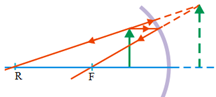
De réir an fhigiúir thuas, tá airíonna fíorúla, ingearacha agus níos mó ná réad ag an íomhá.
2. Má chuirtear réad sa lár idir an pointe fócasach agus an scáthán cuasach, is é seo an íomhá a chruthaíonn an scáthán:
1. Níos mó ná 2 oiread ná an réad
2. Ina seasamh
3. Fad íomhá = fad fócasach
4. Fíorúil
Is é an ráiteas ceart ná…..
Réiteach:
Fad fócasach (f) = 20 cm agus achar an réada (d o ) = 10 cm, mar a thaispeántar sa fhigiúr thíos:
a) Fad íomhá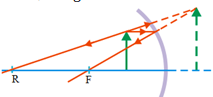
1/f = 1/d o + 1/d i
1/20 = 1/10 + 1/d i
1/20 – 1/10 = 1/l i
1/20 – 2/20 = 1/l i
-1/20 = 1/d i
d i = -20 cm
Léiríonn an comhartha lúide gur íomhá fhíorúil í nó nach dtéann na gathanna tríd an bpointe.
b) Formhéadú íomhá
M = -di / do = -(-20)/10 = 20/10 = 2 uair
Léiríonn an comhartha móide go bhfuil an íomhá ina seasamh agus go bhfuil an íomhá dhá oiread níos mó ná an réad.
Airíonna íomhá
1. Íomhá dhá oiread níos mó ná an réad
2. Ina seasamh
3. Fad íomhá = fad fócasach = 20 cm
4. Fíorúil
3. Tá fad réada 2 mhéadar os comhair scátháin dronnach agus tá airde na híomhá 1/16 oiread airde an réada. Cad é fad fócasach an scátháin?
Ar a dtugtar:
Fad an réada (d o ) = 2 mhéadar
Formhéadú íomhá (M) = 1/16 oiread
Ag teastáil: fad fócasach an scátháin dronnaigh
Réiteach:
Fad íomhá:
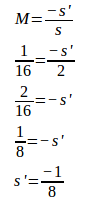
Is é – 1/8 méadar fad na híomhá . Léiríonn an comhartha lúide gur íomhá fhíorúil atá ann.
An fad fócasach (f):
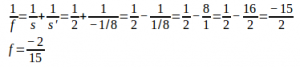
Léiríonn an comhartha lúide go bhfuil an fad fócasach fíorúil.
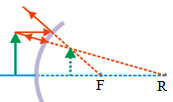
4. Faigh amach airíonna íomhá a bhfuil airde h uirthi, atá suite os comhair scátháin dronnaigh.
réiteach
De réir an fhigiúir, tá airíonna na híomhá fíorúla, ina seasamh agus níos lú ná réad.
7. Lionsa fad fócasach 5 m a úsáidtear mar ghloine formhéadúcháin. An lionsa a úsáideann súil ghnáth nuair a bhíonn an tsúil dírithe ar a pointe gar. Cad é formhéadú uilleach an ghloine formhéadúcháin?
Ar a dtugtar:
An fad fócasach (f) = 5 cm
Pointe gar don tsúil ghnáth (N) = 25 cm
Ag Teastáil: Formhéadú uilleach
Réiteach:
Má tá an tsúil dírithe ar a pointe gar, is é fad na híomhá ná pointe gar na súile gnáth. Cothromóid an fhormhéadaithe uilleach:
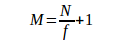
M = Formhéadú uilleach, N = pointe gar don tsúil ghnáth, f = fad fócasach an ghloine formhéadúcháin
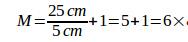
An formhéadú uilleach nuair a bhíonn an tsúil dírithe ar a pointe gar:
Súil ghairdhearcach agus súil chianradharcach
8. Úsáideann duine le súil gharradharcach spéaclaí súl +2 Dioptras . Cad é an t-achar is gaire is féidir le duine a fheiceáil gan spéaclaí súl ?
Ar a dtugtar:
Cumhacht lionsa (P) = +2 dioptraí
Ag Teastáil: An t -achar is gaire
Réiteach:
Lionsa comhtháite nó lionsa scaipthe?
Tá cumhacht dhearfach ag an lionsa toisc gur lionsa dearfach nó lionsa comhthreomhar an lionsa a úsáidtear.
Cad é fad fócasach an lionsa?
P = 1/f
2 = 1/f
f = 1/2 = 0.5 m = 50 cm
Is é 50 cm an fad fócasach.
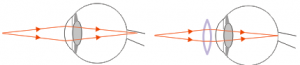 Súil ghearrradharcach agus súil chianradharcach?
Súil ghearr-radharcach mar gur lionsa dearfach an lionsa a úsáidtear.
Cad é an t-achar is gaire is féidir le duine a fheiceáil gan spéaclaí?
Chun go bhfeicfidh an tsúil rudaí ag achar 25 cm mar a fheicfeadh súil ghnáth, ba chóir don lionsa íomhá a chruthú ag achar x cm os comhair na lionsa. Tá an íomhá os comhair na lionsa ionas go mbeidh an íomhá ina seasamh agus fíorúil. Tá an íomhá fíorúil ionas go mbeidh achar an scátha (s') diúltach.
-1/di = 1/f – 1/ dó
-1/d i = 1/50 – 1/25 = 1/50-2/50 = -1/50
-d i = -50/1 = -50 cm = -0.50 méadar
d i = 50 cm = 0.5 méadar
Is é 50 cm an t- achar is gaire is féidir le duine a fheiceáil gan spéaclaí súl . Is é 25 cm an t-achar is gaire is féidir le súil ghnáth a fheiceáil.
9. Is é 50 cm pointe gar duine le súil ghéar-radharcach . Cén chumhacht lionsa a úsáideann an duine sin chun rudaí a fheiceáil ag 25 cm?
réiteach
Tá 25 cm gar do phointe súile gnáth agus tá 50 cm gar do phointe duine le súil chluasfhaireach . Is lionsa comhthreomhar an lionsa a úsáideann an duine.
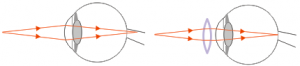 Chun an réad breathnaithe a fheiceáils le bheith 25 cm os comhair na súile, ba chóir go mbeadh an lionsa ina íomha ag achar 50 cm os comhair na súile agus an lionsa. Íomha caithfidh sé a bheith os comhair na súl le go bhfeicfear é ionas go mbeidh an íomha atá ina seasamh agus fíorúil.
Ar a dtugtar:
Fad an réada (d o ) = 25 cm
Fad íomhá (d i ) = -50 cm (diúltach mar gheall ar fhíorúlacht)
Ag Teastáil : An fad fócasach (f) agus cumhacht an lionsa (P)
Réiteach:
1/f = 1/s + 1/s'
1/f = 1/25 + 1/-50
1/f = 2/50 – 1/50
1/f = 1/50
f = 50/1 = 50 cm = 0.5 m
Léiríonn an comhartha móide go bhfuil an lionsa ag teacht le chéile.
P = 1/f = 1/0.5 = +2 Dioptra
Is é +2 D cumhacht an lionsa.
10. Tá lionsa cuspóireach agus lionsa súl ag micreascóp le faid fócasacha de 0.9 cm agus 5 cm. Cuireann duine réad 10 mm os comhair lionsa an chuspóra le breathnú air trí lionsa súl gan chóiríocht. Má tá fad 0.5 mm ag an réad agus má tá an gnáthfhad léitheoireachta ag an duine 25 cm, ansin feicfear fad an réada mar...
Ar a dtugtar:
Fad fócasach an lionsa chuspóra (fob ) = 0.9 cm = 9 mm
Fad fócasach lionsa na súile (f ok ) = 5 cm = 50 mm
Fad an réada ón lionsa cuspóireach (s ob ) = 10 mm
Fad an réada (h o ) = 0.5 mm
Pointe gar don tsúil ghnáth (N) = 25 cm = 250 mm
Ag Teastáil: Fad na híomhá (h i' )
Réiteach:
Fad íomhá ón lionsa cuspóir
1/s ob ' = 1/f ob – 1/s ob = 1/9 – 1/10 = 10/90 – 9/90 = 1/90
s ob ' = 90/1 = 90 mm
Formhéadú iomlán an mhicreascóip nuair a bhíonn an tsúil scíthe nó nuair a bhíonn an íomhá ag an éigríoch, ríomhtar é ag baint úsáide as cothromóid:
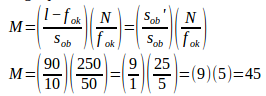
Fad íomhá = fad an réada x formhéadú iomlán = (0.5 mm)(45) = 22.5 mm.
11. Is é 2.0 cm fad fócasach lionsa cuspóir micreascóip. Cuirtear réad ag 2.2 cm. Is é 24.5 cm fad an mhicreascóip. Tá an tsúil gnáth agus suaimhneach. Cad é formhéadú iomlán an mhicreascóip?
Ar a dtugtar:
Fad fócasach an lionsa oibiachtúil (fob ) = 2.0 cm
Fad an réada ón lionsa cuspóireach (d ob ) = 2.2 cm
Fad an mhicreascóip (l) = 24.5 cm
Pointe gar don tsúil ghnáth (N) = 25 cm
Tá an tsúil suaimhneach.
Ag Teastáil: Formhéadú iomlán an mhicreascóip (M)
Réiteach:
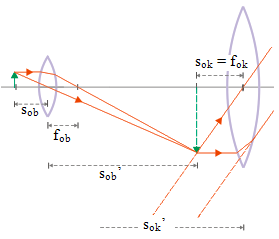
Bíonn an tsúil suaimhneach nuair a bhíonn an íomhá ag an éigríoch.
Formhéadú iomlán an mhicreascóip nuair a bhíonn an tsúil scíthe:
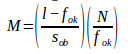
M = formhéadú iomlán
l = fad an mhicreascóip = an fad idir lionsa an chuspóra agus lionsa na súl = fad fócasach lionsa na súl + achar na híomhá ón lionsa cuspóireach (d ob ') = f ok + d ob '
Fad íomhá ón lionsa cuspóir (d ob '):
1/f ob = 1/d ob + 1/d ob '
1/d ob ' = 1/f ob – 1/d ob = 1/2 – 1 / 2.2 = 2.2 / 4.4 – 2 / 4.4 = 0.2 / 4.4
d ob ' = 22
Is é 22 cm an fad íomhá ón lionsa cuspóir.
Fad fócasach lionsa na súile (f ok ):
l = f ceart go leor + s ob '
f ceart go leor = l – d ob ' = 24.5 – 22 = 2.5 cm
Formhéadú iomlán an mhicreascóip (M):
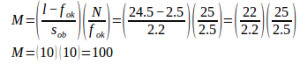
12. Is é 25 cm pointe gar do shúil gnáth. Cad é formhéadú an mhicreascóip?
Ar a dtugtar: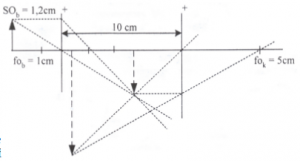
Pointe gar don tsúil ghnáth (N) = 25 cm
Fad an réada (d ob ) = 1.2 cm
Fad fócasach lionsa oibiachtúil (fob ) = 1 cm
Fad fócasach lionsa na súile (f ok ) = 5 cm
Fad idir lionsa an chuspóra agus lionsa na súile = 10 cm
Ag Teastáil: Formhéadú micreascóp
Réiteach:
Más ag an éigríoch atá an íomhá dheireanach, bíonn an tsúil scíthe (cóiríocht íosta). Mura bhfuil an íomhá dheireanach ach ag an bpointe gar (25 cm), níl an tsúil scíthe ach bíonn sí dírithe ag an bpointe gar (cóiríocht uasta).
Cothromóid formhéadúcháin an mhicreascóip nuair a bhíonn an tsúil dírithe ar phointe gar (uasmhéid cóiríochta):
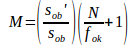
Fad íomhá ón lionsa cuspóir (d ob '):
1/d ob ' = 1/d ob – 1/d ob = 1/1 – 1 / 1.2 = 12/12 – 10/12 = 2/12
d ob ' = 12/2 = 6 cm
Formhéadú íomhá:

Fadhbanna agus réitigh micreascóp
Teileascóp
Fadhbanna agus réitigh teileascóp 1
Fadhbanna agus réitigh teileascóp 2
- Cad é an prionsabal bunúsach atá taobh thiar d'ionstraimí optúla?
- FreagairIs é bunphrionsabal ionstraimí optúla ná ionramháil solais, go príomha trí athraonadh agus frithchaitheamh, chun íomhánna a fhoirmiú agus a mhéadú, rud a chabhraíonn linn rudaí a bhreathnú níos fearr nó airíonna áirithe solais a thomhas.
- Conas a oibríonn spéaclaí ceartaitheacha chun radharc a fheabhsú?
- FreagairBíonn lionsaí i spéaclaí ceartaitheacha a chúiteamh as easnaimh na súile maidir le solas a fhócasú. I gcás ghairdhearcachta, scaipeann lionsaí cuasacha gathanna solais amach, agus i gcás cianradharcachta, comhtháthaíonn lionsaí dronnacha gathanna solais, rud a chuireann ar chumas na súile íomhánna a fhócasú i gceart ar an reitine.
- Cén fáth a mbíonn cuma níos mó ar rudaí le gloine formhéadúcháin?
- FreagairIs lionsa dronnach é gloine formhéadúcháin a chruthaíonn íomhá fhíorúil, formhéadaithe agus ingearach den réad nuair a chuirtear an réad laistigh de fhad fócasach an lionsa. Feiceann an tsúil an íomhá formhéadaithe seo mar rud níos mó ná an réad féin.
- Cén tionchar a bhíonn ag cró ceamara ar cháilíocht na híomhá?
- FreagairRialaíonn an cró an méid solais a théann isteach sa cheamara. Ligeann cró níos mó níos mó solais, rud a d’fhéadfadh grianghraif níos fearr a fháil i solas íseal. Mar sin féin, laghdaíonn cró níos mó doimhneacht an réimse freisin, rud a chiallaíonn go mbeidh cuid níos lú den íomhá i bhfócas. Os a choinne sin, méadaíonn cró níos lú doimhneacht an réimse ach d’fhéadfadh go mbeadh amanna nochta níos faide nó socruithe íogaireachta níos airde ag teastáil.
- Cén fáth a mbíonn uimhir cosúil le “10×50” scríofa ar dhéshúiligh go minic?
- FreagairI ndéshúiligh “10×50”, ciallaíonn an “10x” go mbeidh an réad 10 n-uaire níos gaire ná mar a bheadh sé leis an tsúil nocht. Tagraíonn an “50” do thrastomhas lionsa an chuspóra i milliméadair. Is féidir le lionsa cuspóir níos mó níos mó solais a bhailiú, rud a fhágann go bhfuil an íomhá níos gile, rud atá úsáideach go háirithe i ndálaí ísle solais.
- Conas a bhailíonn teileascóp níos mó solais ná súil an duine, agus cén fáth go bhfuil sé seo tábhachtach chun réaltaí i bhfad i gcéin a bhreathnú?
- FreagairTá lionsaí cuspóireacha (nó scátháin) i bhfad níos mó ag teileascóip ná mar atá ag súil an duine, rud a ligeann dóibh níos mó solais a bhailiú agus a dhíriú. Tá an cumas méadaithe seo chun solas a bhailiú riachtanach chun rudaí neamhaí i bhfad i gcéin agus laga nach mbeadh le feiceáil leis an tsúil nocht a bhreathnú.
- Cad é an difríocht idir teileascóp athraonta agus teileascóp frithchaiteach?
- FreagairÚsáideann teileascóp athraonta (nó athraontóir) lionsaí chun solas a lúbadh agus a fhócasú, agus úsáideann teileascóp frithchaiteach (nó frithchaiteoir) scátháin. Is minic a bhíonn claonadh crómatach ag baint le hathraontóirí, rud a d’fhéadfadh imill dhaite a chur faoi deara timpeall ar rudaí. Seachnaíonn frithchaiteoirí an fhadhb seo ach d’fhéadfadh go mbeadh ailíniú agus coigeartú níos minice ag teastáil.
- Cén fáth a n-úsáideann micreascóip lionsaí iolracha?
- FreagairÚsáideann micreascóip meascán de lionsaí (cuspóir agus súilghréas) chun formhéadú agus réiteach ard a bhaint amach. Formhéadaíonn an lionsa cuspóireach an eiseamal, agus ansin formhéadaíonn an súilghréas an íomhá sin tuilleadh. Ceadaíonn an meascán breathnóireacht mhionsonraithe ar struchtúir bheaga.
- Conas a tharchuireann snáithín optúil faisnéis thar achair fhada?
- FreagairÚsáideann snáithíní optúla prionsabal an fhrithchaitheamh inmheánaigh iomláin. Tugtar comharthaí solais (ó léasair) isteach sa snáithín agus frithchaitheann siad ó bhallaí istigh an tsnáithín, ag taisteal achair fhada le caillteanas íosta déine. Is féidir leis na comharthaí solais seo méideanna ollmhóra sonraí a iompar.
- Cad é ról priosma i speictriméadar?
- FreagairI speictriméadar, scaipeann priosma solas isteach ina dathanna comhpháirteacha (speictream) bunaithe ar thonnfhaid. Ligeann sé seo anailís a dhéanamh ar fhoinsí solais chun a gcomhdhéanamh, a ndéine agus airíonna eile a chinneadh.
