Интерференција двоструког прореза – проблеми и решења
1. Жута светлост пролази кроз два прореза и на екрану се уочава интерференцијски образац.
(1) Светле пруге ће се повећати ако се жуто светло замени плавим.
(2) Светле ресе ће се повећати у ширини ако се растојање између прореза смањи на минимум.
(3) Интензитет светлости се смањује ако је далеко од централне ивице
(4) Интензитет светлости је константан ако је далеко од централне ивице
Која је тачна изјава?
Решење
Растојање између прореза је мање од растојања између прореза и екрана, тако да је угао веома мали. Затим,
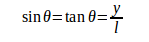
Једначина двоструке прорезне интерференције (конструктивна интерференција )
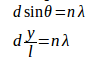
d = растојање између прореза , y = растојање између светле линије и централне ивице , l = растојање између екрана и прореза , n = ред r , λ = таласна дужина
(1) Светле пруге ће се повећати ако се жуто светло замени плавим.

На основу горње једначине, број светлих линија (n) је обрнуто пропорционалан таласној дужини (λ). Ако се таласна дужина смањује, број светлих линија (n) се повећава. Жута светлост има већу таласну дужину (мању фреквенцију) од плаве светлости. Ако се жута светлост промени у плаву, таласна дужина се смањује, па се број светлих линија (n) повећава.
Ова изјава је тачна.
(2) Светле ресе ће се повећати у ширини ако се растојање између прореза смањи на минимум
На основу горње формуле, растојање између прореза (d) је директно пропорционално броју светлих линија (n). Ако се растојање између прореза минимизира, број светлих линија (n) се смањује.
Ова изјава је нетачна.
(3) Интензитет светлости се смањује ако је далеко од централне ивице
Интензитет се односи на ниво светлости. Интензитет је обрнуто пропорционалан удаљености; ако је удаљеност већа, интензитет је мањи (светлост је слабија).
Ова изјава је тачна.
(4) Интензитет светлости је константан ако је далеко од централне ивице
Ова изјава је нетачна.
2. Светлост пада на два прореза удаљена 2 mm и ствара на екрану удаљеном 1 m од светле линије четвртог реда удаљене 1 mm од центра димензија. Која је таласна дужина коришћене светлости?
Познато:
Растојање између прореза (d) = 2 mm = 2 x 10⁻³ m
Ред r (n) = 4
Растојање између екрана и прореза (l) = 1 метар
Растојање између светле линије четвртог реда и центра шаре (y) = 1 mm = 1 x 10⁻³ m = 10⁻³ m
Тражена: Таласна дужина ( λ)
Решење:
Једначина интерференције двоструког прореза:
d sin θ = n λ
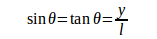
Таласна дужина светлости ( λ):
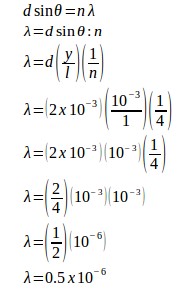
3. Два прореза од 3 мм размака, удаљена 1 метар од екрана. Ако се светла линија шестог реда производи 1 мм од центра узорка, која је таласна дужина коришћене светлости?
Познато:
Растојање између прореза (d) = 3 mm = 3 x 10⁻³ m
Ред r (n) = 6
Растојање између екрана и прореза (l) = 1 метар
Растојање између светле линије шестог реда и центра шаре (y) = 1 mm = 1 x 10⁻³ m = 10⁻³ метара
Тражи се: Таласна дужина светлости ( λ)
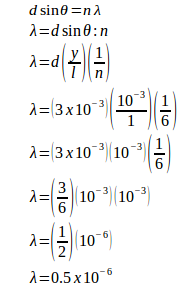
Решење:
Таласна дужина светлости ( λ)
1. Питање: Који је основни принцип који стоји иза интерференције двоструког прореза?
Одговор: Интерференција двоструког прореза настаје суперпозицијом таласа који емитују из два блиско размакнута прореза, што доводи до региона конструктивне и деструктивне интерференције.
2. Питање: Како се на екрану формирају светле и тамне траке?
Одговор: Светле пруге (максимуми) настају услед конструктивне интерференције када се врхови таласа преклапају, док тамне пруге (минимуми) настају услед деструктивне интерференције када се врх из једног прореза преклапа са долином из другог.
3. Питање: Зашто се монохроматска светлост обично користи у експерименту са двоструким прорезом?
Одговор: Монохроматска светлост обезбеђује конзистентну таласну дужину, стварајући јасан и стабилан интерференцијски образац.
4. Питање: Како промена таласне дужине светлости утиче на интерференцијску шему?
Одговор: Повећање таласне дужине повећава размак између пруга, док смањење таласне дужине га смањује.
5. Питање: Како растојање између два прореза утиче на интерференцијску шему?
Одговор: Што је већи размак између прореза, то су интерференцијске пруге ближе једна другој на екрану.
6. Питање: Да ли се интерференција двоструког прореза може посматрати са честицама попут електрона?
Одговор: Да, честице попут електрона показују таласно-честичну дуалност, показујући интерференцијске обрасце сличне светлости када пролазе кроз двоструке прорезе.
7. Питање: Колика је разлика пута између таласа који стижу на светлу ивицу?
Одговор: Разлика путање на светлој ивици је интегрални вишекратник таласне дужине, као што је 0, λ, 2λ, итд.
8. Питање: Како растојање између двоструких прореза и екрана утиче на интерференцијску шему?
Одговор: Како се растојање између прореза и екрана повећава, растојање између ресица постаје веће.
9. Питање: Шта представља централни максимум у интерференцијском обрасцу?
Одговор: Централни максимум је најсветлија тачка директно насупрот двоструким прорезима, где таласи из оба прореза прелазе исту удаљеност до екрана, што резултира конструктивном интерференцијом.
10. Питање: Да ли се интерференцијски образац може видети голим оком?
Одговор: Типично, интерференцијске пруге су преблизу једна другој да би се могле разазнати голим оком, па се користи екран за гледање или детектор.
12. Питање: Шта се дешава са интерференцијским обрасцем када се извор светлости замени извором беле светлости?
Одговор: Бела светлост производи централну белу ивицу окружену обојеним пругама јер различите таласне дужине интерферирају на мало различитим локацијама.
13. Питање: Како је кохеренција повезана са интерференцијом двоструког прореза?
Одговор: За јасан интерференцијски образац, извори светлости из два прореза морају бити кохерентни, што значи да одржавају константан фазни однос.
14. Питање: Зашто су експерименти са једним фотоном значајни за разумевање интерференције двоструког прореза?
Одговор: Експерименти са једним фотоном показују да појединачни фотони могу да интерферирају међусобно, што додатно подржава концепт дуалности таласа и честица.
15. Питање: Како ширина сваког прореза утиче на интерференцијску шему?
Одговор: Шири прорез ће изазвати шире дифракционе обрасце, који ће се преклапати и модификовати видљивост и оштрину интерференцијског обрасца.
16. Питање: Какву улогу игра принцип суперпозиције у интерференцији?
Одговор: Принцип суперпозиције каже да је укупно померање преклапајућих таласа једнако збиру њихових појединачних померања. То доводи до конструктивне и деструктивне интерференције у експериментима са двоструким прорезом.
17. Питање: Може ли доћи до интерференције двоструког прореза са другим врстама таласа осим светлости?
Одговор: Да, интерференција је фундаментални таласни феномен и може се посматрати код звучних таласа, водених таласа, па чак и таласа материје попут електрона.
18. Питање: Шта се дешава са интерференцијским обрасцем када се један од прореза покрије?
Одговор: Покривањем једног прореза елиминисаће се интерференцијски образац и посматраће се само дифракциони образац са једног отвореног прореза.
19. Питање: Како је експеримент са двоструким прорезом повезан са концептом дуалности таласа и честица?
Одговор: Експеримент са двоструким прорезом показује да честице попут електрона могу показивати понашање слично таласима (интерференција) и понашање слично честицама (детектовано као појединачне честице), што наглашава дуалност таласа и честица.
20. Питање: Шта се дешава са интерференцијским обрасцем када се честице посматрају кроз који прорез пролазе?
Одговор: Чин посматрања урушава таласну функцију, а интерференцијски образац нестаје, илуструјући принцип квантне механике да посматрач утиче на посматрано.
Разумевање интерференције двоструког прореза је темељно и у класичној таласној оптици и у квантној механици, откривајући сложену природу светлости и материје.
