Parallel-plate capacitor – problems and solutions

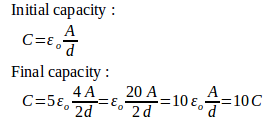
1. A parallel-plate capacitor has initial capacity C, the permittivity of free space is εo, plate area is A, the distance between plates is d. If the plate area increased by 4 times, the distance between plates becomes 2d and the permittivity of free space is 5εo, what is the final capacity of the parallel-plate capacitor.

Known :

The capacity of capacitor = C

The permittivity of free space = εo

Plate area = A

The distance between plates = d

Wanted: Capacity of the capacitor (C)

Solution :

Parallel-plate capacitor – problems and solutions 1

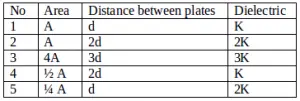
2. The capacitor that has the largest capacity based on the graphic below is

Parallel-plate capacitor – problems and solutions 2

Solution :

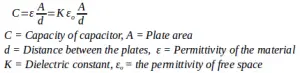
The formula of the parallel-plate capacitor :

Parallel-plate capacitor – problems and solutions 3

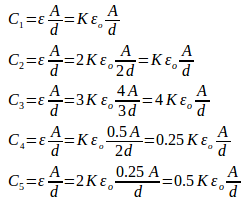
The capacity of capacitors :

Parallel-plate capacitor – problems and solutions 4

The capacitor that has the largest capacity is capacitor C3.

3.

Consider the following factors!
(1) Dielectric constant
(2) The potential difference between the plates
(3)
Plate thick
(4) The surface area of the plate
(5) The distance between the plates
(6) Amount of electric charge
Factors affecting the capacities of parallel plate capacitors are …

Solution :

(1), (4) and (5)

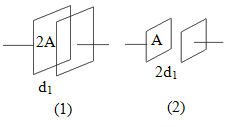
4. The capacity comparison of the capacitor 1 and 2 is…

Parallel-plate capacitor – problems and solutions 5Known :

Capacitor 1 :

Surface area = 2A

The distance between plates = d1

Capacitor 2 :

Surface area = A

The distance between plates = 2 d1

Wanted: The capacity comparison of the capacitor 1 and 2

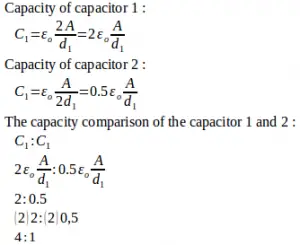
Solution :

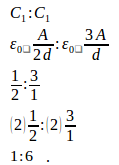
Parallel-plate capacitor – problems and solutions 6

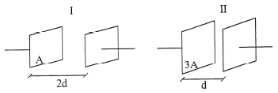
5.

Parallel-plate capacitor – problems and solutions 15

Determine comparison of the capacity of Parallel-plate capacitor I and II.

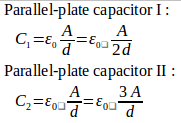
Solution :

Parallel-plate capacitor – problems and solutions 16

Comparison of the capacity of Parallel-plate capacitor I and II :

Parallel-plate capacitor – problems and solutions 17

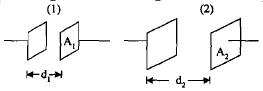
6. Two parallel-plate capacitors shown in the figure below.

If A1 = ½ A2 and d2 = 3 d1 then determine the ratio of capacities of the parallel-plate capacitor between the image 2 and the image 1.

Parallel-plate capacitor – problems and solutions 18

Known :

Parallel-plate capacitor I :

A1 = 1

d1 = 1

Parallel-plate capacitor II :

A2 = 2

d2 = 3

Wanted: the ratio of capacities of the parallel-plate capacitor between the image 2 and the image 1

Solution :

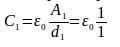
Parallel-plate capacitor I :

Parallel-plate capacitor – problems and solutions 19

Parallel-plate capacitor II :

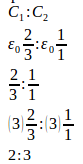
The ratio of capacities of the parallel-plate capacitor II and I :

Parallel-plate capacitor – problems and solutions 20

Read more

Electric voltage – problems and solutions

1. Determine the electric potential at a point located at 1 cm from a charge 5.0 μC. Coulomb constant (k) = 9 x 10⁹ Nm2C−2, 1 μC = 10−6 C.

Known :

The distance from charge (r) = 1 cm = 1/100 m = 0.01 m = 10-2 m

Charge (q) = 5.0 μC = 5.0 x 10⁻⁶ C

Coulomb constant (k) = 9 x 10⁹ Nm2C−2

Wanted : Electric potential (V)

Solution :

Electric potential :

Electric voltage – problems and solutions 1

Electric potential is 4.5 x 10⁶ Volt

2. Charge Q1 = 5.0 μC and charge Q2 = 6.0 μC. Coulomb’s constant (k) = 9 x 10⁹ Nm2C−2, 1 μC = 10−6 C. Point A located between the charges. Determine electric potential at point A.

Electric voltage – problems and solutions 2

Known :

Charge Q1 = -5.0 μC = -5.0 x 10⁻⁶ C

The distance of point A from Q1 = 10 cm = 0.1 m = 10-1 m

Charge Q2 = 6.0 μC = 6.0 x 10⁻⁶ C

The distance of point a from Q2 = 10 cm = 0.1 m = 10-1 m

Coulomb’s constant (k) = 9 x 10⁹ Nm2C−2

Wanted : Electric potential at point A

Solution :

Electric potential 1 :

Electric voltage – problems and solutions 3

Electric potential 2 :

Electric voltage – problems and solutions 4

Electric potential at point A :

V = V2 – V1

V = (54 – 45) x 104

V = 9 x 10⁴

3. Charge q1 = 5.0 μC and charge q2 = 6.0 μC. Coulomb’s constant (k) = 9 x 10⁹ Nm2C−2, 1 μC = 10−6 C. Determine the electric potential at point A.

Electric voltage – problems and solutions 5Known :

Charge Q1 = -5.0 μC = -5.0 x 10⁻⁶ C

The distance of point A from Q1 = 40 cm = 0.4 m = 4 x 10⁻¹ m

Charge Q2 = 6.0 μC = 6.0 x 10⁻⁶ C

The distance of point A from Q2 = 50 cm = 0.5 m = 5 x 10⁻¹ m

Coulomb’s constant (k) = 9 x 10⁹ Nm2C−2

Wanted : Electric potential at point A

Solution :

Electric potential 1 :

Electric voltage – problems and solutions 6

Electric potential 2 :

Electric voltage – problems and solutions 7

Electric potential at point A :

V = V1 + V2

V = (-11.25 + 10.8) x 104

V = -0.45 x 10⁴

V = -4.5 x 10³

Electric potential at point A is -4.5 x 10³ Volt

Read more

Electric potential energy – problems and solutions

1. An electron is accelerated from rest through a potential difference 12 V. What is the change in electric potential energy of the electron?

Electric potential energy – problems and solutions 2Known :

The charge on an electron (e) = -1.60 x 10⁻¹⁹ Coulomb

Electric potential = voltage (V) = 12 Volt

Wanted: The change in electric potential energy of the electron (ΔPE)

Solution :

ΔPE = q V = (-1.60 x 10⁻¹⁹ C)(12 V) = -19.2 x 10⁻¹⁹ Joule

The minus sign indicates that the potential energy decreases.

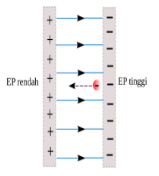
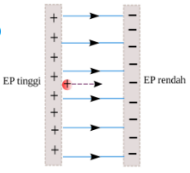
2. Two parallel plates are charged. The separation between the plates is 2 cm and the magnitude of the electric field between the plates is 500 Volt/meter. What is the change in potential energy of the proton when accelerated from the positively charged plate to the negatively charged plate.

Electric potential energy – problems and solutions 2Known :

The magnitude of the electric field between the plates (E) = 500 Volt/meter

The distance between the plates (s) = 2 cm = 0,02 m

The charge on an proton = +1.60 x 10⁻¹⁹ Coulomb

Wanted : The change in electric potential energy (ΔPE)

Solution :

Electric potential :

V = E s

V = (500 Volt/m)(0.02 m)

V = 10 Volt

The change in electric potential energy :

ΔPE = q V

ΔPE = (1,60 x 10⁻¹⁹ C)(10 V)

ΔPE = 16 x 10-19 Joule

ΔPE = 1.6 x 10⁻¹⁸ Joule

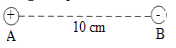
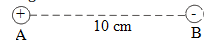
3. Two point charges are separated by a distance of 10 cm. Charge on point A =+9 μC and charge on point B = -4 μC. k = 9 x 10⁹ Nm2C−2, 1 μC = 10−6 C. What is the change in electric potential energy of charge on point B if accelerated to point A ?

Electric potential energy – problems and solutions 3

Known :

Charge A (q1) = +9 μC = +9 x 10⁻⁶ C

Charge B (q1) = -4 μC = -4 x 10⁻⁶ C

k = 9 x 10⁹ Nm2C−2

The distance between charge A and B (r) = 10 cm = 0.1 m = 10-1 m

Wanted : The change in electric potential energy (ΔEP)

Solution :

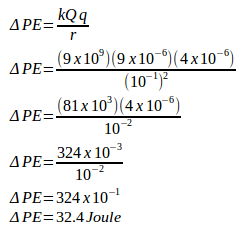
Electric potential energy – problems and solutions 4

Read more

Electric flux – problems and solutions

1. A uniform electric field E = 8000 N/C passing through a flat square area A = 10 m2. Determine the electric flux.

Electric flux through area and closed surface – problems and solutions 1Known :

The magnitude of the electric field (E) = 8000 N/C

Area (A) = 10 m2

θ = 0o (the angle between the electric field direction and a line drawn a perpendicular to the area)

Wanted: Electric flux (Φ)

Solution :

The formula of electric flux :

Φ = E A cos q

Φ = electric flux (Nm2/C), E = electric field (N/C), A = area (m2), q = angle between electric field line with the normal line.

Electric flux :

Φ = E A cos q = (8000)(10)(cos 0) = (8000)(10)(1) = 80,000 = 8 x 10⁴ Nm2/C

2. A uniform electric field E = 5000 N/C passing through a flat square area A = 2 m2. Determine the electric flux.

Electric flux through area and closed surface – problems and solutions 2Known :

Electric field (E) = 5000 N/C

Area (A) = 2 m2

θ = 60o (the angle between the electric field direction and a line drawn perpendicular to the area)

Wanted : Electric flux (Φ)

Solution :

Electric flux :

Φ = E A cos q = (5000)(2)(cos 60) = (5000)(2)(0.5) = 5000 = 5 x 10³ Nm2/C

3. A solid ball with 0.5 meters radius has 10 μC electric charge in its center. Determine the electrical flux pass through the solid ball.

Electric flux through area and closed surface – problems and solutions 3Known :

Radius of ball (r) = 0.5 m

Electric charge (Q) = 10 μC = 10 x 10-6 C

Wanted : Electric flux (Φ)

Solution :

Electric field :

E = k q/r2

E = (9 x 10⁹ Nm2/C2)(10 x 10-6 C) / 0.52

E = (90 x 103) / 0,25

E = 360 x 103

E = 3.60 x 10⁵ N/C

Surface area :

A = 4 π r2 = 4 (3.14)(0.5)2 = (12.56)(0.25) = 3.14 m2

Electric flux :

The electric field lines perpendicular to area, so that the angle between the electric field direction and a line drawn perpendicular to the area, is 0o.

Φ = E A cos q

Φ = (3.60 x 10⁵)(3.14)(cos 0)

Φ = (11.304 x 10⁵)(1)

Φ = 11.304 x 10⁵

Φ = 1.13 x 10⁶ Nm2/C

Read more

The magnitude and direction of electric field – problems and solutions

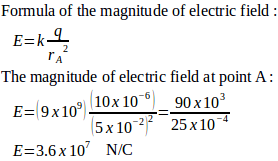
1. Calculate the magnitude and direction of the electric field at a point A located at 5 cm from a point charge Q = +10 μC. k = 9 x 10⁹ Nm2C−2, 1 μC = 10−6 C)

Known :

Electric charge (Q) = +10 μC = +10 x 10-6 C

The distance between point A and point charge Q (rA) = 5 cm = 0.05 m = 5 x 10⁻² m

k = 9 x 10⁹ Nm2C−2

Wanted: The magnitude and direction of the electric field at point A

Solution :

The magnitude and direction of electric field - problems and solutions 1

The direction of the electric field at point A :

The electric charge is positive hence the direction of the electric field away from the electrical charge and points A.

2. Calculate the magnitude and direction of the electric field at a point P located at 10 cm from a point charge Q = -20 μC. k = 9 x 10⁹ Nm2C−2, 1 μC = 10−6 C.

Known :

Electric charge (q) = -20 μC = -20 x 10-6 C

The distance between point P and electric charge (rP) = 10 cm = 0.1 m = 1 x 10⁻¹ m

k = 9 x 10⁹ Nm2C−2

Wanted: The magnitude and direction of the electric field at point P

Solution :

The magnitude and direction of electric field - problems and solutions 2

The direction of electric field at point A :

The electric charge is negative hence the direction of the electric field to the electrical charge.

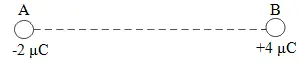
3. Two point charges are separated by a distance of 40 cm. What is the magnitude and direction of the electric field at the point P between the two charges, that is 20 cm from point A?

The magnitude and direction of electric field - problems and solutions 3

Known :

Charge A (qA) = -2 μC = -2 x 10⁻⁶ C

Charge B (qB) = +4 μC = +4 x 10⁻⁶ C

The distance between charge A and point P (rAP) = 20 cm = 0.2 m = 2 x 10⁻¹ m

The distance between charge B and point P (rBP) = 20 cm = 0.2 m = 2 x 10⁻¹ m

Wanted : The magnitude and direction of electric field at point P.

Solution :

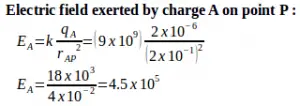
The magnitude and direction of electric field - problems and solutions 4

Charge A is negative so that the direction of the electric field points toward QA (to the left).

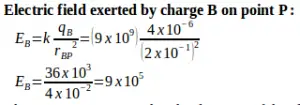
The magnitude and direction of electric field - problems and solutions 5

Charge B is positive so that the direction of the electric field points away from QB (to the left).

The total electric field at point A :

E = EA + EB

E = (4.5 x 10⁵) + (9 x 10⁵)

E = 13.5 x 10⁵ N/C

The direction of the electric field points toward QA (to the left).

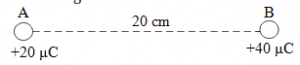
4. The magnitude of the electric field is zero at…

The magnitude and direction of electric field - problems and solutions 6

The charge A is positive and the charge B is positive so that the magnitude of the electric field is zero located at point P, between both charges.

Known :

Charge A (qA) = +20 μC = +20 x 10−6 C

Charge B (qB) = +40 μC = +40 x 10−6 C

k = 9 x 10⁹ Nm2C−2

The distance between charge A and the charge B = 20 cm

The charge between charge A and point P (rAP) = a

The distance between charge B and point P (rBP) = 20 – a

Wanted : The magnitude of the electric field is zero located at….

Solution :

The magnitude of the electric field produced by charge A at point P

The magnitude and direction of electric field - problems and solutions 7

Charge A is positive so that the direction of the electric field points away from charge A (to the right).

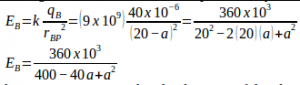
The magnitude of the electric field produced by charge B at point P :

The magnitude and direction of electric field - problems and solutions 8

Charge B is positive so that the direction of the electric field points away from charge B (to the left).

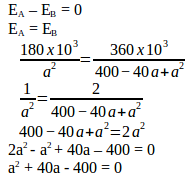
The total electric field at point P = 0 :

The magnitude and direction of electric field - problems and solutions 9

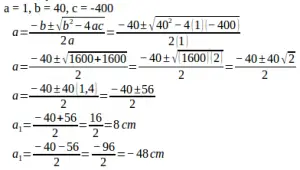
We use the quadratic formula to determine a.

The magnitude and direction of electric field - problems and solutions 10

The magnitude of the electric field is zero located at 8 cm from charge A or 12 cm from charge B.

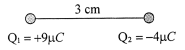
5. Based on the figure below, where is the point P so that the electric field at point P is zero? (k = 9 x 10⁹ Nm2C−2, 1 μC = 10−6 C)

The magnitude and direction of electric field - problems and solutions 11

Solution

To calculate the electric field strength at point P, assumed at point P there is a positive test charge. Q1 is positive and Q2 is negative, therefore point P must be on the right of Q2 or left of Q1. If point P is to the left of Q1; the electric field generated by Q1 at the point P is to the left (away from Q1) and the electric field generated by Q2 at the point P to the right (towards Q1). The direction of the electric field is opposite so that the two electric fields eliminate each other so that the electric field strength at point P is zero.

Known :

Q1 = +9 μC = +9 x 10⁻⁶ C

Q2 = -4 μC = -4 x 10⁻⁶ C

k = 9 x 10⁹ Nm2C−2

Distance between charge 1 and charge 2 = 3 cm

Distance between Q1 and point P (r1P) = a

Distance between Q2 and point P (r2P) = 3 + a

Wanted : location of point P so that the electric field at point P is zero

Solution :

Point P is on the left of Q1.

The electric field produced by Q1 at point P:

The magnitude and direction of electric field - problems and solutions 12

The test charge is positive and Q1 is positive so that the direction of an electric field to leftward.

The electric field produced by Q2 at point P:

The magnitude and direction of electric field - problems and solutions 13

The test charge is positive and Q2 is negative so that the direction of an electric field to rightward.

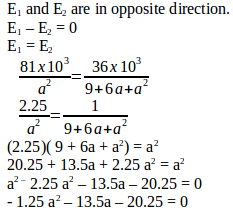
Net electric field at point A :

The magnitude and direction of electric field - problems and solutions 14

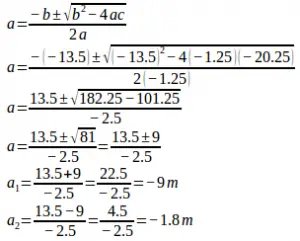
Use the quadratic formula to determine a :

a = -1.25, b = -13.5, c = -20.25

The magnitude and direction of electric field - problems and solutions 15

Distance between Q2 and point P (r2P) = 3 + a = 3 – 1.8 = 1.2 cm.

Point P is on the 1.2 cm right of Q1.

Read more

Coulomb’s law – problems and solutions

1. Two point charges, QA = +8 μC and QB = -5 μC, are separated by a distance r = 10 cm. What is the magnitude of the electric force. The constant k = 8.988 x 10⁹ Nm2C−2 = 9 x 10⁹ Nm2C−2.

Coulomb's law – problems and solutions 1

Known :

Charge A (qA) = +8 μC = +8 x 10⁻⁶ C

Charge B (qB) = ­-5 μC = -5 x 10⁻⁶ C

k = 9 x 10⁹ Nm2C−2

The distance between charge A and B (rAB) = 10 cm = 0.1 m

Wanted : The magnitude of the electric force

Solution :

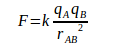
Formula of Coulomb’s law :

Coulomb's law – problems and solutions 2

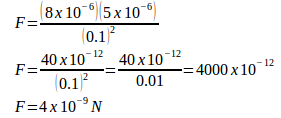
The magnitude of the electric force :

Coulomb's law – problems and solutions 16

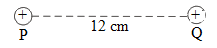
2. Two charged particles as shown in figure below. QP = +10 μC and Qq = +20 μC are separated by a distance r = 10 cm. What is the magnitude of the electrostatic force.

Coulomb's law – problems and solutions 4

Known :

Charge P (QP) = +10 μC = +10 x 10-6 C

Charge Q (QQ) = +20 μC = +20 x 10-6 C

k = 9 x 10⁹ Nm2C−2

The distance between charge P and Q (rPQ) = 12 cm = 0.12 m = 12 x 10-2 m

Wanted : The magnitude of the electric force

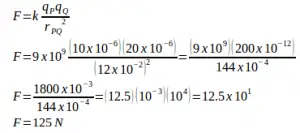
Solution :

Coulomb's law – problems and solutions 15

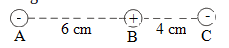
3. Three charged particles are arranged in a line as shown in figure below. Charge A = -5 μC, charge B = +10 μC and charge C = -12 μC. Calculate the net electrostatic force on particle B due to the other two charges.

Coulomb's law – problems and solutions 6

Known :

Charge A (qA) = -5 μC = -5 x 10⁻⁶ C

Charge B (qB) = +10 μC = +10 x 10-6 C

Charge C (qC) = -12 μC = -12 x 10-6 C

k = 9 x 10⁹ Nm2C−2

The distance between particle A and B (rAB) = 6 cm = 0.06 m = 6 x 10⁻² m

The distance between particle B and C (rBC) = 4 cm = 0.04 m = 4 x 10⁻² m

Wanted : The magnitude and the direction of net electrostatic force on particle B

Solution :

The net force on particle B is the vector sum of the force FBA exerted on particle B by particle A and the force FBC exerted on particle B by particle C.

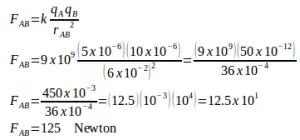
The force FBA exerted on particle B by particle A :


Coulomb's law – problems and solutions 14

The direction of the electrostatic force points to particle A (point to left).

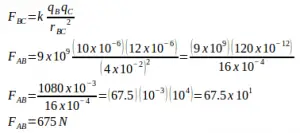
The force FBC exerted on particle B by particle A :


Coulomb's law – problems and solutions 13

The direction of the electrostatic force points to particle C (point to right).

The net electrostatic force on particle B :

FB = FAB – FBC = 675 N – 125 N = 550 Newton.

The direction of the net electrostatic force on particle B points to particle C (points to the right).

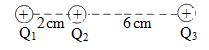
4. +Q1 = 10 μC, +Q2 = 50 μC and Q3 are separated as shown in the figure below. What is the electrostatic charge on particle 3 if the net electrostatic force on particle 2 is zero.

Coulomb's law – problems and solutions 9

Known :

Charge 1 (q1) = +10 μC = +10 x 10-6 C

Charge 2 (q2) = +50 μC = +50 x 10-6 C

The distance between charge 1 and 2 (r12) = 2 cm = 0.02 m = 2 x 10⁻² m

The distance between charge 2 and charge 3 (r23) = 6 cm = 0.06 m = 6 x 10⁻² m

The net electrostatic force on particle 2 (F2) = 0

Wanted : charge 3 (q3)

Solution :

The net force on particle 2 is the vector sum of the force F21 exerted on particle 2 by particle 1 and the force F23 exerted on particle 2 by particle 3.

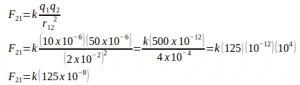
The force F21 exerted on particle 2 by particle 1 :

Coulomb's law – problems and solutions 10

The direction of the electrostatic force points to particle 3 (point to right).

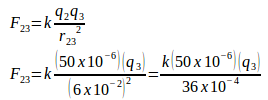
The force F23 exerted on particle 2 by particle 3 : Coulombs law – problems and solutions 12

The direction of the electrostatic force points to particle 1 (point to left).

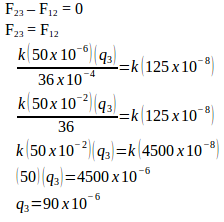
The net electrostatic force on particle 2 = 0 :

Coulomb's law – problems and solutions 11

Read more

Angular momentum – problems and solutions

1. An object with the moment of inertia of 2 kg m2 rotates at 1 rad/s. What is the angular momentum of the object?

Known :

Moment of inertia (I) = 2 kg m2

Angular speed (ω) = 1 rad/s

Wanted : Angular momentum (L)

Solution :

Formula of angular momentum :

L = I ω

L = angular momentum (kg m2/s), I = moment of inertia (kg m2), ω = angular speed (rad/s)

The angular momentum :

L = I ω = (2)(1) = 2 kg m2/s

2. A 2-kg cylinder pulley with radius of 0.1 m rotates at a constant angular speed of 2 rad/s. What is the angular momentum of the pulley ?

Angular momentum – problems and solutions 1Known :

Mass of pulley (m) = 2 kg

Radius of pulley (r) = 0.1 m

Angular speed (ω) = 2 rad/s

Wanted : Angular momentum

Solution :

Formula of moment of inertia for solid cylinder :

I = 1/2 m r2

I = moment of inertia (kg m2), m = mass (kg), r = radius (m)

Moment of inertia :

I = 1/2 (2)(0.1)2 = (1)(0.01) = 0.01 kg m2

The angular speed :

L = I ω = (0.01)(2) = 0.02 kg m2/s

3. A 2-kg uniform sphere with radius of 0.2 m rotates at 4 rad/s. What is the angular momentum of the ball.

Angular momentum – problems and solutions 2Known :

Mass of ball (m) = 2 kg

Radius of ball (r) = 0.2 m

Angular speed (ω) = 4 rad/s

Wanted : Angular momentum

Solution :

Formula of moment of inertia for uniform sphere :

I = (2/5) m r2

I = moment of inertia (kg m2), m = mass (kg), r = radius (m)

The moment of inertia for uniform sphere :

I = (2/5)(2)(0.2)2 = (4/5)(0.04) = 0.032 kg m2

The angular momentum of sphere :

L = I ω = (0.032)(4) = 0.128 kg m2/s

4. A 1-kg particle rotates at a constant angular speed of 2 rad/s. What is the angular speed if the radius of circle is 10 cm.

Known :

Mass of object (m) = 1 kg

The radius of circle (r) = 10 cm = 10/100 = 0.1 m

The angular speed (ω) = 2 rad/s

Wanted : Angular momentum

Solution :

Formula of moment of inertia for particle :

I = m r2 = (1)(0.1)2 = (1)(0.01) = 0.01 kg m2

Angular momentum :

L = I ω = (0.01)(2) = 0.02 kg m2/s

Read more

Rotational kinetic energy – problems and solutions

1. An object has the moment of inertia of 1 kg m2 rotates at a constant angular speed of 2 rad/s. What is the rotational kinetic energy of the object?

Known :

The moment of inertia (I) = 1 kg m2

The angular velocity (ω) = 2 rad/s

Wanted: The rotational kinetic energy (KE)

Solution :

The formula of the rotational kinetic energy :

KE = 1/2 I ω2

KE = the rotational kinetic energy (kg m2/s2), I = the moment of inertia (kg m2), ω = the angular velocity (rad/s)

The rotational kinetic energy :

KE = 1/2 I ω2 = 1/2 (1)(2)2 = 1/2 (1)(4) = 2 Joule

2. A 20-kg cylinder pulley with a radius of 0.2 m rotates at a constant angular speed of 4 rad/s. What is the rotational kinetic energy of the pulley?

Rotational kinetic energy – problems and solutions 1Known :

Mass of cylinder pulley (m) = 20 kg

The radius of cylinder (r) = 0.2 m

The angular speed (ω) = 4 rad/s

Wanted : What is the rotational kinetic energy

Solution ;

Formula of the moment inertia of cylinder :

I = 1/2 m r2

I = the moment of inertia (kg m2), m = mass (kg), r = radius (meter)

The moment of inertia of cylinder pulley :

I = 1/2 (20)(0.2)2 = (10)(0.04) = 0.4 kg m2

The rotational kinetic energy of the pulley :

KE = 1/2 I ω2 = 1/2 (0.4)(4)2 = (0.2)(16) = 3.2 Joule

3. A-10 kg ball with radius of 0.1 m rotates at a constant of 10 rad/s. What is the kinetic energy of the ball.

Known :

Mass of ball (m) = 10 kg

Radius of ball (r) = 0.1 m

Angular velocity (ω) = 10 rad/s

Wanted : The rotational kinetic energy

Solution :

Formula of the moment of inertia :

I = (2/5) m r2

I = moment of inertia (kg m2), m = mass (kg), r = radius (m)

Moment of inertia of the ball :

I = (2/5)(10)(0.1)2 = (4)(0.01) = 0.04 kg m2

The rotational kinetic energy of the ball :

KE = 1/2 I ω2 = 1/2 (0.04)(10)2 = (0.02)(100) = 2 Joule

4. A 0.5-kg particle rotates at a constant angular speed of 2 rad/s. What is the rotational kinetic energy of the particle if the radius of circle is 10 cm.

Known :

Mass of particle (m) = 0.5 kg

The radius of ball (r) = 10 cm = 10/100 = 0.1 m

The angular speed (ω) = 2 rad/s

Wanted : The rotational kinetic energy

Solution :

Moment of inertia for particle :

I = m r2 = (0.5)(0.1)2 = (0.5)(0.01) = 0.005 kg m2

The rotational kinetic energy :

KE = 1/2 I ω2 = 1/2 (0.005)(2)2 = 1/2 (0.005)(4) = (0.005)(2) = 0.01 Joule

Read more

Rotational dynamics – problems and solutions

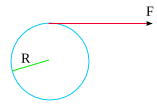
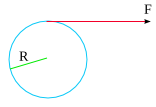
1. A force F applied to a cord wrapped around a cylinder pulley. The torque is 2 N m and the moment of inertia is 1 kg m2, what is the angular acceleration of the cylinder.

Rotational dynamics – problems and solutions 1Known :

Torque (τ) = 2 N m

The moment of inertia (I) = 1 kg m2

Wanted: The angular acceleration of the cylinder

Solution :

Στ = I α

Στ = net torque, I = moment of inertia, α = angular acceleration

Angular acceleration of cylinder :

α = Στ / I = 2 / 1 = 2 rad/s2

2. A force F applied to a cord wrapped around a cylinder pulley. The magnitude of the force is 10 N, the radius of the cylinder is 0.2 m and the moment of inertia is 1 kg m2, What is the angular acceleration of the cylinder?

Rotational dynamics – problems and solutions 2Known :

Force (F) = 10 N

Radius of cylinder (R) = 0.2 m

The moment of inertia (I) = 1 kg m2

Wanted: The angular acceleration of the cylinder.

Solution :

τ = F R

τ = torque, F = force, R = radius of cylinder

Torque :

τ = F R = (10 N)(0.2 m) = 2 N m

Στ = I α

Στ = net torque, I = moment of inertia, α = angular acceleration

Angular acceleration of cylinder :

α = Στ / I = 2 / 1 = 2 rad/s2

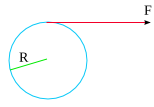
3. A force F applied to a cord wrapped around a cylinder pulley. The magnitude of force is 10 N, the radius of cylinder is 0.2 m and the mass of cylinder is 20 kg m2,. What is the angular acceleration of the cylinder.

Rotational dynamics – problems and solutions 3Known :

Force (F) = 10 N

Radius of cylinder (R) = 0.2 m

Mass of cylinder (M) = 20 kg

Wanted : Angular acceleration of cylinder

Solution :

τ = F R = (10 N)(0.2 m) = 2 N m

Moment of inertia :

I = 1⁄2 M R2 = 1⁄2 (20)(0.2)2 = 1⁄2 (20)(0.04) = 0.4 kg m2

Angular acceleration of cylinder :

α = Στ / I = 2 / 0.4 = 5 rad/s2

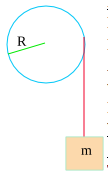
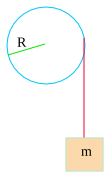
4. A 1-kg block hanging from a cord wrapped around a cylinder pulley. The moment of inertia of pulley is 1 kg m2 and the radius of pulley is 0.2 m. What is the angular acceleration of the pulley. Acceleration due to gravity is 10 m/s2.

Rotational dynamics – problems and solutions 4Known :

Moment of inertia of pulley (I) = 1 kg m2

Mass of block (m) = 1 kg

Acceleration due to gravity (g) = 10 m/s2

Weight (w) = m g = (1 kg)(10 m/s2) = 10 kg m/s2 = 10 N

Radius of pulley (R) = 0.2 m

Wanted : Angular acceleration

Solution :

Torque :

τ = F R = w R = (10 N)(0.2 m) = 2 N m

Moment of inertia :

I = 1 kg m2

Angular acceleration :

α = Στ / I = 2 / 1 = 2 rad/s2

5. A 1-kg block hanging from a cord wrapped around a cylinder pulley. The mass of pulley is 20 kg and the radius of pulley is 0,2 m. What is the angular acceleration of the pulley and the free fall acceleration of the block. Acceleration due to gravity is 10 m/s2.

Rotational dynamics – problems and solutions 5Known :

Mass of pulley (M) = 20 kg

Radius of pulley (R) = 0,2 m

Mass of block (m) = 1 kg

Acceleration due to gravity (g) = 10 m/s2

Weight (w) = m g = (1 kg)(10 m/s2) = 10 kg m/s2 = 10 N

Wanted : the angular acceleration of the pulley and the free fall acceleration of the block.

Solution :

The torque :

τ = F R = w R = (10 N)(0.2 m) = 2 N m

The moment of inertia of cylinder pulley :

I = 1⁄2 M R2 = 1⁄2 (20)(0.2)2 = (10)(0.04) = 0.4 kg m2

The angular acceleration of the pulley :

α = Στ / I = 2 / 0.4 = 5 rad/s2

The free fall acceleration of the block :

a = R α = (0.2)(5) = 1 m/s2

Read more

Moment of inertia particles and rigid body – problems and solutions

The moment of inertia of the particle

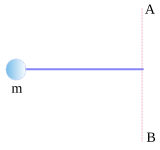
1. A 100-gram ball connected to one end of a cord with a length of 30 cm. What is the moment of inertia of ball about the axis of rotation AB? Ignore cord’s mass.
Moment of inertia particles and rigid body – problems and solutions 1Known :

The axis of rotation at AB

Mass ball (m) = 100 gram = 100/1000 = 0.1 kg

The distance between ball and the axis rotation (r) = 30 cm = 0.3 m

Wanted: Moment of inertia of ball (I)

Solution :

I = m r2 = (0.1 kg)(0.3 m)2

I = (0.1 kg)(0.09 m2)

I = 0.009 kg m2

2. A 100-gram ball, m1, and a 200-gram ball, m2, connected by a rod with a length of 60 cm. The mass of the rod is ignored. The axis of rotation located at the center of the rod. What is the moment of inertia of the balls about the axis of rotation?
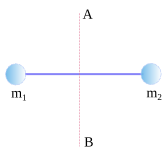
Moment of inertia particles and rigid body – problems and solutions 2Known :

Mass of ball 1 (m1) = 100 gram = 100/1000 = 0.1 kg

The distance of ball 1 and the axis of rotation (r1) = 30 cm = 30/100 = 0.3 m

Mass of ball (m2) = 200 gram = 200/1000 = 0.2 kg

The distance of ball 2 and the axis of rotation (r2) = 30 cm = 30/100 = 0.3 m

Wanted : moment of inertia of the balls

Jawab :

I = m1 r12 + m2 r22

I = (0.1 kg)(0.3 m)2 + (0.2 kg)(0.3 m)2

I = (0.1 kg)(0.09 m2) + (0.2 kg)(0.09 m2)

I = 0.009 kg m2 + 0.018 kg m2

I = 0.027 kg m2

3. A 200-gram ball, m1 and a 100-gram ball, m2, connected by a rod with length of 60 cm. Ignore rod’s mass. The axis of rotation located at ball m2. What is the moment of inertia of the balls. Ignore rod’s mass.
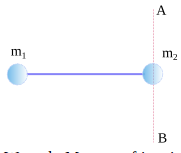
Moment of inertia particles and rigid body – problems and solutions 3Known :

Mass of ball 1 (m1) = 200 gram = 200/1000 = 0.2 kg

The distance between ball 1 and the axis of rotation (r1) = 60 cm = 60/100 = 0.6 m

Mass of ball 2 (m2) = 100 gram = 100/1000 = 0.1 kg

The distance between ball 2 and the axis of rotation (r2) = 0 m

Wanted : Moment of inertia of the balls

Solution :

I = m1 r12 + m2 r22

I = (0.2 kg)(0,6 m)2 + (0.2 kg)(0)2

I = (0.2 kg)(0.36 m2) + 0

I = 0.072 kg m2

4. The mass of each ball is 100 gram, connected by cord. The length of cord is 60 cm and the width of cord is 30 cm. What is the moment of inertia of the balls about the axis of rotation. Ignore cord’s mass.
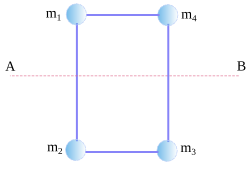
Moment of inertia particles and rigid body – problems and solutions 4Known :

Mass of ball = m1 = m2 = m3 = m4 = 100 gram = 100/1000 = 0.1 kg

The distance between ball and the axis of rotation (r1) = 30 cm = 30/100 = 0.3 m

The distance between ball 2 and the axis of rotation (r2) = 30 cm = 30/100 = 0.3 m

The distance between ball 3 and the axis of rotation (r3) = 30 cm = 30/100 = 0.3 m

The distance between ball 4 and the axis of rotation (r4) = 30 cm = 30/100 = 0.3 m

Known : Moment of inertia

Solution :

I = m1 r12 + m2 r22 + m3 r32 + m4 r42

I = (0.1 kg)(0.3 m)2 + (0.1 kg)(0.3 m)2 + (0.1 kg)(0.3 m)2 + (0.1 kg)(0.3 m)2

I = (0.1 kg)(0.09 m2) + (0.1 kg)(0.09 m2) + (0.1 kg)(0.09 m2) + (0.1 kg)(0.09 m2)

I = 0.036 kg m2

The moment of inertia of rigid object

5. What is the moment of inertia of a 2-kg long uniform rod with length of 2 m. The axis of rotation located at the center of the rod.
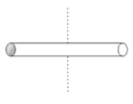
Moment of inertia particles and rigid body – problems and solutions 5Known :

Mass of rod (M) = 2 kg

The length of rod (L) = 2 m

Wanted: Moment of inertia

Solution :

The formula of the moment of inertia when the axis of rotation located at the center of long uniform rod :

I = (1/12) M L2

I = (1/12) (2 kg)(2 m)2

I = (1/12) (2 kg)(4 m2)

I = (1/12)(8 kg m2)

I = 8/12 kg m2

I = 2/3 kg m2

6. What is the moment of inertia of a 2-kg long uniform rod with a length of 2 m? The axis of rotation located at one end of the rod.
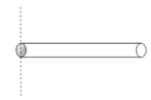
Moment of inertia particles and rigid body – problems and solutions 6Known :

Mass of rod (M) = 2 kg

The length of rigid rod (L) = 2 m

Wanted: Moment of inertia

Solution :

The formula of the moment of inertia when the axis of rotation located at one end of the rod :

I = (1/3) M L2

I = (1/3) (2 kg)(2 m)2

I = (1/3) (2 kg)(4 m2)

I = (1/3)(8 kg m2)

I = 8/3 kg m2

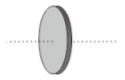
7. A 10-kg solid cylinder with a radius of 0.1 m. The axis of rotational located at the center of the solid cylinder, shown in the figure below. What is the moment of inertia of the cylinder?
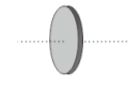
Moment of inertia particles and rigid body – problems and solutions 7Known :

Mass of solid cylinder (M) = 10 kg

Radius of cylinder (L) = 0.1 m

Wanted: The moment of inertia

Wanted: The moment of inertia

Solution :

The formula of moment inertia when the axis of rotation located at the center of cylinder :

I = (1/2) M R2

I = (1/2) (10 kg)(0.1 m)2

I = (1/2) (10 kg)(0.01 m2)

I = (1/2)(0.1 kg m2)

I = 0.05 kg m2

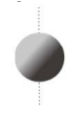
8. A 20-kg uniform sphere with the length of 0.1 m. The axis of rotation located at the center of the sphere shown in the figure below.
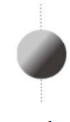
Moment of inertia particles and rigid body – problems and solutions 8Known :

Mass of sphere (M) = 20 kg

The radius of sphere (L) = 0.1 m

Wanted: a moment of inertia

Solution :

The formula of the moment of inertia when the axis of rotation located at the center of the sphere :

I = (2/5) M R2

I = (2/5)(20 kg)(0.1 m)2

I = (2/5)(20 kg)(0.01 m2)

I = (2/5)(0.2 kg m2)

I = 0.4/5 kg m2

I = 0.08 kg m2

9. A 2-kg rectangular thin plate with a length of 0.5 m and width of 0.2 m. The axis of rotation located at the center of the rectangular plat shown in the figure below. What is the moment of inertia of the rectangular?

Known :
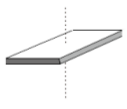
Moment of inertia particles and rigid body – problems and solutions 9Mass of rectangular plat (M) = 2 kg

The length of plat (a) = 0.5 m

The width of plat (b) = 0.2 m

Wanted : Moment of inertia

Solution :

Formula of moment of inertia when the axis of rotation located at the center of plat :

I = (1/12) M (a2 + b2)

I = (1/12)(2)(0.52 + 0.22)

I = (2/12)(0.25 + 0.04)

I = (1/6)(0.29)

I = 0.29/6 kg m2

Read more