Ray diagrams for the convex mirror

Article about Ray diagrams for the convex mirror

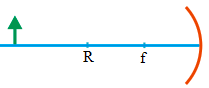
If an object is in the front of a convex mirror surface that reflects light, the convex mirror will form the image of the object. If the distance of the object from the convex mirror is known, how to draw the image formation of the object? Suppose an object is in the front of a convex mirror, as shown in the figure below.

Ray diagrams for the convex mirror 1The orange line = convex mirror

Blue line = the principal axis

Green arrow = object

R = center of curvature of the convex mirror

f = focus of the convex mirror

Read more

Convex mirror

Definition of the convex mirror

One type of mirror used in everyday life is the convex mirror. The convex mirror has curved shapes, where the mirror surface, which reflects light, curve forward.

Uses of the convex mirror

If you have ever seen a motorcycle or car rearview mirror, of course, you already know the use of the convex mirrors in everyday life. The mirrors are used as rearview mirrors because the images formed by convex mirrors are upright, and the images are smaller than objects so that it has the broader range of views. In addition to the smaller image size, all image formed by the convex mirrors are virtual.

Read more

Properties of image formed by concave mirror

Article about Properties of image formed by concave mirror

Object distance is smaller than the focal length of the concave mirror (do < f)

Based on the calculation of the image formation by the concave mirror, it is concluded that if the object distance (do) is smaller than the focal length (f), then the properties of the image are:

– Virtual means that the beam of light does not pass through the image

– Upright

Read more

The concave mirror equation

Article about The concave mirror equation

Before deriving the equation of the concave mirror, first read some sign rules for the concave mirror below.

The sign rules for the concave mirror

Object distance (do)

If the object is in the front of the mirror surface which reflects light, the object distance (do) is positive.

Image distance (di)

If the image is in the front of the mirror surface which reflecting light, where light passes through the image, then the image distance (di) is positive (real image). If the image is behind the mirror surface which reflecting light, where light does not pass through the image, then the image distance is negative (virtual image).

Read more

Image formation by concave mirror

To understand the image of an object formed by a concave mirror, learn example problems and solutions below. In this issue, the object is assumed at a certain distance from the concave mirror, then draw the image formation by the concave mirror,

the image distance from the concave mirror and the magnification of the image formed by the concave mirror.

Consider a concave mirror has a focal length of 20 cm. Draw the image formation and then determine the image distance and the image magnification if:

a) the distance of objects is smaller than the distance of the focal length (do <f)

Read more

Ray diagrams for concave mirror

Article about Ray diagrams for concave mirror

If an object is in front of a concave mirror that reflecting light, the concave mirror will form the image of the object. If the position of the object in front of the concave mirror is known, how to draw the image formation of the object? To clarify this, suppose an object is in front of a concave mirror, as shown below.

Ray diagrams for concave mirror 1Orange line = concave mirror

Blue lines = the principal axis

Arrow (green) = object

R = center of the curvature of the concave mirror

Read more

Concave mirror

Definition of a concave mirror

One type of mirror used in everyday life is a concave mirror. A concave mirror is a curved shape mirror, where a mirror surface reflects light curves backward.

Uses of the concave mirror

If you want to observe your facial skin more clearly and in detail, close your face to the surface of a concave mirror that

reflects light so that the image of your face looks bigger and the pores of the facial skin can be seen clearly. The image of your face looks bigger than your face because the mirror enlarges the image, where this happens when the distance of your face from the concave mirror is smaller than the focal length of the mirror. Because it can enlarge images, concave mirrors are usually used by women to dress up and use to men when shaving.

Read more

Plane mirror

Definition of the plane mirror

A plane mirror is a mirror that has a flat surface, where one of its surfaces is coated with reflective metal so that the surface of the plane mirror can reflect more than 95 percent of the light that strikes it. If you shine a flashlight toward a plane mirror surface, the plane mirror reflects the light so that your eyes glare if the mirror reflects the flashlight to your eyes. Conversely, if you stand in front of a mirror surface during the day, your face reflects sunlight toward the surface of the mirror, and at the same time, the mirror reflects light back toward you. If you stand in front of a plane mirror surface at night, then your face reflects the light of the electric light

towards the plane mirror surface, and at the same time, the plane mirror reflects the light of the electric light back towards you.

Read more

Specular reflection and diffuse reflection

Article about Specular reflection and diffuse reflection

If you stand in front of a plane mirror, you can see the image of your face reflected by the plane mirror. If you stand on the edge of a plane mirror, can you still see your face behind the plane mirror? You can investigate this further by shining a flashlight on a flat mirror surface. When the flashlight is directed perpendicular to the surface of the plane mirror, the flashlight reflected by the plane mirror can be seen. But if you stand on the edge of a plane mirror, then light the flashlight towards the center of the flat mirror, then you cannot see the reflection of the flashlight!

Different things happen when you observe an object during the day. Things like books, stones, or tables can be seen during the day because they reflect sunlight. These objects, like a mirror in the previous problem. When an object is in front of a plane mirror, the object reflects sunlight toward the surface of the plane mirror. Sunlight reflected by an object towards the surface of the plane mirror is then reflected by a plane mirror towards the eye so that we can see the shadow of the object behind the plane mirror. Different things happen to books, stones, or tables. During the day, sunlight is emitted to the book, and the book reflects sunlight into the eyes, so we can see the book. At night, the light is emitted to the book, and the book reflects the light of the lamp towards the eye, so we can see the book.

Read more
Law of reflection of light

Article about Law of reflection of light

Definition of reflection

Reflection can be interpreted as an event in which the direction of motion of an object changes due to the object hits a barrier. If you throw a ball on the wall, the ball reflected because the ball hits the wall.

Reflection of light

When light is emitted by the sun or other light sources such as electric lights, light moves from the light source in all directions. When light strikes a barrier such as a book, wall or mirror, light is reflected by that barrier. The direction of the light reflection after it strikes a barrier object is different from the direction of motion of the light before it strikes the barrier. It can be said that the reflection of light is an event in which light strikes a barrier so that the direction of light changes; the direction of movement of light after strikes a barrier object is different from the direction of motion of light before strikes a barrier.

Read more