Torricellis teorem – problemer og løsninger
1. Et rør med en høyde på 100 cm fylt med vann. Et hull Q er plassert 10 cm over bakken. Hva er den horisontale avstanden (x)?
Kjent: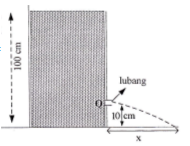
Avstand mellom hullet og vannoverflaten (t) = 100 cm – 10 cm = 90 cm = 0.9 m
Tyngdekraftakselerasjon (g) = 10 m/ s²
Ønsket: Avstand på x
løsning:
Vannstrømmens hastighet ved hullet
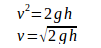
v = hastighet , g = tyngdeakselerasjon , h = avstand mellom hullet og vannoverflaten
Vannstrømmens hastighet ved hullet:

Tid i luften
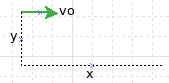 Vannets bevegelse fra hullet til bakken er prosjektil bevegelseProsjektilbevegelsen kan forstås ved å analysere de horisontale og vertikale komponentene av bevegelsen separat. X-bevegelsen skjer med konstant hastighet og y-bevegelsen skjer med konstant tyngdeakselerasjon.
I dette problemet analyseres vertikal bevegelse som fritt fallende bevegelse.
Beregn tiden i luften ved hjelp av ligningen for fritt fall-bevegelsen.
Kjent:
Hullets høyde (y) = 10 cm = 0.1 m
Tyngdekraftakselerasjon (g) = 10 m/ s²
Ønsket: Tidsintervall (t)
løsning:
y = 1/2 gt²
0.1 = 1/2 (10) t²
0.1 = 5 t²
t² = 0.1 / 5
t² = 0.02
t = √0.02 sekunder
Den horisontale avstanden (x):
Kjent:
Starthastigheten (v o = v ox ) = 3√2 m/s
Tid i luft (t) = √0.02 sekunder
Ønsket: Den horisontale avstanden (x)
løsning:
v = x / t
x = vt = (3√2)(√0.02) = (3)(1.41)(0.14) = 0.59 = 0.6 meter
2. En tank som inneholder vann med en høyde på 1 meter. I punkt P er det et hull. Hva er hastigheten på vannets strømning ved hullet? Tyngdeakselerasjonen er 10 m/ s².
Kjent:
Avstand mellom hullet og vannoverflaten (t) = 100 cm – 80 cm = 20 cm = 0.2 m 
Tyngdekraftakselerasjon (g) = 10 m/ s²
Ønsket: Hastigheten på vannstrømmen ved hullet (v)
løsning:
Vannstrømmens hastighet ved hullet:
 3. En store badekar inneholder vann og det er en kran som vist på bildet nedenfor. Hvis g = 10 ms-2, så er vannhastigheten ut av kranen…
Kjent: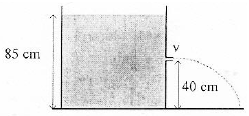
Høyde (h) = 85 cm – 40 cm = 45 cm = 0.45 meter
Tyngdekraftakselerasjon (g) = 10 m/ s²
Ønskes: Vannhastighet (v)
løsning:
Torricellis teorem sier at vannets hastighet gjennom et hull langt h fra vannoverflaten er lik hastigheten på fritt fall av vann fra en høyde på h.
Vannhastigheten beregnes ved hjelp av formelen for fritt fallbevegelse a v t 2 = 2 gh
v t 2 = 2 gh = 2(10)(0.45) = 9
v t = √9 = 3 m/s
4. Et kar fylt med vann, og det er et hull på veggen (se figuren nedenfor ). Hastigheten til vannet som kommer ut av hullet er… (g = 10 ms⁻² )
Kjent: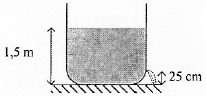
Høyde (h) = 1.5 m – 0.25 m = 1.25 meter
Tyngdekraftakselerasjon (g) = 10 m/ s²
Ønskes: Vannhastighet ( v )
løsning:
v t 2 = 2 gh = 2(10)(1.25) = 25
v t = √25 = 5 m/s
5. En tank som inneholder vann så høyt som 1 meter (g = 10 ms -2 ) og hvor det er et lekkasjehull på veggen (se figur nedenfor ). Hastigheten på vannet som kommer ut av hullet er...
Kjent:
Høyde (h) = 1 m – 0.20 m = 0.8 meter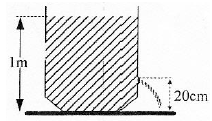
Tyngdekraftakselerasjon (g) = 10 m/ s²
Ønskes: Vannhastighet ( v )
løsning:
v t 2 = 2 gh = 2(10)(0.8) = 16
v t = √16 = 4 m/s
- Hva beskriver Torricellis teorem?
- Svar: Torricellis teorem relaterer hastigheten på væske som strømmer ut av en åpning til høyden på væskesøylen over åpningen, forutsatt jevn, uviskos (ingen viskositet) og inkompressibel strømning.
- Hvordan uttrykkes Torricellis teorem matematisk?
- Svar: Teoremet uttrykkes som , Hvor er hastigheten på utstrømningen, er tyngdeakselerasjonen, og ℎ er høyden på væskesøylen over åpningen.
- Under hvilke forutsetninger ble Torricellis teorem utledet?
- Svar: Teoremet forutsetter at væsken er inkompressibel og ikke-viskøs, at strømningen er jevn, og at det ikke tilføres eller tas noen ekstra energi fra væsken.
- Hvis en beholder har to hull i ulik dybde, hvordan vil hastigheten på væskene som kommer ut av hullene være i forhold til hverandre?
- Svar: Væsken som kommer ut av hullet nærmere bunnen vil ha større hastighet enn væsken fra hullet høyere. Dette er fordi trykket (og dermed den potensielle energien) er større på dypere dyp.
- Hvorfor avhenger ikke utstrømningshastigheten av beholderens form eller tverrsnittsareal?
- Svar: Torricellis teorem tar bare hensyn til den potensielle energien på grunn av høyden på væskesøylen over åpningen. Formen på beholderen endrer ikke denne høyden, så utstrømningshastigheten forblir den samme.
- Hvordan skiller den faktiske hastigheten til væsken som strømmer ut av en åpning seg fra forutsigelsen gjort av Torricellis teorem i virkelige situasjoner?
- Svar: I virkelige situasjoner kan faktorer som væskeviskositet, turbulens og formen på åpningen påvirke den faktiske hastigheten, ofte noe som gjør den mindre enn det Torricellis teorem forutsier.
- Hva er forholdet mellom Torricellis teorem og energibevaring?
- Svar: Torricellis teorem er utledet fra bevaring av mekanisk energi. Det likestiller den potensielle energien på væskens overflate med den kinetiske energien ved åpningen.
- Hvis det er en åpning helt øverst i en væskefylt beholder, hvordan beskriver Torricellis teorem utstrømningshastigheten?
- Svar: Høyden ℎ over åpningen ville være null, så ifølge Torricellis teorem ville utstrømningshastigheten være null.
- Hvordan påvirker tilstedeværelsen av atmosfærisk trykk forutsigelsene i Torricellis teorem?
- Svar: Torricellis teorem antar at beholderen er åpen mot atmosfæren, og dermed virker atmosfæretrykket likt over væskens overflate. Dette trykket utlignes når man vurderer trykkforskjellen over væskens høyde, så teoremet forblir gyldig.
- Hva skjer med utstrømningshastigheten når væsken i beholderen avtar?
- Svar: Etter hvert som væskenivået synker, øker høyden ℎ over åpningen avtar. I følge Torricellis teorem vil utstrømningshastigheten avta når .
Disse spørsmålene og svarene utforsker grunnlaget for, implikasjonene av og anvendelsene av Torricellis teorem innen fluiddynamikk.
