경사면 – 문제점과 해결책
1. 블록의 질량 은 5kg이고, 중력 가속도는 9.8m/s²이며 , tan 37 ° = 3/4입니다. 블록의 가속도는 얼마입니까?
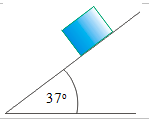
해법
알려진 바에 따르면: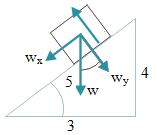
질량(m) = 5kg
중력 가속도(g) = 10 m/ s²
무게 (w) = mg = (5)(10) = 50 N
X = 3
경사면 의 높이 (y) = 4
경사면의 길이(l) = 5
구하는 것 : 블록 (a)의 가속도 ?
솔루션 :
물체는 w x 의 힘에 의해 가속됩니다. 경사면은 매끄럽기 때문에 마찰력은 없습니다.
w x = w sin θ = (w)(y / z)
w x = (50)(4/5)
w x = 40 뉴턴
블록 (a)의 가속도?
ΣF = ma
w x = ma
40 = (5) a
에이 = 40 / 5
a = 8 m/ s²
2. 정지 상태에 있던 물체가 경사면과 평행하게 위쪽으로 가속됩니다. 물체의 질량은 8kg이고, 정지 마찰 계수는 µs = 0.5이며, 경사각은 θ = 45 ° 입니다. 물체를 가속시키는 힘 F의 크기는 얼마입니까?
알려진 바에 따르면: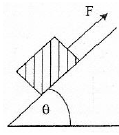
정지 마찰 계수(µs ) = 0.5
각도(θ) = 45 °
중력 가속도(g) = 10 m/ s²
블록의 질량(m) = 8kg
블록 무게(w) = mg = (8 kg)(10 m/s² ) = 80 kg m/s² = 80 뉴턴
구하는 것: 힘 F의 크기
솔루션 :
블록이 가속을 시작하면 F ≥ wx + fs. 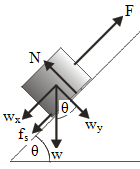
무게의 수평 성분 :
w x = w sin θ = (80)(sin 45) = (80)(0.5√2) = 40√2
무게의 수직 성분:
w y = w cos θ = (80)(cos 45) = (80)(0.5√2) = 40√2
수직항력 :
N = w y = 40√2
정지 마찰력:
fs = µs N = (0.5)(40√2) = 20√2
힘 F의 크기:
F ≥ w x + f s
F ≥ 40√2 + 20√2
F ≥ 60√2 뉴턴
3. 블록의 질량은 8kg입니다. 블록 이 미끄러져 내려가지 않도록 고정하는 데 필요한 최소 힘은 다음과 같습니다. (sin 37 ° = 0.6, cos 37 ° = 0.8, g = 10 ms⁻² , µk = 0.1)
알려진 바에 따르면: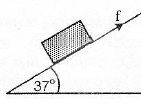
블록의 질량(m) = 8kg
중력 가속도(g) = 10 m/ s²
블록의 무게(w) = mg = (8)(10) = 80 뉴턴
Sin 37 ° = 0.6
Cos 37 o = 0.8
운동 마찰 계수(µk ) = 0.1
수직항력(N) = w y = w cos 37 ° = (80)(0.8) = 64 뉴턴
구하는 것: 힘 F의 크기
솔루션 :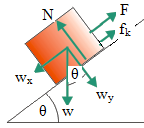
F = w x 이면 블록은 아래로 미끄러지지 않습니다.
경사면과 평행한 무게의 수평 성분:
w x = w sin θ = (80)(sin 37) = (80)(0.6) = 48
f k = µ k N = (0.1)(64) = 6.4
블록이 미끄러져 내려가지 않도록 하는 최소 힘 F는 다음과 같습니다.
F + f k – w x = 0
F = w x – f k = 48 – 6.4 = 41.6 뉴턴
4. 5kg짜리 블록이 71N의 힘으로 거친 경사면을 따라 당겨지고 있습니다(g = 10ms⁻² , sin 37 ° = 0.6, cos 37 ° = 0.8). 블록과 경사면 사이의 마찰 계수가 0.4일 때, 블록의 가속도는 얼마입니까?
알려진 바에 따르면:
물체의 질량(m) = 5kg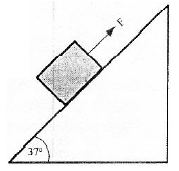
중력 가속도(g) = 10 m/ s²
블록의 무게(w) = mg = (5)(10) = 50 뉴턴
힘 F = 71 뉴턴
Sin 37 ° = 0.6
Cos 37 o = 0.8
마찰 계수 = 0.4
구하는 것 : 블록의 가속도 (a)
솔루션 :
무게의 수평 성분 :
w x = w sin θ = (50)(sin 37) = (50)(0.6) = 30
무게의 수직 성분 :
w y = w cos θ = (50)(cos 37) = (50)(0.8) = 40
수직항력 :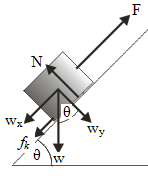
N = w y = 40
운동 마찰력:
f k = µ k N = (0.4)(40) = 16
순 힘 :
∑F = F – w x – f k = 71 – 30 – 16 = 25 뉴턴
물체의 가속도:
a = ∑F / m = 25 / 5 = 5 m/ s²
5. 아래 그림과 같이 500N의 상자를 경사면을 따라 트럭에 실어 나릅니다. 트럭의 높이가 1.5m일 때, 상자를 움직이는 데 필요한 힘의 크기를 구하세요.
알려진 바에 따르면: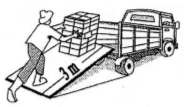
상자의 무게(w) = 500 뉴턴
트럭의 높이(h) = 1.5미터
경사면의 길이(l) = 3미터
구하는 것: 상자를 움직이는 데 필요한 힘의 크기(F)
솔루션 :
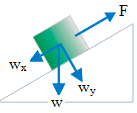 Sin θ = opp / hip = 1.5미터 / 3미터 = 1.5 / 3 = 0.5
상자를 움직이는 데 필요한 힘(F)은 경사면과 평행한 무게의 수평 성분(w x )과 같습니다.
w x = w sin θ = (500 N)(0.5) = 250 N
- 경사면이란 무엇이며, 어떻게 작업을 더 쉽게 만들어 줄까요?
- 대답경사면은 수평면을 향해 직각이 아닌 각도로 기울어진 평평한 표면입니다. 경사면은 힘을 더 긴 거리에 걸쳐 가할 수 있게 하여 저항력을 극복하도록 도와주므로, 물체를 들어 올리거나 내리는 데 필요한 힘의 크기를 줄여주는 효과가 있습니다.
- 경사각은 물체를 경사면 위로 움직이는 데 필요한 힘에 어떤 영향을 미칠까요?
- 대답경사각이 가파를수록 물체를 경사면 위로 움직이는 데 필요한 힘이 커집니다. 경사각이 작아지면 필요한 힘은 줄어들지만, 더 긴 거리에 걸쳐 힘이 작용합니다.
- 무거운 상자를 경사로 위로 밀어 올리는 것이 똑바로 들어 올리는 것보다 쉬운 이유는 무엇일까요?
- 대답경사로(비탈면) 위로 상자를 밀어 올리면 상자의 무게가 더 넓은 거리에 분산되어 순간적으로 필요한 힘이 줄어듭니다. 반면, 상자를 똑바로 들어 올리려면 상자의 무게 전체를 직접적으로 상쇄해야 하므로 훨씬 더 큰 힘이 필요합니다.
- 경사면의 길이는 물체를 경사면 위로 움직이는 데 필요한 힘과 어떤 관계가 있습니까?
- 대답경사면의 길이가 길수록(높이가 일정할 때) 물체를 경사면 위로 움직이는 데 필요한 힘은 줄어듭니다. 하지만 힘을 가해야 하는 거리는 더 길어집니다.
- 경사면에 마찰력이 발생하면, 경사면 위의 물체 운동에 어떤 영향을 미칠까요?
- 대답마찰력은 물체의 운동을 방해하는 힘입니다. 물체가 경사면 위로 밀려 올라갈 때, 마찰력은 아래쪽으로 작용하여 물체를 움직이는 데 필요한 힘을 증가시킵니다. 반대로 물체가 경사면 아래로 내려갈 때는 마찰력이 하강 속도를 늦춥니다.
- 작업자들이 트럭에 무거운 물건을 싣기 위해 경사면을 사용하는 이유는 무엇일까요?
- 대답경사로를 이용하면 작업자는 더 적은 힘으로 더 긴 거리를 무거운 물건을 옮길 수 있으므로, 물건을 수직으로 들어 올리는 것보다 작업이 더 수월하고 힘들지 않습니다.
- 물체의 무게는 경사면을 따라 미끄러져 내려가려는 경향과 어떤 관계가 있을까요?
- 대답물체의 무게 중 경사면의 표면에 평행하게 작용하는 성분이 물체를 미끄러지게 합니다. 물체가 무거울수록 이 무게 성분이 커지고, 따라서 물체가 미끄러져 내려가려는 경향이 더 커집니다.
- 경사면에서 수직항력은 어떤 역할을 할까요?
- 대답수직항력은 경사면의 표면에 수직으로 작용합니다. 마찰력은 일반적으로 수직항력에 비례하므로, 수직항력은 물체와 경사면 사이의 마찰력을 결정하는 요인입니다.
- 빙판길에서 모래나 자갈을 경사면에 놓는 이유는 무엇일까요?
- 대답모래나 자갈은 경사면과 그 위에 닿는 물체(신발이나 타이어 등) 사이의 마찰력을 증가시킵니다. 이렇게 추가된 마찰력은 빙판길이나 젖은 노면에서 미끄러짐을 방지하는 데 도움이 됩니다.
- 공이 경사면을 따라 굴러 올라갔다가 다시 굴러 내려올 때, 공기 저항과 마찰을 무시하면 출발점으로 돌아올 때 원래 속도에 도달할까요?
- 대답네, 공기 저항과 마찰이 없다면 공이 최고점에 있을 때의 위치 에너지는 하강하면서 운동 에너지로 완전히 전환되어 에너지 보존 법칙에 따라 출발점으로 돌아올 때쯤에는 원래 속도에 도달하게 됩니다.
