રેખીય ગતિમાં ઉકેલાયેલી સમસ્યાઓ - મુક્ત પતનમાં ઉપર અને નીચે ગતિ
1. એક વ્યક્તિ 20 મીટર/સેકન્ડના પ્રારંભિક વેગથી બોલને હવામાં ઉપર ફેંકે છે. ગણતરી કરો કે તે કેટલો ઊંચો જાય છે. પાણીના પ્રતિકારને અવગણો. ગુરુત્વાકર્ષણને કારણે પ્રવેગ (g) = 10 મીટર/સેકન્ડ 2.
ઉકેલ
નીચે બતાવ્યા પ્રમાણે, આપણે સતત પ્રવેગ પર ગતિ માટે આમાંથી એક ગતિશીલ સમીકરણનો ઉપયોગ કરીએ છીએ.
v t = v o + at
2 વાગ્યે s = v o t + ½
v t 2 = v o 2 + 2 તરીકે
જાણીતા:
આપણે ઉપરની દિશાને હકારાત્મક અને નીચેની દિશાને નકારાત્મક તરીકે પસંદ કરીએ છીએ.
પ્રારંભિક વેગ (v o ) = 20 m/s (ધન ઉપર તરફ)
ગુરુત્વાકર્ષણનું પ્રવેગ (g) = – 10 m/s 2 (ઋણ નીચે તરફ).
અંતિમ વેગ (v t ) = 0 (ઉચ્ચતમ બિંદુ પર તેની ગતિ એક ક્ષણ માટે શૂન્ય હોય છે)
ઇચ્છિત: મહત્તમ ઊંચાઈ (ક)
ઉકેલો:
v t 2 = v o 2 + 2 ઘ
૦ = (૨૦ ૨ ) + ૨(-૧૦) ક
૦ = ૧૦૦ – ૨૦ કલાક
૯૦૦ = ૧૯.૬ કલાક
h = 400 / 20 = 40 / 2 = 20 મીટર
[આઈઆરપી]
2. એક વ્યક્તિ ખડકની ધાર પર ઊભા રહીને 20 મીટર/સેકન્ડની ઝડપે પથ્થર ઉપર ફેંકે છે, જેથી પથ્થર 100 મીટર નીચે ખડકના પાયા પર પડી શકે.
(a) ખડકના પાયા સુધી પહોંચવામાં બોલ કેટલો સમય લે છે (b) પથ્થર જમીન પર અથડાતા પહેલાનો અંતિમ વેગ. ગુરુત્વાકર્ષણને કારણે પ્રવેગ (g) = 10 m/s 2. પાણીના પ્રતિકારને અવગણો.
જાણીતા:
આપણે ઉપરની દિશાને હકારાત્મક અને નીચેની દિશાને નકારાત્મક તરીકે પસંદ કરીએ છીએ.
ઊંચું (h) = -100 મીટર (ઋણ કારણ કે અંતિમ સ્થાન પ્રારંભિક સ્થાન નીચે છે)
પ્રારંભિક વેગ (v o ) = 20 m/s (ધન ઉપર તરફ)
ગુરુત્વાકર્ષણ પ્રવેગ (g) = -10 m/s 2 (ઋણ નીચે તરફ)
જોઈતું હતું:
(a) હવામાં સમય અથવા સમય અંતરાલ (t)
(b) અંતિમ વેગ (v t )
ઉકેલો:
(a) સમય અંતરાલ (t)
જાણીતા:
ઊંચું (h) = -100 મીટર (ઋણ કારણ કે અંતિમ સ્થાન પ્રારંભિક સ્થાન નીચે છે)
પ્રારંભિક વેગ (v o ) = 20 m/s (ધન ઉપર), ગુરુત્વાકર્ષણ પ્રવેગ (g) = -10 m/s 2 (ઋણ નીચે).
h = વોટ + ½ gt 2
-100 = (20) ટી + ½ (-10) ટી 2
-100 = 20 ટન – 5 ટન 2
-૪.૯ ટી ૨ + ૫ ટી + ૫ = ૦
આપણે ચતુર્ભુજ સૂત્રનો ઉપયોગ કરીએ છીએ:
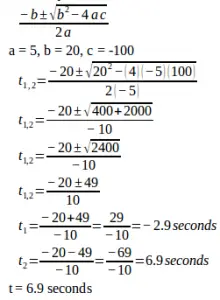
(b) અંતિમ વેગ
v t 2 = v o 2 + 2 ઘ
v t 2 = (20 2 ) + 2 (-10)(-100)
v t 2 = 400 + 2000
v t 2 = 2400
v t = 49 મીટર/સેકન્ડ
[આઈઆરપી]
[wpdm_package id='515′]
[wpdm_package id='517′]
- અંતર અને વિસ્થાપન
- સરેરાશ ગતિ અને સરેરાશ વેગ
- સતત વેગ
- સતત પ્રવેગક
- મુક્ત પતન ગતિ
- ફ્રી ફોલમાં નીચે ગતિ
- ફ્રી ફોલમાં ઉપર અને નીચે ગતિ
