บทความเกี่ยวกับสมการของเลนส์กระจายแสง (เลนส์เว้า)
ก่อนที่จะหาอนุพันธ์ของสมการเลนส์เว้า เราต้องเข้าใจกฎเครื่องหมายของเลนส์เว้าก่อน
กฎของเลนส์เว้า
ต่อไปนี้เป็นกฎเกี่ยวกับเครื่องหมายของเลนส์เว้า
– ระยะห่างของวัตถุ (do)
ถ้าวัตถุอยู่ด้านเดียวกับทิศทางของลำแสงของเลนส์ ระยะห่างของวัตถุจะเป็นค่าบวก
– ระยะห่างของภาพ (di)
ถ้าลำแสงผ่านภาพระยะห่างของภาพจะเป็นบวก (ภาพจริง) ถ้าภาพไม่ผ่านลำแสงระยะห่างของภาพจะเป็นลบ (ภาพเสมือน)
– ระยะโฟกัส (f)
ถ้าลำแสงผ่านจุดโฟกัสของเลนส์ ระยะโฟกัสของเลนส์จะเป็นค่าบวก ในทางกลับกัน ถ้าลำแสงไม่ผ่านจุดโฟกัสของเลนส์ ระยะโฟกัสของเลนส์จะเป็นค่าลบ จุดโฟกัสของเลนส์เว้าไม่ผ่านลำแสง ดังนั้นระยะโฟกัสของเลนส์เว้าจึงเป็นค่าลบ
– ความสูงของวัตถุ (ho)
ถ้าวัตถุอยู่เหนือแกนหลัก ความสูงของวัตถุจะมีค่าเป็นบวก (วัตถุตั้งตรง) ในทางกลับกัน ถ้าวัตถุอยู่ใต้แกนหลัก ความสูงของวัตถุจะมีค่าเป็นลบ (วัตถุกลับหัว)
– ความสูงของภาพ (hi)
ถ้าภาพอยู่เหนือแกนหลัก ความสูงของภาพจะเป็นค่าบวก (ภาพตั้งตรง) ถ้าภาพอยู่ใต้แกนหลัก ความสูงของภาพจะเป็นค่าลบ (ภาพกลับหัว)
– กำลังขยายของภาพ (เมตร)
ถ้ากำลังขยายของภาพมากกว่า 1 แสดงว่าขนาดของภาพใหญ่กว่าขนาดของวัตถุ ถ้ากำลังขยายของภาพเท่ากับ 1 แสดงว่าขนาดของภาพเท่ากับขนาดของวัตถุ ถ้ากำลังขยายของภาพน้อยกว่า 1 แสดงว่าขนาดของภาพเล็กกว่าขนาดของวัตถุ
สมการของเลนส์เว้า
จากภาพด้านล่าง จะเห็นว่ามีลำแสงสองลำพุ่งเข้าหาเลนส์เว้า และเลนส์เว้าจะหักเหลำแสงทั้งสอง
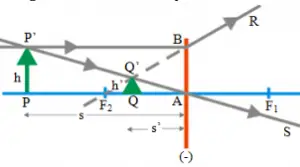
s = do = ระยะห่างของวัตถุ, s' = di = ระยะห่างของภาพ, h = P P' = ความสูงของวัตถุ, h' = Q Q' = ความสูงของภาพ, F 1 และ F 2 = จุดโฟกัสของเลนส์เว้า
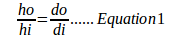
รูปสามเหลี่ยม P'AP คล้ายกับรูปสามเหลี่ยม Q'AQ ดังนั้น:
รูปสามเหลี่ยม BF 2 A คล้ายกับรูปสามเหลี่ยม Q'F 2 Q โดยที่ระยะ AB = ความสูงของวัตถุ (h) และระยะ F 2 A = ความยาวโฟกัส (f) ของเลนส์เว้า ดังนั้น:
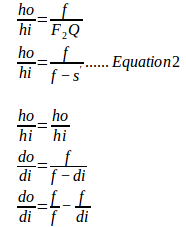
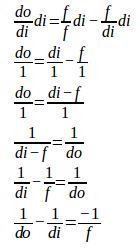
โดยอาศัยกฎเครื่องหมายของเลนส์เว้า สมการนี้สามารถเปลี่ยนแปลงให้คล้ายกับสมการของกระจกโค้งได้
หากระยะภาพ (di) มีเครื่องหมายลบ เนื่องจากลำแสงไม่ผ่านภาพ
และระยะโฟกัส (f) จะมีเครื่องหมายลบด้วย เนื่องจากแสงไม่สามารถผ่านจุดโฟกัสของเลนส์เว้าได้ (เปรียบเทียบกับภาพการเกิดภาพด้านบน) จากข้อความนี้ สมการของเลนส์เว้าจึงเปลี่ยนเป็น:
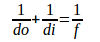
do = ระยะห่างของวัตถุ, di = ระยะห่างของภาพ, f = ความยาวโฟกัส
กำลังขยายของภาพ (เมตร)
สังเกตภาพที่เกิดขึ้นด้านบน สามเหลี่ยม P'AP และ Q'AQ มีความคล้ายคลึงกัน ดังนั้นเราจึงสามารถหาความสัมพันธ์ระหว่างระยะห่างของวัตถุและระยะห่างของภาพกับความสูงของวัตถุและความสูงของภาพได้:

สมการนี้สามารถเขียนใหม่ได้ดังนี้ โดยเพิ่มค่า m เข้าไป:
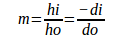
m = กำลังขยายของภาพ
ho = ความสูงของวัตถุ (เป็นค่าบวกถ้าอยู่เหนือแกนหลักหรือวัตถุอยู่ในแนวตั้ง)
hi = ความสูงของภาพ (ค่าเป็นบวกหากอยู่เหนือแกนหลักหรือภาพตั้งตรง)
do = ระยะห่างของวัตถุ (ค่าเป็นบวกหากลำแสงผ่านวัตถุ)
di = ระยะห่างของภาพ (เป็นค่าบวกหากลำแสงผ่านภาพหรือภาพเป็นภาพจริง)
