ਕੰਪੋਨੈਂਟਸ ਦੀ ਵਰਤੋਂ ਕਰਕੇ ਵੈਕਟਰ ਜੋੜਨਾ - ਸਮੱਸਿਆਵਾਂ ਅਤੇ ਹੱਲ
1. ਹੇਠਾਂ ਦਿੱਤੀ ਤਸਵੀਰ ਵਿੱਚ ਦਰਸਾਏ ਗਏ ਤਿੰਨ ਵੈਕਟਰ।
V1 = 30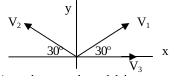
ਵੀ 2 = 30
ਵੀ 3 = 40
ਨਤੀਜੇ ਵਜੋਂ ਵੈਕਟਰ ਕੀ ਹਨ?
ਜਾਣਿਆ ਜਾਂਦਾ ਹੈ:
V 1 = 30, V 1 ਅਤੇ x ਧੁਰੇ ਵਿਚਕਾਰ ਕੋਣ = 30 o
V 2 = 30, V 2 ਅਤੇ x ਧੁਰੇ ਵਿਚਕਾਰ ਕੋਣ = 30 o
V 3 = 40, V 3 ਅਤੇ x ਧੁਰੇ ਵਿਚਕਾਰ ਕੋਣ = 0 o
ਲੋੜੀਂਦਾ: ਨਤੀਜੇ ਵਜੋਂ ਵੈਕਟਰ
ਹੱਲ:
V 1x = (V 1 )(cos 30 o ) = (30)(0.5√3) = 15√3। ਸਕਾਰਾਤਮਕ ਕਿਉਂਕਿ ਇਹ ਵੈਕਟਰ ਕੰਪੋਨੈਂਟ ਸਕਾਰਾਤਮਕ x ਧੁਰੇ (ਸੱਜੇ ਪਾਸੇ) ਦੇ ਨਾਲ-ਨਾਲ ਇਸ਼ਾਰਾ ਕਰਦਾ ਹੈ।
V 1y = (V 1 )(sin 30 o ) = (30)(0.5) = 15. ਸਕਾਰਾਤਮਕ ਕਿਉਂਕਿ ਇਹ ਵੈਕਟਰ ਕੰਪੋਨੈਂਟ ਸਕਾਰਾਤਮਕ y ਧੁਰੇ (ਉੱਪਰ ਵੱਲ) ਦੇ ਨਾਲ-ਨਾਲ ਇਸ਼ਾਰਾ ਕਰਦਾ ਹੈ।
V 2x = (V 2 )(cos 30 o ) = (30)(0.5√3) = -15√3। ਨੈਗੇਟਿਵ ਕਿਉਂਕਿ ਇਹ ਵੈਕਟਰ ਕੰਪੋਨੈਂਟ ਨੈਗੇਟਿਵ x ਧੁਰੇ (ਖੱਬੇ ਪਾਸੇ) ਦੇ ਨਾਲ-ਨਾਲ ਇਸ਼ਾਰਾ ਕਰਦਾ ਹੈ।
V 2y = (V 2 )(sin 30 o ) = (30)(0.5) = 15. ਸਕਾਰਾਤਮਕ ਕਿਉਂਕਿ ਇਹ ਵੈਕਟਰ ਕੰਪੋਨੈਂਟ ਸਕਾਰਾਤਮਕ y ਧੁਰੇ (ਉੱਪਰ ਵੱਲ) ਦੇ ਨਾਲ-ਨਾਲ ਇਸ਼ਾਰਾ ਕਰਦਾ ਹੈ।
V 3x = (V 3 )(cos 0 o ) = (40)(1) = 40। ਸਕਾਰਾਤਮਕ ਕਿਉਂਕਿ ਇਹ ਵੈਕਟਰ ਕੰਪੋਨੈਂਟ ਸਕਾਰਾਤਮਕ x ਧੁਰੇ (ਸੱਜੇ ਪਾਸੇ) ਦੇ ਨਾਲ-ਨਾਲ ਇਸ਼ਾਰਾ ਕਰਦਾ ਹੈ।
V 3y = (V 3 )(sin 0 o ) = (40)(0) = 0
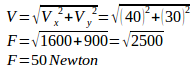
ਨਤੀਜੇ ਵਜੋਂ ਆਉਣ ਵਾਲੇ ਵੈਕਟਰਾਂ ਦੇ ਹਿੱਸੇ:
V x = V 1x – V 2x + V 3x = 15√3 – 15√3 + 40 = 40
V y = V 1y + V 2y + V 3y = 15 + 15 = 30
2. ਦੋ ਬਲ ਇੱਕ ਦੂਜੇ ਦੇ ਲੰਬਵਤ ਹਨ, F 1 = 12 N ਅਤੇ F 2 = 5 N। ਦੋਵਾਂ ਬਲਾਂ ਦਾ ਨਤੀਜਾ ਕੀ ਹੈ?
ਜਾਣਿਆ ਜਾਂਦਾ ਹੈ:
ਬਲ 1 (F 1 ) = 12 ਨਿਊਟਨ
ਬਲ 2 (F 2 ) = 5 ਨਿਊਟਨ
ਲੋੜੀਂਦਾ: ਨਤੀਜੇ ਵਜੋਂ ਵੈਕਟਰ ( ΣF)
ਹੱਲ:
ΣF 2 = F 1 2 + F 2 2 = 12 2 + 5 2 = 144 + 25 = 169
ΣF = √ 169 = 13 ਨਿਊਟਨ
3. ਤਿੰਨ ਵੈਕਟਰ,
V1 = 30
ਵੀ 2 = 30
ਵੀ 3 = 40
ਨਤੀਜੇ ਵਜੋਂ ਆਉਣ ਵਾਲੇ ਵੈਕਟਰਾਂ ਦਾ ਪਤਾ ਲਗਾਓ।
ਜਾਣਿਆ ਜਾਂਦਾ ਹੈ:
v 1 = 30, ਰਿਣਾਤਮਕ x ਧੁਰੇ ਦੇ ਆਲੇ-ਦੁਆਲੇ 30 o ਬਣਦਾ ਹੈ
v 2 = 30, ਸਕਾਰਾਤਮਕ x ਧੁਰੇ ਦੇ ਆਲੇ-ਦੁਆਲੇ 30 o ਬਣਾਉਂਦਾ ਹੈ
v 3 = 40, ਸਕਾਰਾਤਮਕ x ਧੁਰੇ ਦੇ ਆਲੇ-ਦੁਆਲੇ 0 o ਬਣਾਉਂਦਾ ਹੈ
ਲੋੜੀਂਦਾ: ਨਤੀਜੇ ਵਜੋਂ ਵੈਕਟਰ
ਹੱਲ:
ਵੈਕਟਰਾਂ ਦੇ ਹਿੱਸੇ:
v 1x = v 1 cos 30 o = (30)(0.5 √ 3) = -15 √ 3 ( ਨਕਾਰਾਤਮਕ ਕਿਉਂਕਿ ਇਹ ਵੈਕਟਰ ਕੰਪੋਨੈਂਟ ਨਕਾਰਾਤਮਕ x ਧੁਰੇ (ਖੱਬੇ ਪਾਸੇ) ਦੇ ਨਾਲ-ਨਾਲ ਇਸ਼ਾਰਾ ਕਰਦਾ ਹੈ )
v 1y = v 1 sin 30 o = (30)(0.5) = 15 ( ਧਨਾਤਮਕ ਕਿਉਂਕਿ ਇਹ ਵੈਕਟਰ ਕੰਪੋਨੈਂਟ ਧਨਾਤਮਕ y ਧੁਰੇ (ਉੱਪਰ ਵੱਲ) ਦੇ ਨਾਲ-ਨਾਲ ਇਸ਼ਾਰਾ ਕਰਦਾ ਹੈ )
v 2x = v 2 cos 30 o = (30)(0.5 √ 3) = 15 √ 3 ( ਧਨਾਤਮਕ ਕਿਉਂਕਿ ਇਹ ਵੈਕਟਰ ਕੰਪੋਨੈਂਟ ਧਨਾਤਮਕ x ਧੁਰੇ (ਸੱਜੇ ਪਾਸੇ ) ਦੇ ਨਾਲ-ਨਾਲ ਇਸ਼ਾਰਾ ਕਰਦਾ ਹੈ )
v 2y = v 2 sin 30 o = (30)(0.5) = 15 ( ਧਨਾਤਮਕ ਕਿਉਂਕਿ ਇਹ ਵੈਕਟਰ ਕੰਪੋਨੈਂਟ ਧਨਾਤਮਕ y ਧੁਰੇ (ਉੱਪਰ ਵੱਲ) ਦੇ ਨਾਲ-ਨਾਲ ਇਸ਼ਾਰਾ ਕਰਦਾ ਹੈ। )
v 3x = v 3 cos 0 o = (40)(1) = 40 ( ਧਨਾਤਮਕ ਕਿਉਂਕਿ ਇਹ ਵੈਕਟਰ ਕੰਪੋਨੈਂਟ ਧਨਾਤਮਕ x ਧੁਰੇ (ਸੱਜੇ ਪਾਸੇ) ਦੇ ਨਾਲ-ਨਾਲ ਇਸ਼ਾਰਾ ਕਰਦਾ ਹੈ। )
v 3y = v 3 ਪਾਪ 0 o = (40)(0) = 0
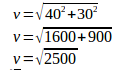
ਨਤੀਜੇ ਵਜੋਂ ਆਉਣ ਵਾਲੇ ਵੈਕਟਰਾਂ ਦੇ ਹਿੱਸੇ:
v x = – v 1x + v 2x + v 3x = -15 √ 3 + 15 √ 3 + 40 = 40
v y = v 1y + v 2y + v 3y = 15 + 15 = 30
ਨਤੀਜਾ ਵੈਕਟਰ:
4. ਹੇਠਾਂ ਦਿੱਤੇ ਚਿੱਤਰ ਵਿੱਚ ਦਰਸਾਏ ਗਏ ਤਿੰਨ ਵੈਕਟਰਾਂ ਦਾ ਨਤੀਜਾ ਕੀ ਹੈ:
ਜਾਣਿਆ ਜਾਂਦਾ ਹੈ:
F1 = 3 ਨਿਊਟਨ, ਬਣਾ ਦਿੰਦਾ ਹੈ 60o ਸਕਾਰਾਤਮਕ x ਧੁਰੇ ਬਾਰੇ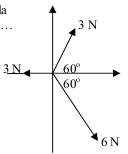
F 2 = 3 ਨਿਊਟਨ, ਰਿਣਾਤਮਕ x ਧੁਰੇ ਦੇ ਆਲੇ-ਦੁਆਲੇ 0 o ਬਣਾਉਂਦਾ ਹੈ
F 3 = 6 ਨਿਊਟਨ , ਨਕਾਰਾਤਮਕ y ਧੁਰੇ ਦੇ ਆਲੇ-ਦੁਆਲੇ 60 o ਬਣਾਉਂਦਾ ਹੈ
ਲੋੜੀਂਦਾ: ਨਤੀਜਾ ਵੈਕਟਰ
ਹੱਲ:
ਵੈਕਟਰਾਂ ਦੇ ਹਿੱਸੇ:
F 1x = F 1 cos 60 o = (3)(0.5) = 1.5 N ( ਧਨਾਤਮਕ ਕਿਉਂਕਿ ਇਹ ਵੈਕਟਰ ਕੰਪੋਨੈਂਟ ਧਨਾਤਮਕ x ਧੁਰੇ (ਸੱਜੇ ਪਾਸੇ ) ਦੇ ਨਾਲ-ਨਾਲ ਇਸ਼ਾਰਾ ਕਰਦਾ ਹੈ )
F 1y = F 1 sin 60 o = (3)(0.5√3) = 1.5√3 N ( ਧਨਾਤਮਕ ਕਿਉਂਕਿ ਇਹ ਵੈਕਟਰ ਕੰਪੋਨੈਂਟ ਧਨਾਤਮਕ y ਧੁਰੇ (ਉੱਪਰ ਵੱਲ) ਦੇ ਨਾਲ-ਨਾਲ ਇਸ਼ਾਰਾ ਕਰਦਾ ਹੈ )
F 2x = F 2 cos 0 o = (3)(1) = -3 N ( ਨਕਾਰਾਤਮਕ ਕਿਉਂਕਿ ਇਹ ਵੈਕਟਰ ਕੰਪੋਨੈਂਟ ਨਕਾਰਾਤਮਕ x ਧੁਰੇ (ਖੱਬੇ ਪਾਸੇ) ਦੇ ਨਾਲ-ਨਾਲ ਇਸ਼ਾਰਾ ਕਰਦਾ ਹੈ )
F 2y = F 2 ਪਾਪ 0 o = (3)(0) = 0
F 3x = F 3 cos 60 o = (6)(0.5) = 3 N ( ਧਨਾਤਮਕ ਕਿਉਂਕਿ ਇਹ ਵੈਕਟਰ ਕੰਪੋਨੈਂਟ ਧਨਾਤਮਕ x ਧੁਰੇ (ਸੱਜੇ ਪਾਸੇ ) ਦੇ ਨਾਲ-ਨਾਲ ਇਸ਼ਾਰਾ ਕਰਦਾ ਹੈ )
F 3y = F 3 sin 60 o = (6)(0.5√3) = -3√3 N ( ਨਕਾਰਾਤਮਕ ਕਿਉਂਕਿ ਇਹ ਵੈਕਟਰ ਕੰਪੋਨੈਂਟ ਨਕਾਰਾਤਮਕ y ਧੁਰੇ ( ਹੇਠਾਂ ਵੱਲ) ਦੇ ਨਾਲ-ਨਾਲ ਇਸ਼ਾਰਾ ਕਰਦਾ ਹੈ )
ਨਤੀਜੇ ਵਜੋਂ ਆਉਣ ਵਾਲੇ ਵੈਕਟਰਾਂ ਦੇ ਹਿੱਸੇ:
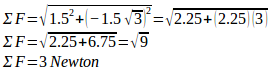
ΣF x = F 1x – F 2x + F 3x = 1.5 N – 3 N + 3 N = 1.5 N
ΣF y = F 1y + F 2y – F 3y = 1.5√3 N + 0 N – 3√3 N = -1.5√3 N
ਨਤੀਜਾ ਵੈਕਟਰ:
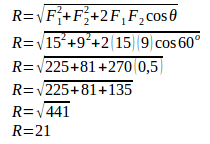
5. ਦੋ ਬਲ, F 1 = 15 N ਅਤੇ F 2 = 9 N। ਦੋਵਾਂ ਵੈਕਟਰਾਂ ਵਿਚਕਾਰ ਕੋਣ 60° ਹੈ। ਵੈਕਟਰਾਂ ਦਾ ਨਤੀਜਾ ਕੀ ਹੈ?
ਲੋੜੀਂਦਾ:
ਬਲ 1 (F 1 ) = 15 ਨਿਊਟਨ
ਬਲ 2 (F 2 ) = 9 ਨਿਊਟਨ
ਕੋਣ ( θ) = 60 o
ਲੋੜੀਂਦਾ: ਨਤੀਜਾ ਵੈਕਟਰ
ਹੱਲ:
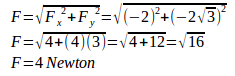
6. ਹੇਠਾਂ ਦਿੱਤੇ ਚਿੱਤਰ ਵਿੱਚ ਦਰਸਾਏ ਗਏ ਤਿੰਨ ਵੈਕਟਰਾਂ ਦਾ ਨਤੀਜਾ ਕੀ ਹੈ?
ਜਾਣਿਆ ਜਾਂਦਾ ਹੈ:
F1 = 20 ਨਿਊਟਨ, F ਵਿਚਕਾਰ ਕੋਣ1 ਅਤੇ x ਧੁਰਾ = 0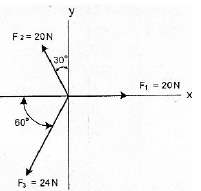
F 2 = 20 ਨਿਊਟਨ, F 2 ਅਤੇ x ਧੁਰੇ ਵਿਚਕਾਰ ਕੋਣ = 60
F 3 = 24 ਨਿਊਟਨ, F 3 ਅਤੇ x ਧੁਰੇ ਵਿਚਕਾਰ ਕੋਣ = 60
ਲੋੜੀਂਦਾ: ਨਤੀਜਾ ਵੈਕਟਰ
ਹੱਲ:
ਵੈਕਟਰਾਂ ਦੇ ਹਿੱਸੇ:
F 1x = (F 1 )(cos 0) = (20)(1) = 20। ਸਕਾਰਾਤਮਕ ਕਿਉਂਕਿ ਇਹ ਵੈਕਟਰ ਕੰਪੋਨੈਂਟ ਸਕਾਰਾਤਮਕ x ਧੁਰੇ (ਸੱਜੇ ਪਾਸੇ ) ਦੇ ਨਾਲ-ਨਾਲ ਇਸ਼ਾਰਾ ਕਰਦਾ ਹੈ।
F 1y = (F 1 )(sin 0) = (20)(0) = 0
F 2x = (F 2 )(cos 60) = (20)(0.5) = -10। ਨੈਗੇਟਿਵ ਕਿਉਂਕਿ ਇਹ ਵੈਕਟਰ ਕੰਪੋਨੈਂਟ ਨੈਗੇਟਿਵ x ਧੁਰੇ (ਖੱਬੇ ਪਾਸੇ) ਦੇ ਨਾਲ-ਨਾਲ ਇਸ਼ਾਰਾ ਕਰਦਾ ਹੈ।
F 2y = (F 2 )(sin 60) = (20)(0.5√3) = 10√3। ਸਕਾਰਾਤਮਕ ਕਿਉਂਕਿ ਇਹ ਵੈਕਟਰ ਕੰਪੋਨੈਂਟ ਸਕਾਰਾਤਮਕ y ਧੁਰੇ (ਉੱਪਰ ਵੱਲ) ਦੇ ਨਾਲ-ਨਾਲ ਇਸ਼ਾਰਾ ਕਰਦਾ ਹੈ।
F 3x = (F 3 )(cos 60) = (24)(0.5) = -12। ਨੈਗੇਟਿਵ ਕਿਉਂਕਿ ਇਹ ਵੈਕਟਰ ਕੰਪੋਨੈਂਟ ਨੈਗੇਟਿਵ x ਧੁਰੇ (ਖੱਬੇ ਪਾਸੇ) ਦੇ ਨਾਲ-ਨਾਲ ਇਸ਼ਾਰਾ ਕਰਦਾ ਹੈ।
F 3y = (F 3 )(sin 60) = (24)(0.5√3) = -12√3. N ਨੈਗੇਟਿਵ ਕਿਉਂਕਿ ਇਹ ਵੈਕਟਰ ਕੰਪੋਨੈਂਟ ਨੈਗੇਟਿਵ y ਧੁਰੇ ( ਹੇਠਾਂ ਵਾਰਡ) ਦੇ ਨਾਲ-ਨਾਲ ਇਸ਼ਾਰਾ ਕਰਦਾ ਹੈ।
ਨਤੀਜੇ ਵਜੋਂ ਆਉਣ ਵਾਲੇ ਵੈਕਟਰਾਂ ਦੇ ਹਿੱਸੇ:
F x = F 1x – F 2x – F 3x = 20 – 10 – 12 = -2
F y = F 1y + F 2y – F 3y = 0 + 10√3 – 12√3 = -2√3
ਨਤੀਜਾ ਵੈਕਟਰ: