Карно мөчлөг - асуудлууд ба шийдэл
1. Хэрэв хөдөлгүүрийн шингээсэн дулаан ( Q1 ) = 10,000 Жоуль бол Карно хөдөлгүүрийн хийдэг ажил хэд вэ?
Мэдэгдэж байгаа: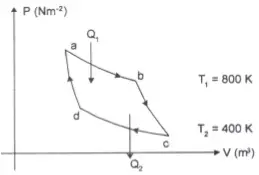
Бага температур (T2 ) = 400 К
Өндөр температур (T1 ) = 800 К
Дулааны оролт (Q 1 ) = 10,000 Жоул
Хүсэж буй ажил: Карно хөдөлгүүрээр хийгдсэн ажил (W)
Шийдэл:
Карно хөдөлгүүрийн үр ашиг:
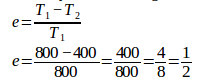
Ажлыг Карно хөдөлгүүрээр гүйцэтгэсэн:
W = e Q 1
W = (1/2)(10,000) = 5000 Жоул
2.
Дээрх графикт үндэслэн хөдөлгүүрийн нэг мөчлөгт хийх ажил хэд вэ?
Мэдэгдэж байгаа: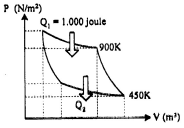
Бага температур (T L ) = 400 K
Өндөр температур (T H ) = 600 K
Дулааны оролт (Q 1 ) = 600 Жоул
Хайж байна: Ажлыг Карно хөдөлгүүр (W) гүйцэтгэсэн.
Шийдэл:
Карно хөдөлгүүрийн үр ашиг:
Карно хөдөлгүүрийн хийсэн ажил: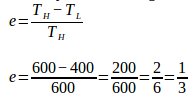
W = e Q 1
W = (1/3)(600) = 200 Жоул
3. Доорх график дээр үндэслэн Карно хөдөлгүүрийн үр ашиг хэд вэ?
Мэдэгдэж байгаа: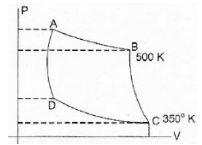
Бага температур (T L ) = 350 K
Өндөр температур (T H ) = 500 K
Хүсэж буй зүйл: Карно хөдөлгүүрийн үр ашиг (e)
Шийдэл:
Карно хөдөлгүүрийн үр ашиг:
e = (TH – TH ) / TH
e = (500 – 350) / 500
e = 150 / 500
e = 0.3 байна
e = 30/100 = 30%
4. Доорх график дээр үндэслэн дулааны хөдөлгүүрийн өндөр температур нь 600 К, доод температур нь 400 К байна. Хэрэв хөдөлгүүрийн хийсэн ажил Вт бол дулааны гарц хэд вэ?
Мэдэгдэж байгаа: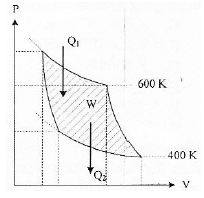
Бага температур (T L ) = 400 K
Өндөр температур (T H ) = 600 K
Хүссэн: дулаан гаралт ( Q2 )
Шийдэл:
Карно хөдөлгүүрийн үр ашиг:
e = (TH – TH ) / TH
e = (600 – 400) / 600
e = 200 / 600
e = 1/3
Карно хөдөлгүүрийн хийсэн ажил:
W = e Q 1
W = хөдөлгүүрийн хийсэн ажил, e = үр ашиг, Q1 = дулааны оролт
W = (1/3)(Q 1 )
3W = Q 1
Дулааны гаралт:
А2 = А1 – W
Q 2 = 3W – W
Q 2 = 2W
5. Доорх графикт үндэслэн, хэрэв дулааны гаралт 3000 Жоуль бол оролтын дулаан хэд вэ.
Мэдэгдэж байгаа:
Бага температур (T)L) = 500 K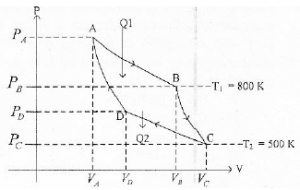
Өндөр температур (T H ) = 800 K
Дулааны гаралт (Q2 ) = 3000 Жоул
Хүссэн зүйл: Дулааны оролт (Q 1 )
Шийдэл:
Карно хөдөлгүүрийн үр ашиг:
e = (TH – TH ) / TH
e = (800 – 500) /8600
e = 300 / 800
e = 3/8
Карно хөдөлгүүрийн хийсэн ажил:
W = e Q 1
W = (3/8)(Q 1 )
8W/3 = Q 1
А2 = А1 – W
Q 2 = 8W/3 – 3W/3
Q 2 = 5W/3
3Q 2 = 5W
W = 3Q 2 /5 = 3(3000)/5 = 9000/5 = 1800
Хөдөлгүүрийн шингээсэн дулаан:
Q 1 = W + Q 2 = 1800 + 3000 = 4800 Жоул
6. Карно хөдөлгүүр нь 800 Кельвин өндөр температурт дулааныг шингээдэг бөгөөд Карно хөдөлгүүрийн үр ашиг 50% байна. Хэрэв бага температурыг тогтмол байлгавал үр ашгийг 80% хүртэл нэмэгдүүлэх өндөр температур хэд вэ?
Мэдэгдэж байгаа:
Хэрэв өндөр температур (T₂H₂ ) = 800 K бол үр ашиг (e) = 50% = 0.5
Хүсэж буй зүйл: Хэрэв үр ашиг (e) = 80% = 0.8 байвал өндөр температур (T H )
Шийдэл:
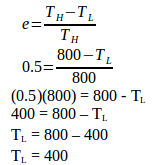
Бага температур = 400 Кельвин
Хэрэв үр ашиг (e) = 80% бол өндөр температур (TH) хэд вэ?
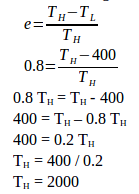
Өндөр температур = 2000 Кельвин
7. Карно хөдөлгүүр нь 600 Кельвиний өндөр температурт 40%-ийн үр ашигтай ажилладаг. Хэрэв хөдөлгүүрийн үр ашиг 75% бөгөөд бага температурыг тогтмол байлгавал өндөр температур хэд вэ?
Мэдэгдэж байгаа:
Хэрэв өндөр температур (T₂H₂ ) = 600 K бол үр ашиг (e) = 40% = 0.4
Хүсэж буй зүйл: Хэрэв үр ашиг (e) = 75% = 0.75 байвал өндөр температур (T H )
Шийдэл:
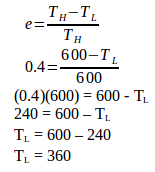
Өндөр температур (TH) хэрэв үр ашиг (e) = 75% бол ?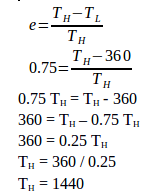
Өндөр температур = 1440 Кельвин
- Карно мөчлөг гэж юу вэ? хариултКарно цикл нь хамгийн үр ашигтай эргэлттэй дулааны хөдөлгүүрийн циклийг төлөөлдөг онолын термодинамик цикл юм. Энэ нь хоёр изотермийн процесс ба хоёр адиабат процессоос бүрдэнэ.
- Карно мөчлөгийг яагаад хамгийн тохиромжтой мөчлөг гэж үздэг вэ? хариултКарно циклийг хамгийн тохиромжтой гэж үздэг, учир нь энэ нь аливаа дулааны хөдөлгүүрийн үр ашгийн дээд хязгаарыг илэрхийлдэг. Ижил хоёр температурын савны хооронд ажилладаг Карно хөдөлгүүрээс илүү үр ашигтай ямар ч бодит хөдөлгүүр байхгүй.
- Карнотын мөчлөгт ямар дөрвөн процесс явагддаг вэ? хариултКарнотын мөчлөгийн дөрвөн процесс нь:
- Өндөр температурт изотермаль тэлэлт .
- Адиабат тэлэлт (систем дулаан тусгаарлалттай бөгөөд хөрдөг).
- Бага температурт изотермаль шахалт .
- Адиабат шахалт (систем нь дулаан тусгаарлалттай бөгөөд халаадаг).
- Карно цикл дээр ажилладаг жинхэнэ дулааны хөдөлгүүр яагаад байдаггүй вэ? хариултБодит хөдөлгүүрүүд нь үрэлт гэх мэт эргэлт буцалтгүй алдагдалтай байдаг бөгөөд адиабат процессын үед төгс дулаалгыг хадгалж чаддаггүй. Цаашилбал, Карно циклд шаардлагатай хязгааргүй удаан изотермийн процессуудыг хэрэгжүүлэх нь практик биш юм.
- Карно хөдөлгүүрийн үр ашиг хэд вэ? хариултҮр ашиг Хоёр температурын савны хооронд ажиллаж буй Карно хөдөлгүүрийн (халуун) ба (ханиад)-ыг дараах байдлаар өгнө:
температур нь Кельвинээр хэмжигддэг газар.
- Карно хөдөлгүүр яагаад 100% үр ашигтай байж чадахгүй байна вэ? хариултКарно хөдөлгүүрийн үр ашиг нь халуун ба хүйтэн савны хоорондох температурын зөрүүнээс хамаарна. 100% үр ашгийг хангахын тулд хүйтэн савны температур абсолют тэг (0 Кельвин) байх шаардлагатай бөгөөд энэ нь практик дээр хүрэх боломжгүй юм.
- Карнотын мөчлөгт урвуу байдлын ач холбогдол юу вэ? хариултЭргэлзээтэй байдал нь энтропи үүсгэдэг процесс байхгүй байхыг баталгаажуулдаг бөгөөд энэ нь мөчлөг хамгийн их үр ашигтайгаар ажиллах боломжтой гэсэн үг юм. Аливаа эргэлт буцалтгүй процесс нь мөчлөгийн үр ашгийг бууруулдаг.
- Карнотын мөчлөг нь термодинамикийн хоёрдугаар хуультай хэрхэн холбогддог вэ? хариултКарнотын мөчлөг нь дулааны хөдөлгүүрийн үр ашгийн дээд хязгаарыг тогтоосноор Хоёрдугаар хуулийг бататгадаг. Хоёрдугаар хуулиар ямар ч хөдөлгүүр ижил хоёр температурын хооронд ажилладаг Карнотын хөдөлгүүрээс илүү үр ашигтай байж чадахгүй гэж үздэг.
- Карнотын мөчлөгт гардаг шигээ бодит ертөнцөд изотермаль процессуудыг хийх боломжгүй яагаад байдаг вэ? хариултКарнотын мөчлөгт дүрслэгдсэн изотермаль процесс нь хязгааргүй их хугацаа шаарддаг бөгөөд энэ нь бодит ертөнцөд практик биш юм. Учир нь изотермаль нөхцлийг хадгалахын тулд дулаан дамжуулалт хязгааргүй удаан явагдах ёстой.
-
Карнотын мөчлөг нь инженер, эрдэмтдэд хэрхэн тусалдаг вэ? Хариулт : Карнотын мөчлөг нь дулааны хөдөлгүүрийн хамгийн их үр ашгийн онолын жишиг болдог. Бодит хөдөлгүүрийг Карнотын мөчлөгтэй харьцуулснаар инженер, эрдэмтэд сайжруулах шаардлагатай чиглэлүүдийг тодорхойлж, өөрсдийн дизайны үндсэн хязгаарыг ойлгож чадна.
