복합 현미경 - 문제점과 해결책
1.
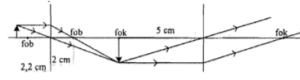
위 그림을 바탕으로 전체 확대율은 얼마입니까? 정상적인 눈을 기준으로 근점(N)은 25cm라고 가정합니다.
알려진 바에 따르면:
대물렌즈의 초점거리(f o ) = 2cm
물체와 대물렌즈 사이의 거리(d o ) = 2.2cm
정상인의 근점(N) = 25cm
접안렌즈의 초점 거리(fe ) = 25cm
원하는 값: 전체 확대율(M)
솔루션 :
접안렌즈에 의해 최종 이미지가 무한대에 맺히면 눈은 이완된 상태입니다. 최종 이미지가 무한대에 맺히지 않으면 눈은 이완되지 않은 상태입니다.
위 그림을 보면, 접안렌즈를 통해 형성되는 허상은 무한대에 위치합니다. 최종적으로 무한대에 상이 맺히므로 눈의 피로를 줄여줍니다.
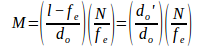
먼저, 대물렌즈로부터 상의 거리(d o ')를 계산합니다. 대물렌즈는 볼록렌즈이므로 상의 거리는 볼록렌즈 의 방정식을 사용하여 계산합니다.
볼록 렌즈의 초점 거리는 양수입니다.
1/d o ' = 1/f o – 1/d o = 1/2 – 1 / 2.2 = 11 / 22 – 10/22 = 1/22
d o ' = 22/1 = 22cm
현미경 의 전체 확대율 :

2.
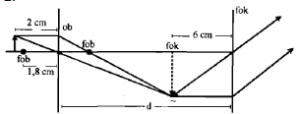
위 그림을 기준으로 현미경의 대물렌즈와 접안렌즈 사이의 거리는 얼마입니까?
솔루션 :
현미경은 대물렌즈와 접안렌즈로 구성됩니다. 현미경은 매우 가까이 있는 물체를 관찰하는 데 사용됩니다. 대물렌즈에 의해 형성된 상은 실상입니다. 접안렌즈는 이 실상을 확대하여 매우 큰 허상을 만듭니다.
알려진 바에 따르면:
대물렌즈의 초점 거리(f o ) = 1.8cm (대물렌즈는 볼록렌즈이므로 초점 거리는 양수입니다.)
접안렌즈의 초점 거리(fe ) = 6cm (접안렌즈는 볼록렌즈이므로 초점 거리는 양수입니다.)
물체와 대물렌즈 사이의 거리(d o ) = 2cm (플러스 부호는 실상을 나타냅니다)
구하는 값: 대물렌즈와 접안렌즈 사이의 거리 (현미경의 길이 = d)
솔루션 :
상과 대물렌즈 사이의 거리 ( d o ') :
1/d o + 1/d o ' = 1/f o
1/d o ' = 1/f o – 1/d o
1/d o ' = 1 / 1.8 – 1/2 = 10/18 – 9/18 = 1/18
d o ' = 18cm
위 그림에서 보는 바와 같이, 실상은 접안렌즈의 초점에 위치한 대물렌즈에 의해 형성됩니다.
대물렌즈와 접안렌즈 사이의 거리:
l = d o ' + f e = 18cm + 6cm = 24cm
3.
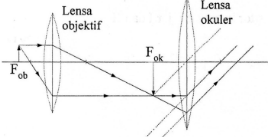
물체와 대물렌즈 사이의 거리는 1.1cm이고, 대물렌즈의 초점거리는 1cm, 접안렌즈의 초점거리는 5cm입니다. 이 현미경의 전체 배율은 얼마입니까?
알려진 바에 따르면:
물체와 대물렌즈 사이의 거리(d o ) = 1.1cm
대물렌즈의 초점 거리(f o ) = 1cm (대물렌즈는 볼록렌즈이므로 초점 거리는 양수입니다.)
접안렌즈의 초점 거리(fe ) = 5cm (접안렌즈는 볼록렌즈이므로 초점 거리는 양수입니다.)
원하는 값: 전체 확대율(M)
솔루션 :
현미경의 전체 배율은 대물렌즈의 배율(m o )과 접안렌즈의 각배율(Me ) 의 곱입니다.
대물렌즈의 배율:
대물렌즈의 선형 배율 (m ob ) 에 대한 방정식 :
m o = h o '/h o = d o '/d o = (l – f e )/d o
어디에
h o ' = 대물렌즈에 의해 형성된 상의 높이
h o = 물체의 높이
d o ' = 대물렌즈에 의해 형성된 실상과 대물렌즈 사이의 거리
d o = 물체와 대물렌즈 사이의 거리
f e = 접안렌즈의 초점 거리
l = 현미경의 길이 = 두 렌즈 사이의 거리 = 대물렌즈에 의해 형성된 실상 사이의 거리(d o ' ) + 접안렌즈의 초점 거리 f e )
대물렌즈에 의해 형성된 실상과 대물렌즈 사이의 거리 ( d o ') :
먼저 실상과 대물렌즈 사이의 거리를 측정합니다.
1/d o + 1/d o ' = 1/f o
1/d o ' = 1/f o – 1/d o
1/d o ' = 1/1 – 1 / 1.1 = 11/11 – 10/11 = 1/11
d o ' = 11cm
대물렌즈에 의해 형성된 실상은 위 그림과 같이 접안렌즈의 초점에 위치합니다.
대물렌즈의 배율:
m o = d o ' / d o = 11 cm / 1.1 cm = 10
접안렌즈의 확대율:
눈이 이완된 상태라면 접안렌즈의 확대율(Me ) :
Me = N / fe
어디에
N = 눈의 근점(25cm)
f e = 접안렌즈의 초점 거리 = 5cm
접안렌즈의 각배율 ( Me ) :
Me = N / fe = 25cm / 5cm = 5
현미경의 전체 확대율:
M = m o x M e = 10 x 5 = 50
4.
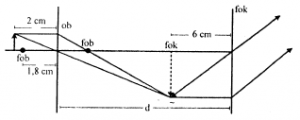
현미경의 대물렌즈와 접안렌즈 사이의 거리.
알려진 바에 따르면:
물체와 대물렌즈 사이의 거리(d o ) = 2cm
대물렌즈의 초점거리(f o ) = 1.8cm
실상과 접안렌즈 사이의 거리(d e ) = 6cm
접안렌즈의 초점 거리(fe ) = 6cm
필요한 정보: 대물렌즈와 접안렌즈 사이의 거리(현미경의 길이)
솔루션 :
눈이 이완된 상태라면, 접안렌즈에 의해 형성되는 최종 이미지는 무한대에 있습니다. 대물렌즈에 의해 형성된 실상이 접안렌즈의 초점에 위치할 때, 최종 이미지는 무한대에 있게 됩니다.
대물렌즈와 접안렌즈 사이의 거리(l) = 대물렌즈에 의해 형성된 실상 사이의 거리(d o ' ) + 접안렌즈의 초점 거리(fe ).
실상과 대물렌즈 사이의 거리(d o '):
1/d o + 1/d o ' = 1/f o
1/d o ' = 1/f o – 1/d o
1/d o ' = 1 / 1.8 – 1/2
1/d o ' = 10/18 – 9/18 = 1/18
d o ' = 18cm
대물렌즈와 접안렌즈 사이의 거리(현미경의 길이):
l = do ' + f e
l = 18cm + 6cm
l = 24cm
- 복합 현미경이란 무엇인가요?
- 답변 : 복합 현미경은 여러 개의 렌즈를 사용하여 작은 물체를 확대하는 광학 기기로, 육안으로는 볼 수 없을 정도로 작은 세부 사항까지 관찰할 수 있게 해줍니다.
- 복합 현미경은 단현미경과 어떻게 다른가요?
- 답변 : 단순 현미경은 확대를 위해 렌즈 하나만 사용하지만(돋보기처럼), 복합 현미경은 두 쌍의 렌즈, 즉 시료 가까이에 있는 대물렌즈와 관찰자가 보는 접안렌즈를 사용합니다.
- 복합 현미경의 주요 구성 요소는 무엇이며, 각각의 기능은 무엇입니까?
- 답변 : 주요 부분은 다음과 같습니다.
- 대물렌즈: 이것들은 배율이 서로 다른 여러 개의 렌즈가 시료에 가장 가깝게 배치된 것입니다.
- 접안렌즈(대물렌즈): 이것은 보는 사람이 세상을 바라보는 렌즈입니다.
- 단계: 표본을 놓는 평평한 받침대.
- 콘덴서: 빛을 표본에 집중시킵니다.
- 조명기/광원: 표본을 관찰할 수 있도록 빛을 제공합니다.
- 거친 초점 및 미세 초점 조절 노브: 초점을 조정하세요.
- 답변 : 주요 부분은 다음과 같습니다.
- 복합 현미경의 전체 확대율은 어떻게 결정됩니까?
- 답변 : 전체 배율은 대물렌즈의 배율과 접안렌즈의 배율을 곱하여 결정됩니다.
- 고배율 대물렌즈에 침유를 사용하는 이유는 무엇일까요?
- 답변 : 침유는 현미경의 해상도를 높이는 데 사용됩니다. 침유는 유리와 동일한 굴절률을 가지고 있어 빛의 산란을 줄이고 더 많은 빛이 대물렌즈로 들어갈 수 있도록 합니다.
- 현미경에서 "해상도"라는 용어는 무엇을 의미합니까?
- 답변 : 해상도는 현미경이 매우 가까이 있는 두 지점을 명확하게 구분할 수 있는 능력을 말합니다. 이는 관찰할 수 있는 선명도와 세부 묘사의 수준을 나타냅니다.
- 복합현미경으로 표본을 관찰할 때 염색을 자주 사용하는 이유는 무엇일까요?
- 답변 : 염색은 시료의 각 부분 사이의 대비를 강화하여 현미경으로 특정 구조나 구성 요소를 더 잘 보이게 합니다.
- 복합 현미경에서 "파포컬(parfocal)" 렌즈 시스템이란 무엇입니까?
- 답변 : 파포컬 렌즈 시스템이란 하나의 대물렌즈에 초점이 맞춰지면 다른 대물렌즈들도 거의 초점이 맞춰진다는 것을 의미합니다. 이를 통해 초점을 다시 맞출 필요 없이 대물렌즈를 쉽게 교체할 수 있습니다.
- 단안 현미경과 쌍안 복합 현미경의 차이점은 무엇인가요?
- 답변 : 단안 복합 현미경은 관찰용 접안렌즈가 하나이고, 쌍안 복합 현미경은 접안렌즈가 두 개 있어 더욱 편안한 관찰과 입체감각을 제공합니다.
- 복합 현미경으로 관찰할 때 시료가 매우 얇아야 하는 이유는 무엇일까요?
- 답변 : 시료가 얇으면 더 많은 빛이 통과하여 더 선명한 이미지를 얻을 수 있습니다. 또한, 두꺼운 시료는 현미경의 제한된 초점 심도 때문에 깊이 전체에 걸쳐 초점이 맞지 않을 수 있습니다.
