Էլեկտրական էներգիա կոնդենսատորային շղթաներում՝ խնդիրներ և լուծումներ
1. Որոշեք ստորև նկարում պատկերված շղթայի էլեկտրական էներգիան (1 μF = 10 -6 F):
Հայտնի է.
CAPACITOR 1 (C1) = 3 մկՖ 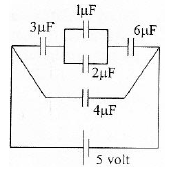
Կոնդենսատոր 2 (C2 ) = 1 μF
Կոնդենսատոր 3 (C3 ) = 2 μF
Կոնդենսատոր 4 (C4 ) = 6 μF
Կոնդենսատոր 5 (C5 ) = 4 μF
Էլեկտրական լարում (Վ) = 5 վոլտ
Փնտրվում է։ Էլեկտրական էներգիա շղթաներում
Լուծում.
Համարժեք կոնդենսատոր՝
Կոնդենսատոր 2-ը և կոնդենսատոր 3-ը միացված են զուգահեռաբար ։ Համարժեք կոնդենսատորը՝
C A = C 2 + C 3 = 1 + 2 = 3 μF
Կոնդենսատոր 1-ը, կոնդենսատոր A-ն և կոնդենսատոր 4-ը միացված են հաջորդաբար ։ Համարժեք կոնդենսատորը՝
1/C B = 1/C 1 + 1/C A + 1/C 4 = 1/3 + 1/3 + 1/6 = 2/6 + 2/6 + 1/6 = 5/6
C B = 6/5 μF
Կոնդենսատոր B-ն և կոնդենսատոր 5-ը միացված են զուգահեռաբար։ Համարժեք կոնդենսատորը՝
C = C B + C 5 = 6/5 + 4 = 6/5 + 16/4 = 24/20 + 80/20 = 104/20 = 5.2 μF
C = 5.2 x 10 -6 Ֆարադ
Էլեկտրական էներգիա շղթայում.
E = ½ CV 2 = ½ (5.2 x 10 -6 )(5 2 ) = (2.6 x 10 -6 )(25)
E = 65 x 10 -6 Ջոուլ
2. Որոշեք ստորև նկարում պատկերված կոնդենսատորային շղթաներում էլեկտրական էներգիան (1 μF = 10 -6 F):
Հայտնի է.
Կոնդենսատոր 1 (C1) = 4 մկՖ 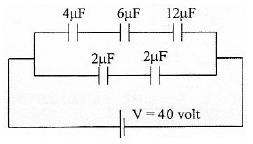
Կոնդենսատոր 2 (C2 ) = 6 μF
Կոնդենսատոր 3 (C3 ) = 12 μF
Կոնդենսատոր 4 (C4 ) = 2 μF
Կոնդենսատոր 5 (C5 ) = 2 μF
Էլեկտրական լարում (V) = 40 վոլտ
Փնտրվում է։ Էլեկտրական էներգիա շղթաներում
Լուծում.
Համարժեք կոնդենսատոր՝
Կոնդենսատոր 1-ը, կոնդենսատոր 2-ը և կոնդենսատոր 3-ը միացված են հաջորդաբար։ Համարժեք կոնդենսատորը՝
1/C A = 1/C 1 + 1/C 2 + 1/C 3 = 1/4 + 1/6 + 1/12 = 3/12 + 2/12 + 1/12 = 6/12
C A = 12/6 = 2 μF
Կոնդենսատոր 4-ը և կոնդենսատոր 5-ը միացված են հաջորդաբար։ Համարժեք կոնդենսատորը՝
1/C B = 1/C 4 + 1/C 5 = 1/2 + 1/2 = 2/2
C B = 2/2 = 1 μF
Կոնդենսատոր A-ն և կոնդենսատոր B-ն զուգահեռաբար միացված են։ Համարժեք կոնդենսատորը՝
C = C A + C B = 2 + 1 = 3 μF
C = 3 x 10 -6 Ֆարադ
Էլեկտրական էներգիան շղթաներում.
E = ½ CV 2 = ½ (3 x 10 -6 )(40 2 ) = (1.5 x 10 -6 )(1600)
E = 2400 x 10 -6 = 2.4 x 10 -3 Ջոուլ
3. Որոշեք ստորև նկարում պատկերված էլեկտրական շղթայում կուտակված էներգիան ։
Հայտնի է.
Կոնդենսատոր 1 (C1) = 4 Ֆ 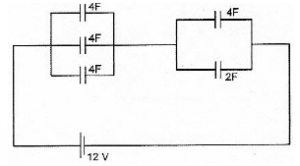
Կոնդենսատոր 2 (C2 ) = 4 F
Կոնդենսատոր 3 (C3 ) = 4 F
Կոնդենսատոր 4 (C4 ) = 4 F
Կոնդենսատոր 5 (C5 ) = 2 F
Էլեկտրական լարում (V) = 12 վոլտ
Փնտրվում է։ Էլեկտրական էներգիա շղթաներում
Լուծում.
Համարժեք կոնդենսատոր՝
Կոնդենսատոր 1-ը, կոնդենսատոր 2-ը և կոնդենսատոր 3-ը միացված են զուգահեռաբար։ Համարժեք կոնդենսատորը՝
C A = C 1 + C 2 + C 3 = 4 + 4 + 4 = 12 F
Կոնդենսատոր 4-ը և կոնդենսատոր 5-ը միացված են զուգահեռաբար։ Համարժեք կոնդենսատորը՝
C B = C 4 + C 5 = 4 + 2 = 6 F
Կոնդենսատոր A-ն և կոնդենսատոր B-ն միացված են հաջորդաբար։ Համարժեք կոնդենսատորը՝
1/C = 1/C A + 1/C B = 1/12 + 1/6 = 1/12 + 2/12 = 3/12
C = 12/3 = 4 Ֆարադ
Էլեկտրական էներգիան շղթաներում.
E = ½ CV 2 = ½ (4) (12 2 ) = (2) (144)
E = 288 Ջոուլ
1. Հարց. Ինչպե՞ս է էներգիան կուտակվում կոնդենսատորում։
Պատասխան՝ Կոնդենսատորի էներգիան կուտակվում է իր թիթեղների միջև գտնվող էլեկտրական դաշտում։ Երբ կոնդենսատորի վրա լարում է կիրառվում, դրական լիցքերը կուտակվում են մեկ թիթեղի վրա, իսկ բացասական լիցքերը՝ հակառակ թիթեղի վրա, ստեղծելով էլեկտրական դաշտ։
2. Հարց. Ո՞րն է կոնդենսատորում կուտակված էներգիայի բանաձևը։
Պատասխան՝ Կոնդենսատորում կուտակված էներգիան (U) տրվում է հետևյալ բանաձևով ՝ �=12��2 որտեղ C-ն տարողունակությունն է, իսկ V-ն՝ կոնդենսատորի վրա լարումը։
3. Հարց. Ի՞նչ է պատահում կոնդենսատորում կուտակված էներգիայի հետ, երբ լարումը կրկնապատկվում է։
Պատասխան՝ Քանի որ էներգիան համեմատական է լարման քառակուսիին (V^2), երբ լարումը կրկնապատկվում է, էներգիան մեծանում է չորս անգամ։
4. Հարց. Ինչո՞ւ կարող է լիցքավորված կոնդենսատորը վտանգավոր լինել, նույնիսկ եթե այն անջատված է իր լարման աղբյուրից:
Պատասխան՝ Լիցքավորված կոնդենսատորը կարող է պահպանել իր կուտակված էներգիան նույնիսկ լարման աղբյուրից անջատված լինելու դեպքում։ Եթե հաղորդիչը (կամ անձը) շփվի ծայրակալների հետ, կուտակված էներգիան կարող է արագորեն արտանետվել՝ հնարավոր վնաս կամ վնաս պատճառելով։
5. Հարց. Ինչպե՞ս է փոխվում կոնդենսատորում կուտակված էներգիան, եթե տարողունակությունը կիսով չափ կրճատվում է՝ միաժամանակ լարումը պահպանելով հաստատուն։
Պատասխան՝ Եթե տարողունակությունը կիսով չափ կրճատվի, իսկ լարումը մնա հաստատուն, կուտակված էներգիան նույնպես կկիսով չափ կրճատվի, քանի որ էներգիան ուղիղ համեմատական է տարողունակությանը։
6. Հարց. Ի՞նչ դեր է խաղում դիէլեկտրիկ նյութը կոնդենսատորում:
Պատասխան՝ Դիէլեկտրիկ նյութը մեծացնում է կոնդենսատորի տարողունակությունը՝ նվազեցնելով թիթեղների միջև արդյունավետ էլեկտրական դաշտը, ինչպես նաև կանխում է թիթեղների միջև լիցքի հաղորդումը։
7. Հարց. Հաջորդական կոնդենսատորային սխեմայում ինչպե՞ս է ընդհանուր տարողունակությունը համեմատվում առանձին տարողունակությունների հետ։
Պատասխան՝ Հաջորդական դասավորության դեպքում ընդհանուր տարողության հակադարձը (1/C_total) առանձին տարողությունների հակադարձերի գումարն է։ Սա նշանակում է, որ հաջորդական դասավորության ընդհանուր տարողությունը միշտ փոքր է հաջորդականության ամենափոքր տարողունակությունից։
8. Հարց. Ինչպե՞ս է հաշվարկվում զուգահեռ միացված կոնդենսատորների ընդհանուր տարողունակությունը:
Պատասխան՝ Զուգահեռ միացված կոնդենսատորների դեպքում ընդհանուր տարողունակությունը առանձին տարողունակությունների գումարն է։
9. Հարց. Ինչո՞ւ է կոնդենսատորը արգելափակում հաստատուն հոսանքը (DC), բայց թույլ է տալիս անցնել փոփոխական հոսանքը (AC):
Պատասխան՝ Կոնդենսատորը արգելափակում է հաստատուն հոսանքը, քանի որ լիովին լիցքավորվելուց հետո այլևս հոսանք չի կարող հոսել: Սակայն, փոփոխական հոսանքի դեպքում լարումը անընդհատ փոխվում է, ինչը հանգեցնում է կոնդենսատորի լիցքավորման և լիցքաթափման, ինչը թույլ է տալիս հոսել արդյունավետ հոսանք:
10. Հարց. Ի՞նչ է պատահում կոնդենսատորի լարման հետ, եթե այն միացված է մարտկոցին և անջատվում է մինչև լրիվ լիցքավորումը։
Պատասխան՝ Կոնդենսատորը կպահպանի անջատման պահին ունեցած լարումը և այլևս չի լիցքավորվի, եթե չմիացվի սնուցման աղբյուրին։
