Ka'idar Torricelli - matsaloli da mafita
1. Bututu mai tsayin santimita 100 cike da ruwa. An sanya ramin Q a 10 santimita sama da ƙasa. Menene nisan kwance (x)?
An sani: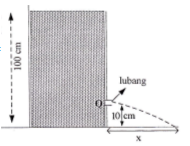
Nisa tsakanin rami da saman ruwan (h) = 100 cm – 10 cm = 90 cm = 0.9 m
Saurin gudu saboda nauyi (g) = 10 m/s 2
Ana so: Nisa na x
Magani:
Gudun ruwan da ke kwarara a ramin
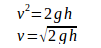
v = gudu , g = hanzari saboda nauyi , h = tazara tsakanin ramin da saman ruwan
Gudun ruwan da ke kwarara a ramin:

Lokacin da ake cikin iska
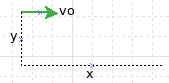 Motsin ruwa daga ramin zuwa ƙasa shine motsi motsiAna iya fahimtar motsin harsashi ta hanyar nazarin sassan motsi na kwance da tsaye daban-daban. Motsin x yana faruwa ne a daidai lokacin gudu kuma motsin y yana faruwa ne a daidai lokacin saurin nauyi.
A cikin wannan matsala, ana nazarin motsi a tsaye a matsayin motsi na faɗuwa kyauta.
Lissafin lokaci a cikin iska ta amfani da lissafin motsi na faɗuwar 'free fall'.
An sani:
Tsayin ramin (y) = 10 cm = 0.1 m
Saurin gudu saboda nauyi (g) = 10 m/s 2
Ana so: Tazarar lokaci (t)
Magani:
y = 1/2 gt 2
0.1 = 1/2 (10) t 2
0.1 = 5 t 2
t 2 = 0.1 / 5
t 2 = 0.02
t = √ daƙiƙa 0.02
Nisa a kwance (x):
An sani:
Saurin farko (vo o = v ox ) = 3√2 m/s
Lokacin da ake watsawa (t) = √0.02 daƙiƙa
Ana so: Nisa a kwance (x)
Magani:
v = x / t
x = vt = (3√2)(√0.02) = (3)(1.41)(0.14) = 0.59 = mita 0.6
2. Tanki mai dauke da ruwa mai tsayin mita 1. A wurin P, akwai rami. Menene saurin kwararar ruwa a ramin. Saurin gudu saboda nauyi shine 10 m/s 2.
An sani:
Nisa tsakanin rami da saman ruwan (h) = 100 cm – 80 cm = 20 cm = 0.2 m 
Saurin gudu saboda nauyi (g) = 10 m/s 2
Ana so: Saurin kwararar ruwa a ramin (v)
Magani:
Gudun ruwan da ke kwarara a ramin:
 3. Babbane baho yana ɗauke da ruwa kuma akwai famfo kamar yadda aka nuna a hoton da ke ƙasa. Idan g = 10 ms-2, to saurin ruwan da ke fitowa daga famfo shine…
An sani: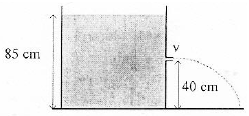
Tsawo (h) = 85 cm – 40 cm = 45 cm = mita 0.45
Saurin gudu saboda nauyi (g) = 10 m/s 2
Ana nema: Gudun ruwa (v)
Magani:
Ka'idar T oricelli ta bayyana cewa saurin ruwa ta cikin rami mai nisa da saman ruwa daidai yake da saurin faɗuwar ruwa daga tsayin h.
Ana ƙididdige saurin ruwa ta amfani da dabarar motsi na faɗuwa kyauta a v t 2 = 2 gh
v t 2 = 2 gh = 2(10)(0.45) = 9
v t = √9 = 3 m/s
4. Baho mai cike da ruwa kuma a bango akwai rami (duba hoton da ke ƙasa ) . Saurin fitar ruwa daga ramin shine… (g = 10 ms -2 )
An sani: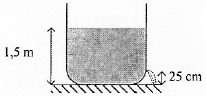
Tsawo (h) = mita 1.5 – mita 0.25 = mita 1.25
Saurin gudu saboda nauyi (g) = 10 m/s 2
Ana nema: Gudun ruwa (v)
Magani:
v t 2 = 2 gh = 2(10)(1.25) = 25
v t = √25 = 5 m/s
5. Tanki mai ɗauke da ruwa har zuwa mita 1 (g = 10 ms -2 ) kuma a bango akwai ramin ɓuya (duba hoton da ke ƙasa ). Saurin fitar ruwa daga ramin shine...
An sani:
Tsawo (h) = mita 1 – mita 0.20 = mita 0.8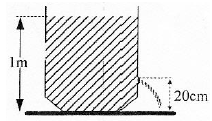
Saurin gudu saboda nauyi (g) = 10 m/s 2
Ana nema: Gudun ruwa (v)
Magani:
v t 2 = 2 gh = 2(10)(0.8) = 16
v t = √16 = 4 m/s
- Menene ka'idar Torricelli ta bayyana?
- amsa: Ka'idar Torricelli ta danganta saurin ruwa da ke fitowa daga rami zuwa tsayin ginshiƙin ruwa da ke sama da buɗewar, tana ɗaukar cewa kwararar ruwa ba ta da ƙarfi, ba ta da ganuwa (babu ɗanko), kuma ba ta da ƙarfi.
- Ta yaya ake bayyana ka'idar Torricelli ta hanyar lissafi?
- amsa: An bayyana ka'idar kamar haka , inda shine saurin kwararar ruwa, saurin gudu ne saboda nauyi, kuma ℎ shine tsayin ginshiƙin ruwa a saman ramin.
- A ƙarƙashin waɗanne zato ne aka samo ka'idar Torricelli?
- amsa: Ka'idar ta ɗauka cewa ruwan ba shi da matsewa kuma ba shi da ƙauri, kwararar ruwan tana nan a tsaye, kuma babu wani ƙarin kuzari da aka ƙara ko aka ɗauka daga ruwan.
- Idan akwati yana da ramuka biyu a zurfin daban-daban, ta yaya saurin ruwan da ke fitowa daga ramukan zai kwatanta?
- amsa: Ruwan da ke fitowa daga ramin da ke kusa da tushe zai yi saurin gudu fiye da ruwan da ke fitowa daga ramin da ke sama. Wannan saboda matsin lamba (da kuma ƙarfin da ke akwai) ya fi girma a zurfin zurfi.
- Me yasa saurin kwararar ruwa ba ya dogara da siffar ko yankin giciye na akwati?
- amsa: Ka'idar Torricelli ta yi la'akari ne kawai da ƙarfin da ake da shi saboda tsayin ginshiƙin ruwa a saman ramin. Siffar akwati ba ta canza wannan tsayin ba, don haka saurin kwararar ruwa ya kasance iri ɗaya.
- Ta yaya ainihin saurin ruwan da ke fitowa daga rami ya bambanta da hasashen da ka'idar Torricelli ta yi a cikin yanayi na zahiri?
- amsa: A cikin yanayi na zahiri, abubuwa kamar ɗanko mai ruwa, turbulen iska, da siffar ramin na iya shafar ainihin saurin, wanda galibi yakan sa ya zama ƙasa da abin da ka'idar Torricelli ta annabta.
- Menene alaƙar da ke tsakanin ka'idar Torricelli da kuma kiyaye makamashi?
- amsa: Ka'idar Torricelli ta samo asali ne daga kiyaye makamashin injiniya. Tana daidaita kuzarin da ke saman ruwan da makamashin motsi a saman.
- Idan akwai rami a saman akwati mai cike da ruwa, ta yaya ka'idar Torricelli ta kwatanta saurin kwararar ruwa?
- amsa: Tsayin ℎ A saman ramin zai zama sifili, don haka bisa ga ka'idar Torricelli, saurin kwararar ruwa zai zama sifili.
- Ta yaya kasancewar matsin lamba a yanayi ke shafar hasashen ka'idar Torricelli?
- amsa: Ka'idar Torricelli ta ɗauka cewa akwatin yana buɗe ga sararin samaniya, don haka, matsin lamba na yanayi yana aiki daidai gwargwado a saman ruwan. Ana soke wannan matsin lamba idan aka yi la'akari da bambancin matsin lamba a tsayin ruwan, don haka ka'idar ta kasance mai inganci.
- Me ke faruwa da saurin kwararar ruwa yayin da ruwan da ke cikin akwati ke raguwa?
- amsa: Yayin da matakin ruwa ke raguwa, tsayin zai ragu ℎ sama da ramin yana raguwa. A cewar ka'idar Torricelli, saurin kwararar ruwa zai ragu kamar yadda .
Waɗannan tambayoyi da amsoshi suna bincika tushe, abubuwan da suka shafi, da kuma aikace-aikacen ka'idar Torricelli a cikin yanayin ruwa.
