Mexanik to'lqinlarning ta'rifi formulasi va turlari haqida maqolalar
MEXANIK TO'LQINLARNING TA'RIFI
Agar siz arqonning bir uchini ushlab, yuqoriga va pastga tebratsangiz, arqon bo'ylab tarqaladigan to'lqin paydo bo'ladi. Yoki agar siz suvga tosh tashlasangiz, suv yuzasida to'lqinlar paydo bo'ladi. Arqon va suv faqat yuqoriga va pastga tebranadi, gorizontal harakatlanmaydi. Arqondagi to'lqinlar va suvdagi to'lqinlar mexanik to'lqinlarga misoldir.
Mexanik to'lqinlar - bu muhit orqali tarqaladigan to'lqinlar. Mexanik to'lqinlarga misollar sifatida arqonlar yoki torlardagi to'lqinlar, suvdagi to'lqinlar, havo muhitida tarqaladigan tovush to'lqinlari va tuproq muhitida tarqaladigan zilzila to'lqinlari kiradi. To'lqinlar tebranadigan muhit muvozanat nuqtasi atrofida bo'lganda, ular uzoq masofalarga tarqalishi mumkin.
MEXANIK TO'LQINLARNING TURLARI
Shakliga qarab, mexanik to'lqinlar ikki turga bo'linadi: ko'ndalang to'lqinlar va bo'ylama to'lqinlar.
Ko'ndalang to'lqinlar - bu to'lqin harakatining yo'nalishi zarracha harakatining yo'nalishiga perpendikulyar bo'lganda yuzaga keladigan to'lqinlar. Masalan, arqondagi to'lqinlar, suvdagi to'lqinlar.
Agar ipdagi to'lqinlar gorizontal yo'nalishda harakatlansa, ipdagi zarralar vertikal yo'nalishda harakatlanadi. Xuddi shunday, agar suv to'lqinlari gorizontal yo'nalishda harakatlansa, suv zarralari vertikal yo'nalishda harakatlanadi.
Uzunlamasına to'lqinlar - bu to'lqin harakatining yo'nalishi zarracha harakatining yo'nalishiga parallel bo'lganda yuzaga keladigan to'lqinlar. Masalan, prujinalardagi to'lqinlar va havodagi tovush to'lqinlari.
Agar prujinadagi to'lqin gorizontal yo'nalishda harakatlansa, prujinada hosil bo'lgan zichlik va kuchlanish ham gorizontal yo'nalishda oldinga va orqaga harakatlanadi.
Xuddi shunday, agar tovush to'lqini vertikal yo'nalishda harakat qilsa, havo vertikal yo'nalishda qisqaradi va cho'ziladi.
Zilzila to'lqinlari ko'ndalang to'lqinlardan (siljish to'lqinlari deb ataladi) va bo'ylama to'lqinlardan (bosim to'lqinlari deb ataladi) iborat.
MEXANIK TO'LQIN FORMULASI
Transvers to'lqin formulasi
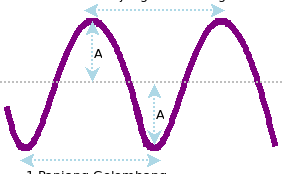
To'lqinlarni tavsiflash uchun bir nechta miqdorlar qo'llaniladi, xususan, amplituda (A), chastota (f), davr (T) va to'lqin tezligi (v).
Amplituda maksimal og'ishdir. Davr - bu fazoda bir xil nuqtadan o'tadigan ketma-ket ikkita to'lqin cho'qqilari/vodiylarining vaqt oralig'i. Chastota - bu vaqt birligida bir xil nuqtadan o'tadigan cho'qqilar/vodiylar soni.
Mexanik to'lqinlar ma'lum bir tezlikda harakatlanadi. To'lqin tezligi formulasi quyidagicha:
v = λ f = λ/T
v = to'lqin tezligi, λ = to'lqin uzunligi, f = chastota, T = davr.
To'lqin uzunligining xalqaro birligi metr, chastota birligi Gerts va davr birligi sekunddir. To'lqin tezligi birligi metr/sekunddir.
Namunaviy muammo:
Ipdagi ko'ndalang to'lqin 2 Gts chastotaga ega (2 ta to'lqin cho'qqisi fazoda bir xil nuqtadan 1 soniya davomida o'tadi) va to'lqin uzunligi 3 metr (eng yaqin ikkita cho'qqi orasidagi masofa 2 metr). To'lqin tezligi qancha?
Ma'lum:
Chastota (f) = 2 Gts
To'lqin uzunligi (λ) = 3 metr
Kerakli: Tezlik (v)
Qarori:
v = λ f = 3 (2) = 6 m/s
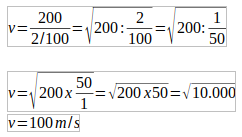
Ko'ndalang to'lqinning muhitdagi tezligi u o'tadigan muhitning tabiatiga bog'liq. Masalan, ipdagi (arqon, ip, sim) to'lqin tezligi ipdagi kuchlanishga (FT) va ipning massa zichligiga (ipning uzunlik birligiga to'g'ri keladigan massasi) bog'liq.

Namunaviy muammo:
To'lqin uzunligi 1 metr va 100 metr uzunlikdagi va 2 kg massali ipda tarqaladi. Arqondagi taranglik 200 N ga teng. Arqondagi to'lqinlarning tezligi qanday?
Ma'lum:
To'lqin uzunligi (λ) = 1 metr
Arqonning uzunligi (L) = 100 metr
Arqonning massasi (m) = 2 kg
Arqonning tarangligi (T) = 200 N
Istalgan: Ipdagi to'lqinlarning tezligi (v)
Qarori:
Uzunlamasına to'lqin formulasi
Muhitdagi bo'ylama to'lqinlarning tezligi u o'tadigan muhitning tabiatiga bog'liq. Qattiq tayoqchalarda tarqaladigan bo'ylama to'lqinlarning tezligi quyidagi formula yordamida hisoblanadi:

v = to'lqin tezligi, E = Yungning elastiklik moduli, ρ = zichlik
Namunaviy muammo:
Po'lat rels bo'ylab harakatlanadigan tovush to'lqinining tezligini hisoblang. Young Steelning elastiklik moduli = 2 x 10 11 N/m2 va po'latning zichligi = 7.8 x 10 3 kg/m3.
Ma'lum:
Po'latning elastiklik moduli (E) = 2 x 10 11 N/ m2
Po'lat zichligi (ρ) = 7.8 x 10 3 kg/m 3
Kerakli: Ovoz to'lqinlarining tezligi
Qarori:

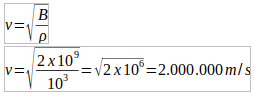
Suyuqlik va gazlarda tarqaladigan bo'ylama to'lqinlarning tezligi quyidagi formula yordamida hisoblanadi: v = to'lqin tezligi, B = massa moduli, ρ = zichlik
Namunaviy muammo:
Suv orqali o'tayotganda bo'ylama to'lqinlarning tezligi qanday?
Suvning katta hajmdagi moduli (B) = 2 x 10 9 N/m 2
Suv zichligi (ρ) = 1000 kg/ m3
Qarori:
Suvda tarqalish paytida uzunlamasına to'lqin tezligi: