วัฏจักรคาร์โนต์ – ปัญหาและวิธีแก้ไข
1. ถ้าความร้อนที่เครื่องยนต์ดูดซับ (Q 1 ) = 10,000 จูล งานที่เครื่องยนต์คาร์โนต์ ทำมีค่าเท่าใด?
เป็นที่รู้จัก: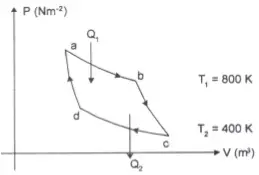
อุณหภูมิต่ำ (T 2 ) = 400 K
อุณหภูมิสูง (T 1 ) = 800 K
ปริมาณความร้อนที่ป้อนเข้า (Q 1 ) = 10,000 จูล
ต้องการ:งานที่ทำโดยเครื่องยนต์คาร์โนต์ (W)
วิธีการแก้:
ประสิทธิภาพของเครื่องยนต์คาร์โนต์:
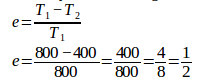
งานดังกล่าวทำโดยใช้เครื่องยนต์คาร์โนต์:
W = e Q 1
W = (1/2)(10,000) = 5000 จูล
2.
จากกราฟข้างต้น งานที่เครื่องยนต์ทำในหนึ่งรอบการทำงานคือเท่าใด?
เป็นที่รู้จัก :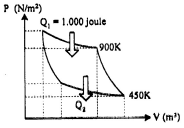
อุณหภูมิต่ำ (T L ) = 400 K
อุณหภูมิสูง (TH ) = 600 K
ปริมาณความร้อนที่ป้อนเข้า (Q 1 ) = 600 จูล
ต้องการ:งานที่ดำเนินการโดยเครื่องยนต์คาร์โนต์ (W)
วิธีการแก้ปัญหา:
ประสิทธิภาพของเครื่องยนต์คาร์โนต์:
งานที่เครื่องยนต์คาร์โนต์ทำ: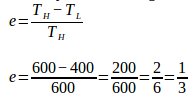
W = e Q 1
W = (1/3)(600) = 200 จูล
3. จากกราฟด้านล่าง ประสิทธิภาพของเครื่องยนต์คาร์โนต์คือเท่าใด?
เป็นที่รู้จัก :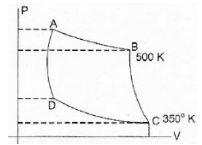
อุณหภูมิต่ำ (T L ) = 350 K
อุณหภูมิสูง (TH ) = 500 K
ต้องการทราบ:ประสิทธิภาพของเครื่องยนต์คาร์โนต์ (e)
วิธีการแก้ปัญหา:
ประสิทธิภาพของเครื่องยนต์คาร์โนต์:
e = (TH – TH ) / TH
e = (500 – 350) / 500
e = 150 / 500
อี = 0.3
e = 30/100 = 30%
4. จากกราฟด้านล่าง อุณหภูมิสูงสุดของเครื่องยนต์ความร้อนคือ 600 K และอุณหภูมิต่ำสุดคือ 400 K ถ้างานที่เครื่องยนต์ทำคือ W ความร้อนที่ออกมาคือเท่าใด
เป็นที่รู้จัก :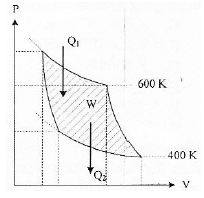
อุณหภูมิต่ำ (T L ) = 400 K
อุณหภูมิสูง (TH ) = 600 K
ต้องการ:ปริมาณความร้อนที่ปล่อยออกมา ( Q2 )
วิธีการแก้ปัญหา:
ประสิทธิภาพของเครื่องยนต์คาร์โนต์:
e = (TH – TH ) / TH
e = (600 – 400) / 600
e = 200 / 600
e = 1/3
งานที่เครื่องยนต์คาร์โนต์ทำ:
W = e Q 1
W = งานที่เครื่องยนต์ทำ, e = ประสิทธิภาพ, Q1 = ความร้อนที่ป้อนเข้า
W = (1/3)(Q 1 )
3W = Q 1
ปริมาณความร้อนที่ปล่อยออกมา:
Q 2 = Q 1 – W
Q 2 = 3W – W
Q 2 = 2W
5. จากกราฟด้านล่าง ถ้าความร้อนที่ปล่อยออกมาคือ 3000 จูล ความร้อนที่ป้อนเข้าไปคือเท่าไร
เป็นที่รู้จัก :
อุณหภูมิต่ำ (T)L) = 500 K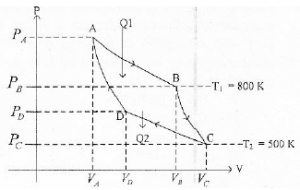
อุณหภูมิสูง (TH ) = 800 K
ปริมาณความร้อนที่ปล่อยออกมา (Q 2 ) = 3000 จูล
ต้องการ:ปริมาณความร้อนที่ป้อนเข้า (Q 1 )
วิธีการแก้ปัญหา:
ประสิทธิภาพของเครื่องยนต์คาร์โนต์:
e = (TH – TH ) / TH
e = (800 – 500) /8600
e = 300 / 800
e = 3/8
งานที่เครื่องยนต์คาร์โนต์ทำ:
W = e Q 1
W = (3/8)(Q 1 )
8W/3 = Q 1
Q 2 = Q 1 – W
Q 2 = 8W/3 – 3W/3
Q 2 = 5W/3
3Q 2 = 5W
W = ไตรมาส3 2 /5 = 3(3000)/5 = 9000/5 = 1800
ความร้อนที่เครื่องยนต์ดูดซับ:
Q 1 = W + Q 2 = 1800 + 3000 = 4800 จูล
6. เครื่องยนต์คาร์โนต์ดูดความร้อนที่อุณหภูมิสูง 800 เคลวิน และประสิทธิภาพของเครื่องยนต์คาร์โนต์คือ 50% อุณหภูมิสูงสุดที่จะเพิ่มประสิทธิภาพเป็น 80% คือเท่าใด หากอุณหภูมิต่ำสุดคงที่
เป็นที่รู้จัก :
ถ้าอุณหภูมิสูง (TH ) = 800 K ประสิทธิภาพ (e) = 50% = 0.5
ต้องการ:อุณหภูมิสูง (TH )ถ้าประสิทธิภาพ (e) = 80% = 0.8
วิธีการแก้ปัญหา:
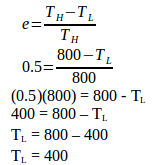
อุณหภูมิต่ำ = 400 เคลวิน
อุณหภูมิสูงสุด (TH) คือเท่าใดหากประสิทธิภาพ (e) = 80%
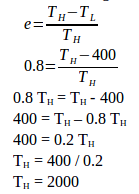
อุณหภูมิสูง = 2000 เคลวิน
7. เครื่องยนต์คาร์โนต์ทำงานที่อุณหภูมิสูง 600 เคลวิน โดยมีประสิทธิภาพ 40% ถ้าประสิทธิภาพของเครื่องยนต์เป็น 75% และอุณหภูมิต่ำคงที่ อุณหภูมิสูงจะเป็นเท่าใด
เป็นที่รู้จัก :
ถ้าอุณหภูมิสูง (TH ) = 600 K ประสิทธิภาพ (e) = 40% = 0.4
ต้องการ:อุณหภูมิสูง (TH )ถ้าประสิทธิภาพ (e) = 75% = 0.75
วิธีการแก้ปัญหา:
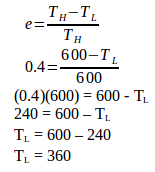
อุณหภูมิสูง (T)Hถ้าประสิทธิภาพ (e) = 75% ?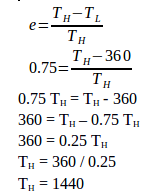
อุณหภูมิสูง = 1440 เคลวิน
- วัฏจักรคาร์โนต์คืออะไร? คำตอบวัฏจักรคาร์โนต์เป็นวัฏจักรทางเทอร์โมไดนามิกเชิงทฤษฎีที่แสดงถึงวัฏจักรเครื่องยนต์ความร้อนแบบผันกลับได้ที่มีประสิทธิภาพสูงสุดเท่าที่จะเป็นไปได้ ประกอบด้วยกระบวนการไอโซเทอร์มอลสองกระบวนการและกระบวนการอะเดียแบติกสองกระบวนการ
- เหตุใดวัฏจักรคาร์โนต์จึงถือเป็นวัฏจักรในอุดมคติ? คำตอบวัฏจักรคาร์โนต์ถือเป็นวัฏจักรในอุดมคติ เนื่องจากแสดงถึงขีดจำกัดสูงสุดของประสิทธิภาพสำหรับเครื่องยนต์ความร้อนใดๆ ไม่มีเครื่องยนต์จริงใดที่จะมีประสิทธิภาพมากกว่าเครื่องยนต์คาร์โนต์ที่ทำงานระหว่างแหล่งอุณหภูมิสองแหล่งเดียวกันได้
- กระบวนการทั้งสี่ในวัฏจักรคาร์โนต์มีอะไรบ้าง? คำตอบกระบวนการทั้งสี่ในวัฏจักรคาร์โนต์มีดังนี้:
- การขยายตัวแบบไอโซเทอร์มอลที่อุณหภูมิสูง .
- การขยายตัวแบบอะเดียแบติก (ซึ่งระบบถูกหุ้มฉนวนความร้อนและเย็นลง)
- การอัดแบบไอโซเทอร์มอลที่อุณหภูมิต่ำ .
- การอัดแบบอะเดียแบติก (ซึ่งระบบถูกหุ้มฉนวนความร้อนและร้อนขึ้น)
- ทำไมจึงไม่มีเครื่องยนต์ความร้อนที่ทำงานตามวัฏจักรคาร์โนต์จริงๆ? คำตอบเครื่องยนต์จริงมีการสูญเสียที่ไม่สามารถย้อนกลับได้ เช่น แรงเสียดทาน และไม่สามารถรักษาฉนวนได้อย่างสมบูรณ์แบบในระหว่างกระบวนการอะเดียแบติก นอกจากนี้ การบรรลุถึงกระบวนการไอโซเทอร์มอลที่ช้าอย่างไม่มีที่สิ้นสุดซึ่งจำเป็นสำหรับวัฏจักรคาร์โนต์นั้นเป็นเรื่องที่ไม่สามารถทำได้ในทางปฏิบัติ
- ประสิทธิภาพของเครื่องยนต์คาร์โนต์คืออะไร? คำตอบประสิทธิภาพ ของเครื่องยนต์คาร์โนต์ที่ทำงานระหว่างแหล่งเก็บอุณหภูมิสองแหล่ง (ร้อน) และ (ความหนาวเย็น) กำหนดโดย:
โดยที่อุณหภูมิมีหน่วยเป็นเคลวิน
- เหตุใดเครื่องยนต์คาร์โนต์จึงไม่สามารถมีประสิทธิภาพ 100% ได้? คำตอบประสิทธิภาพของเครื่องยนต์คาร์โนต์ขึ้นอยู่กับความแตกต่างของอุณหภูมิระหว่างแหล่งความร้อนและแหล่งความเย็น เพื่อให้ได้ประสิทธิภาพ 100% อุณหภูมิของแหล่งความเย็นจะต้องเป็นศูนย์สัมบูรณ์ (0 เคลวิน) ซึ่งเป็นสิ่งที่ไม่สามารถทำได้ในทางปฏิบัติ
- ความสามารถในการย้อนกลับมีความสำคัญอย่างไรในวัฏจักรคาร์โนต์? คำตอบความผันกลับได้ทำให้มั่นใจได้ว่าไม่มีกระบวนการใดที่ก่อให้เกิดเอนโทรปี ซึ่งหมายความว่าวัฏจักรสามารถทำงานได้อย่างมีประสิทธิภาพสูงสุด กระบวนการใดๆ ที่ไม่สามารถผันกลับได้จะลดประสิทธิภาพของวัฏจักรลง
- วัฏจักรคาร์โนต์มีความเกี่ยวข้องกับกฎข้อที่สองของอุณหพลศาสตร์อย่างไร? คำตอบวัฏจักรคาร์โนต์เป็นพื้นฐานของกฎข้อที่สอง โดยกำหนดขีดจำกัดสูงสุดของประสิทธิภาพของเครื่องยนต์ความร้อน กฎข้อที่สองระบุว่า ไม่มีเครื่องยนต์ใดจะมีประสิทธิภาพมากกว่าเครื่องยนต์คาร์โนต์ที่ทำงานระหว่างอุณหภูมิสองค่าเดียวกัน
- เหตุใดจึงเป็นไปไม่ได้ที่จะมีกระบวนการอุณหภูมิคงที่ในแอปพลิเคชันในโลกแห่งความเป็นจริงให้เหมือนกับที่ปรากฏในวัฏจักรคาร์โนต์ทุกประการ? คำตอบกระบวนการไอโซเทอร์มอล ดังที่แสดงในวัฏจักรคาร์โนต์ ต้องใช้เวลาอนันต์ ซึ่งเป็นไปไม่ได้ในทางปฏิบัติ เนื่องจากในการรักษาสภาวะไอโซเทอร์มอล การถ่ายเทความร้อนจะต้องเกิดขึ้นอย่างช้ามากจนแทบเป็นศูนย์
-
วัฏจักรคาร์โนต์ช่วยวิศวกรและนักวิทยาศาสตร์ได้อย่างไร? คำตอบ : วัฏจักรคาร์โนต์เป็นเกณฑ์มาตรฐานทางทฤษฎีสำหรับประสิทธิภาพสูงสุดที่เป็นไปได้ของเครื่องยนต์ความร้อน โดยการเปรียบเทียบเครื่องยนต์จริงกับวัฏจักรคาร์โนต์ วิศวกรและนักวิทยาศาสตร์สามารถระบุจุดที่ควรปรับปรุงและเข้าใจข้อจำกัดพื้นฐานของการออกแบบของพวกเขาได้
