Resistivity

Sengoloa se buang ka Resistivity

Mabapi le motlakase, ho buisanoe ka bongata ba motlakase, kahoo le tšimo ea motlakase e hlalositsoe sehloohong se buang ka tšimo ea motlakase. Tšimo ea motlakase le motlakase li ka har'a conductor haeba ho na le phapang e ka bang teng ho conductor, athe haeba ho se na phapang e ka bang teng, joale ha ho na tšimo ea motlakase le motlakase.

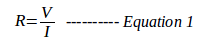
Hoo e ka bang ho di-conductor tsohle tsa tshepe, tshimo ya motlakase e lekana ka ho toba le boima ba motlakase, moo karolelano ya tshimo ya motlakase le boima ba motlakase e sa fetoheng. Boleng ba papiso ya tshimo ya motlakase le boima ba motlakase bo bitswa resistivity. Ho ya ka dipalo, kamano pakeng tsa tshimo ya motlakase, boima ba motlakase, le resistivity e boletswe ho equation:
Bala haholoanyane

Mohanyetsi khoutu ea mebala

Article about the Resistor color code

The sehanyetsi is one component of an electrical circuit that functions to control the number of electric currents. In general, there are two types of resistors, namely wire coil resistors and carbon resistors. Wire roll resistors are usually used in the laboratory, made by wrapping fine wire on the surface of the insulator tube. Carbon resistors are typically used in electronic circuits, cylindrical, and have wires at both ends. The value of the carbon resistor resistance is expressed in color code and displayed on the surface of the resistor.

The resistance value of a resistor can be known by interpreting the resistor color code. To understand this, first look at the following table, then study the example problem to determine the resistor resistance value.

Bala haholoanyane

Li-resistor tse latellanang

Resistors in series 1

Article about the Resistors in series

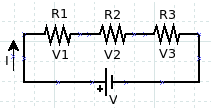
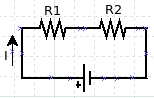
If the resistors are connected as shown in the figure, the resistors are arranged in series. Resistor or electrical resistance in question can be in the form of resistor components, lights, or other electrical resistance.

The electric charge moves through resistance 1 (R1) = ea tefiso ea motlakase moves through resistance 2 (R2) = the electric charge moves through resistance 3 (R3). Motlakase (I) is an electric charge that flows during a certain time interval (I = Q / t), hence the electric current through resistance 1 (I1) = electric current through resistance 2 (I2) = electric current through resistance 3 (I3). Mathematically, the total electric current (I) = I1 = KE2 = KE3.

Bala haholoanyane

Ho hanyetsa motlakase

Equation of the Electric resistance

In the topic of Ohm’s law, a formula that states the relationship between the Palo ea li-volts (V), motlakase (I), and ho hanyetsa motlakase (R) has been derived. Mathematically expressed through equations:

Electric resistance 1

This equation shows that the electrical resistance (R) is directly proportional to the electric voltage (V) and inversely proportional to the electric current (I). If the mains voltage is greater than the electrical resistance is getting bigger, on the contrary, if the stronger the electric current gets bigger than the electrical resistance will be greater. This equation explains Ohm’s law only when the electrical resistance (R) is constant. If the electrical resistance is not constant, then this equation does not explain Ohm’s law, but explains the resistance of a conductor.

Bala haholoanyane

Li-resistor tse tšoanang

Resistors in parallel 1

Article about the Resistors in parallel

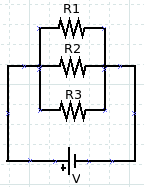
If the resistors are connected as in the figure, the resistors are connected in parallel.

The motlakase (electric current = electric charge that flows during a time interval) that enters the junction point is the same as the electric current exit from the junction point. There are several junctions so that the total electric current = the amount of electric current flowing in each junction. Mathematically, I = I1 + Ke2 + Ke3. While the electric potential difference or motlakase oa motlakase in each junction is the same.

I = V/R so the above equation changes to I = V/R1 + V/R2 + V/R3. The electric voltage is equal, so this equation changes to I = V (1/R1 +1/R2 +1/R3). If the equivalent resistance is 1/R then I = V (1/R). Thus, 1/R = 1/R1 +1/R2 +1/R3.

Bala haholoanyane

Mohloli oa matla a motlakase a emf Khanyetso ea kahare Voltage ea terminal

Sengoloa se mabapi le Mohloli oa matla a motlakase emf Khanyetso ea kahare Voltage ea terminal

Motlakase phallo ka potoloho e koetsoeng, ho tloha ho bokgoni bo phahameng ho ya ho bokgoni bo tlase. Ha motlakase o feta ka hara karolo ya kganyetso ya motlakase, ho na le phokotseho ya matla a motlakase hobane matla a motlakase a sebediswa kganyetsong ena. E le hore motlakase o tswele pele ho phalla ho tloha bokgoning bo hodimo ho ya bokgoning bo tlase,

ho tlameha ho be le sesebediswa sa ho eketsa matla a motlakase, sesebediswa ke matla a motlakase (emf) kapa ka nepo e bitswang mohlodi wa motlakase. Emf kapa mohlodi wa motlakase ke karolo e fetolang mofuta wa matla hore e be matla a motlakase, jwalo ka dibetri, disele tsa letsatsi, kapa dijenereithara tsa motlakase.

Bala haholoanyane

Li-EMF tse latellanang le tse bapileng

EMFs in series and parallel 1

Li-EMF tse latellanang le tse bapileng

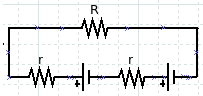
If there are two or more sources of electromotive (emf) connected as shown in the figure, the emf is arranged in series.

E lekanang Palo ea li-volts source (ε) is:

ε = ε1 + ε2 + εn

The equivalent internal resistance (r) is:

r = r1 +r2 +rn

The electric current flowing through the external resistance (R) is:

Bala haholoanyane

Molao oa pele oa Kirchhoff

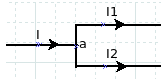
Molao oa pele oa Kirchhoff 1Molao oa pele oa Kirchhoff o boetse o bitsoa molao oa ntlha ea khokahano o bolela hore motlakase o kenang ntlheng ea khokahano o tšoana le motlakase o tsoang ntlheng eo ea khokahano. Ntlha ea khokahano potolohong ea motlakase ke ntlha eo li-conductor tse peli kapa ho feta li kopanang ho eona, joalo ka ntlha ea a setšoantšong se ka lehlakoreng.
Ke motlakase o kenang moo ho kopanang teng, ha ke ntse ke1 le nna2 ke maqhubu a motlakase a tsoang sebakeng seo ho kopanang ho sona, I = I1 + Ke2Mohlala o mong, sheba setšoantšo se ka tlase.

Bala haholoanyane

Molao oa bobeli oa Kirchhoff

Molao oa bobeli oa Kirchhoff o bolela hore phetoho ea matla a motlakase selikalikoeng sa potoloho e koetsoeng ke lefela. Molao oa bobeli oa Kirchhoff o thehiloe molaong oa paballo ea matla, o bolelang hore matla ke a ka ho sa feleng.

Molao oa bobeli oa Kirchhoff 1Ho utloisisa sena hamolemo, nahana ka tjhaja ya motlakase e tsamayang ka potoloho e kwetsweng, jwalo ka setshwantshong. Ha tjhaja ya motlakase e feta ka hara ho hanyetsa motlakase (R), e matla a motlakase e fokotsehile hobane e sebelisoa ho lihanyetsi tsena. Haeba tjhaja ea motlakase e feta khanyetsong e 'ngoe ea motlakase, matla a motlakase a fokotseha hape hobane a sebelisoa hape khanyetsong. Ho feta moo, ha tjhaja ea motlakase e feta mohloling oa motlakase ho tloha ho matla a tlase ho ea ho matla a phahameng, matla a motlakase aa eketseha. Ha e khutlela ntlheng ea eona ea pele, matla a motlakase a tšoana le a pele, moo phetoho ea matla a motlakase e leng lefela. Ha ho sebelisoa KirchhoffMolao oa bobeli oa potoloho ea motlakase, re sebelisa phetoho ea motlakase oa motlakase, eseng phetoho ea matla a motlakase.

Bala haholoanyane

Matla a motlakase

Tlhaloso ea matla a motlakase

Matla a ithutoang mosebetsing le Matla a khethoa e le mosebetsi o etsoang nakong e itseng ea nako. Mosebetsi ke ts'ebetso ea phetoho ea matla e le hore matla a ka utloisisoa e le phetoho ea matla e etsahalang nakong e itseng ea nako.

Matla a motlakase ke phetoho ea matla a motlakase nakong e itseng ea nako. Tlhahlobong ea matla a motlakase, ho hlalositsoe hore liphetoho tsa matla a motlakase li etsahala ha tjhaja ea motlakase e feta sebakeng se itseng. bokgoni ba motlakase phapang.

Bala haholoanyane