1. Ngarkesa me dy pika, QA = +8 μC dhe QB = -5 μC, janë të ndara nga një distancë r = 10 cm. Cila është madhësia e forcë elektrikeKonstantja k = 8.988 x 10⁹ Nm2C-2 = 9 x 10⁹ Nm2C-2.
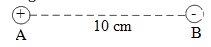
I njohur:
Ngarkesa A (q A ) = +8 μC = +8 x 10 -6 C
Ngarkesa B (q B ) = -5 μC = -5 x 10 -6 C
k = 9 x 10⁹ Nm2C − 2
Distanca midis ngarkesave A dhe B (rAB ) = 10 cm = 0.1 m
Kërkohet : Madhësia e forcës elektrike
zgjidhje:
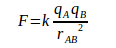
Formula e ligjit të Kulombit :
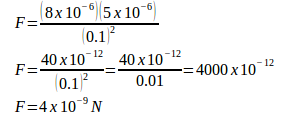
Madhësia e forcës elektrike:
[irp]
2. Dy grimca të ngarkuara siç tregohet në figurën më poshtë. Q P = +10 μC dhe Q q = +20 μC janë të ndara nga njëra-tjetra nga një distancë r = 10 cm. Cila është madhësia e forcës elektrostatike.
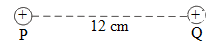
I njohur:
Ngarkesa P (Q P ) = +10 μC = +10 x 10 -6 C
Ngarkesa Q (Q Q ) = +20 μC = +20 x 10 -6 C
k = 9 x 10⁹ Nm2C − 2
Distanca midis ngarkesave P dhe Q (r PQ ) = 12 cm = 0.12 m = 12 x 10 -2 m
Kërkohet: Madhësia e forcës elektrike
zgjidhje:
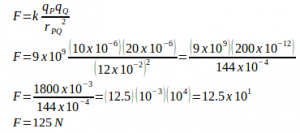
[irp]
3. Tre grimca të ngarkuara janë rregulluar në një vijë siç tregohet në figurën më poshtë. Ngarkesa A = -5 μC, ngarkesa B = +10 μC dhe ngarkesa C = -12 μC. Llogaritni forcën neto elektrostatike mbi grimcën B për shkak të dy ngarkesave të tjera.
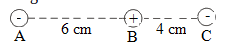
I njohur:
Ngarkesa A (q A ) = -5 μC = -5 x 10 -6 C
Ngarkesa B (q B ) = +10 μC = +10 x 10 -6 C
Ngarkesa C (q C ) = -12 μC = -12 x 10 -6 C
k = 9 x 10⁹ Nm2C − 2
Distanca midis grimcave A dhe B (rAB ) = 6 cm = 0.06 m = 6 x 10 -2 m
Distanca midis grimcave B dhe C (r BC ) = 4 cm = 0.04 m = 4 x 10 -2 m
Kërkohet: Madhësia dhe drejtimi i forcës neto elektrostatike në grimcën B
zgjidhje:
Forca neto mbi grimcën B është shuma vektoriale e forcës FBA të ushtruar mbi grimcën B nga grimca A dhe forcës FBC të ushtruar mbi grimcën B nga grimca C.
Forca F BA e ushtruar mbi grimcën B nga grimca A:
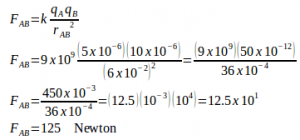
Drejtimi i forcës elektrostatike tregon nga grimca A (pika majtas).
Forca F BC e ushtruar mbi grimcën B nga grimca A:
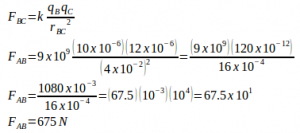
Drejtimi i forcës elektrostatike tregon nga grimca C (pika djathtas).
Forca neto elektrostatike në grimcën B :
F B = F AB – F BC = 675 N – 125 N = 550 Njutonë.
Drejtimi i forcës neto elektrostatike në grimcën B tregon nga grimca C (tregon në të djathtë).
[irp]
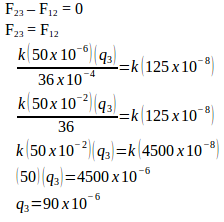
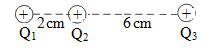
4. +Q1 = 10 μC, +Q2 = 50 μC dhe Q3 janë të ndara siç tregohet në figurën më poshtë. Cila është ngarkesa elektrostatike në grimcën 3 nëse forca neto elektrostatike në grimcën 2 është zero.
I njohur:
Ngarkesa 1 (q1 ) = +10 μC = +10 x 10-6 C
Ngarkesa 2 (q2 ) = +50 μC = +50 x 10-6 C
Distanca midis ngarkesave 1 dhe 2 (r12 ) = 2 cm = 0.02 m = 2 x 10 -2 m
Distanca midis ngarkesës 2 dhe ngarkesës 3 (r23 ) = 6 cm = 0.06 m = 6 x 10 -2 m
Forca neto elektrostatike mbi grimcën 2 (F2 ) = 0
Kërkohet : ngarkesa 3 ( ç3 )
zgjidhje:
Forca neto mbi grimcën 2 është shuma vektoriale e forcës F21 të ushtruar mbi grimcën 2 nga grimca 1 dhe forcës F23 të ushtruar mbi grimcën 2 nga grimca 3.
Forca F21 e ushtruar mbi grimcën 2 nga grimca 1:
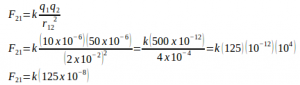
Drejtimi i forcës elektrostatike tregon nga grimca 3 (pika në të djathtë).
Forca F23 ushtruar mbi grimcën 2 nga grimca 3: 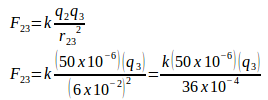
Drejtimi i forcës elektrostatike tregon nga grimca 1 (pika majtas).
Forca neto elektrostatike në grimcën 2 = 0: