1. Persuna tinsab f'lift li jiċċaqlaq 'il fuq b'veloċità kostanti . Il- piż tal-persuna huwa ta' 800 N. Immedjatament il-ħabel tal-lift jinkiser, u għalhekk il-lift jaqa'. Iddetermina l- forza normali li l-art tal-lift taġixxi fuq il-persuna eżatt qabel u wara li nkiser il-ħabel tal-lift.
A. 800 N u 0
B. 800 N u 800 N
Ċ. 1600 N u 0
D. 1600 N u 800 N
Magħruf:
Piż (w) = 800 Newton
Meħtieġa: Il-forza normali (N)
Soluzzjoni:
Qabel ma jinkiser il-ħabel tal-lift
Meta l-persuna tkun wieqfa fuq l-art tal-lift, il-piż jaġixxi fuq il-persuna fejn id-direzzjoni tal-persuna hija 'l isfel. Dik il-persuna tkun wieqfa u għalhekk irid ikun hemm forza normali li taġixxi fuq il-persuna, fejn id-direzzjoni tal-forza normali hija 'l fuq u l-kobor tal-forza normali huwa l-istess bħall-kobor tal-piż.
 Minħabba li l-persuna tinsab wieqfa fil-lift u l-lift jiċċaqlaq b'veloċità kostanti (l-ebda aċċelerazzjoni), għalhekk m'hemm l-ebda forza netta li taġixxi fuq il-persuna.
∑F = 0
N – w = 0
N = w
N = 800 Newton
Wara li nqata’ l-ħabel tal-lift
Wara li jinkiser il-ħabel tal-lift, il-lift u l-persuna jaqgħu liberament flimkien, fejn il-kobor u d-direzzjoni tal-aċċelerazzjoni tagħhom huma l-istess bħall-aċċelerazzjoni minħabba l-gravità. Ma jkun hemm l-ebda forza normali fuq il-persuna.
It-tweġiba t-tajba hija A.
2. Blokk b'massa ta' 20 gramma jiċċaqlaq b'veloċità kostanti fuq art orizzontali mhux maħduma b'veloċità kostanti jekk ikun hemm forza esterna ta' 2 N li taġixxi fuq il-blokk. Iddetermina l-kobor tal- forza tal-frizzjoni li jesperjenza l-blokk.
A. 0.3 N
B. 1.4 N
Ċ 2.0 N
D. 3.6 Tramuntana
Magħruf:
Massa (m) = 20 gramma
Forza (F) = 2 Newton
Meħtieġa: Il-kobor tal-forza tal-frizzjoni li jesperjenza l-blokka.
Soluzzjoni:
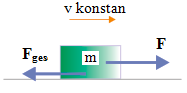 Abbażi tal-ewwel liġi tal-moviment ta' Newton, jekk blokka tiċċaqlaq b'veloċità kostanti, allura l-blokka ma jkollha l-ebda aċċelerazzjoni. Il-blokka tiċċaqlaq b'veloċità kostanti, u ma jkun hemm l-ebda aċċelerazzjoni jekk:
– Il-kobor tal-forza tal-frizzjoni (F fric ) huwa l-istess bħall-kobor tal-forza esterna (F)
– Il-forza tal-frizzjoni (F fric ) għandha direzzjoni opposta għall-forza esterna (F)
Applika l-ewwel liġi tal-moviment ta' Newton:
ΣF = 0
F – F fric = 0
F = F fric
F fric = 2 Newton
It-tweġiba t-tajba hija C.
3. Pjan inklinat lixx b'tul ta' 0.6 m u għoli ta' 0.4 m. Blokk b'piż ta' 1350 N se jiċċaqlaq 'il fuq billi juża l-pjan inklinat. Iddetermina l-kobor tal-forza meħtieġa biex iċċaqlaq il-blokk.
A. 100 N
B. 300 N
Ċ 600 N
D. 900 Tramuntana
Magħruf:
Piż tal-blokka (w) = 1350 Newton
iper = 0.6 m
opp = 0.4 m
Meħtieġa: Il-forza minima
Soluzzjoni:
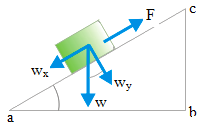 iper = ac = 0.6 m
opp = bc = 0.4 m
Sin θ = bc / ac = 0.4 / 0.6 = 4/6 = 2/3
Abbażi tal-ewwel liġi tal-moviment ta' Newton, il-blokk jibda jiċċaqlaq 'il fuq imbagħad il-forza esterna (F) tkun mill-inqas l-istess bħall-komponent orizzontali tal-piż (wx ).
ΣF = 0
F – w x = 0
F = w x
Jekk F = wx , allura l-oġġett jibda jiċċaqlaq 'il fuq b'veloċità kostanti.
w x = w sin θ = (1350)(2/3) = (2)(450) = 900 Newton
It-tweġiba t-tajba hija D.
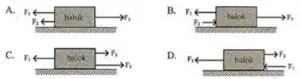
4. Tliet forzi, F1 = 22 N, F2 = 18 N u F3 = 40 N jaġixxu fuq blokka. Liema figura tiddeskrivi l-ewwel liġi ta' Newton?
Soluzzjoni:
L-ewwel liġi ta' Newton: Forza netta (ΣF) = 0.
A. F1 + F2 – F3 = 22 N + 18 N – 40 N = 40 N – 40 N = 0
B. F2 + F3 – F1 = 18 N + 40 N – 22 N = 58 N – 22 N = 36 N (lejn il-lemin)
Ċ. F2 + F3 – F1 = 18 N + 40 N – 22 N = 58 N – 22 N = 36 N (lejn il-lemin)
D. F 1 + F 3 – F 2 = 22 N + 40 N – 18 N = 62 N – 18 N = 44 N (lejn ix-xellug)
