Straipsnis apie gravitacinį lauką ir gravitacinio lauko stiprumą
Kai stumiate knygą ant stalo paviršiaus, kol ji pajuda, jūsų ranka paliečia knygą. Panašiai, kai pririšate daiktą virve ir traukiate jį, kol jis pajuda, jūsų ranka paliečia virvę, o virvė – daiktą. Šiuo atveju virvės stūmimo, traukimo, įtempimo ir panašios jėgos vadinamos prisilietimo jėgomis. Žemės gravitacinė jėga, traukianti link Žemės paviršiaus krintantį vaisių. Arba Žemės gravitacinė jėga, traukianti Mėnulį į Žemės orbitą, atsiranda be Žemės ir vaisiaus bei Mėnulio sąlyčio.
Todėl gravitacinės jėgos arba panašios jėgos vadinamos neliečiamosiomis jėgomis. Kaip vaisius galėtų nukristi, o mėnulis „kristi“ link Žemės, nesiliesdami tarp Žemės ir vaisiaus bei Mėnulio? Mokslininkams, įskaitant Niutoną , buvo sunku įsivaizduoti neliečiamosios jėgos sąvoką. Siekiant lengviau įsivaizduoti ir suprasti neliečiamosios jėgos sąvoką, iškeliama lauko sąvoka.
Gravitacinis laukas
Kai objektas, turintis masę, yra erdvėje, jis sukuria gravitacinį lauką. Objekto, kurio masė m, gravitacinis laukas pavaizduotas lauko linijų pavidalu, kaip parodyta paveikslėlyje žemiau.
Kuo toliau nuo objekto paviršiaus, tuo didesnis atstumas tarp gravitacinio lauko linijų. Priešingai, kuo arčiau objekto paviršiaus, tuo artėja atstumas tarp lauko linijų. Kuo arčiau, tuo didesnis gravitacinio lauko stiprumas. Kuo toliau, tuo mažesnis gravitacinis laukas. Panašiai, kuo didesnė objekto masė, tuo daugiau ir arčiau gravitacinio lauko linijų. Jei bandomoji dalelė bus šalia objekto, sukuriančio gravitacinį lauką, ji patirs gravitacinę jėgą. Gravitacinės jėgos kryptis objekto centro link sukuria gravitacinį lauką.
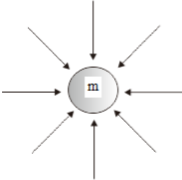 Kuo toliau nuo objekto paviršiaus, tuo didesnis atstumas tarp gravitacinio lauko linijų. Kuo arčiau objekto paviršiaus, tuo artėja atstumas tarp lauko linijų. Kuo arčiau, tuo didesnis gravitacinio lauko stiprumas. Kuo toliau, tuo mažesnis gravitacinis laukas. Panašiai, kuo didesnė objekto masė, tuo daugiau ir arčiau viena kitos gravitacinio lauko linijų.
Jei bandomoji dalelė yra šalia objekto, kuris sukuria gravitacinį lauką, bandomoji dalelė patirs gravitacinę jėgą. Gravitacinės jėgos kryptis objekto centro link sukuria gravitacinį lauką.
Gravitacinio lauko stiprumas
Žemės gravitacinio lauko stiprumas, kurį patiria objektas virš Žemės paviršiaus:
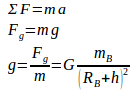
g = gravitacinio lauko stiprumas
F g = sunkio jėga
m B = Žemės masė
R B = Žemės spindulys = 6.37 x 10⁶ m
h = objektų aukštis virš Žemės paviršiaus
Jei norime apskaičiuoti gravitacinio lauko stiprį planeta, Žemės masė ir spindulys (mB ir RB) pakeičiami Mėnulio mase ir spinduliu arba konkrečios planetos mase ir spinduliu.
Jei stebime objekto laisvą kritimą virš Žemės paviršiaus, matome, kad tai Žemės gravitacinis pagreitis, kurį patiria objektas, yra 9.8 m/s² . Jei objektas vis dar yra virš Žemės paviršiaus (objektai laisvai nekrenta), tai g matomas kaip objekto patiriamas Žemės gravitacinio lauko stiprumas, kuris yra 9.8 N/kg.
