Seasmhachd

Artaigil mu dheidhinn strì an aghaidh

A thaobh sruth dealain, chaidh dùmhlachd sruth dealain a dheasbad, agus mar sin chaidh an raon dealain a mhìneachadh cuideachd anns a’ chuspair mun raon dealain. Tha an raon dealain agus an sruth dealain ann an seoltóir ma tha eadar-dhealachadh comasach anns an t-seoltóir, ach mura h-eil eadar-dhealachadh comasach ann, chan eil raon dealain agus sruth dealain ann nas motha.

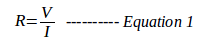
Anns cha mhòr a h-uile giùlan meatailt, tha an raon dealain dìreach co-rèireach ri dùmhlachd an t-sruth dealain, far a bheil an co-mheas eadar an raon dealain agus dùmhlachd an t-sruth dealain seasmhach. Canar strìochd ri luach coimeas an raoin dealain ri dùmhlachd an t-srutha. Gu matamataigeach, tha an dàimh eadar an raon dealain, dùmhlachd an t-srutha, agus strìochd air a ràdh anns a’ cho-aontar:
Leugh tuilleadh

Còd dath an aghaidh-aghaidh

Article about the Resistor color code

Tha Resistor is one component of an electrical circuit that functions to control the number of electric currents. In general, there are two types of resistors, namely wire coil resistors and carbon resistors. Wire roll resistors are usually used in the laboratory, made by wrapping fine wire on the surface of the insulator tube. Carbon resistors are typically used in electronic circuits, cylindrical, and have wires at both ends. The value of the carbon resistor resistance is expressed in color code and displayed on the surface of the resistor.

The resistance value of a resistor can be known by interpreting the resistor color code. To understand this, first look at the following table, then study the example problem to determine the resistor resistance value.

Leugh tuilleadh

Resistors ann an sreath

Resistors in series 1

Article about the Resistors in series

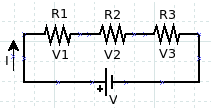
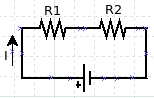
If the resistors are connected as shown in the figure, the resistors are arranged in series. Resistor or electrical resistance in question can be in the form of resistor components, lights, or other electrical resistance.

The electric charge moves through resistance 1 (R1) = an cosgais dealain moves through resistance 2 (R2) = the electric charge moves through resistance 3 (R3). Sruth dealain (I) is an electric charge that flows during a certain time interval (I = Q / t), hence the electric current through resistance 1 (I1) = electric current through resistance 2 (I2) = electric current through resistance 3 (I3). Mathematically, the total electric current (I) = I1 = Mise2 = Mise3.

Leugh tuilleadh

Frith-aghaidh dealain

Equation of the Electric resistance

In the topic of Ohm’s law, a formula that states the relationship between the bholtaids (V), sruth dealain (I), and strì an aghaidh dealain (R) has been derived. Mathematically expressed through equations:

Electric resistance 1

This equation shows that the electrical resistance (R) is directly proportional to the electric voltage (V) and inversely proportional to the electric current (I). If the mains voltage is greater than the electrical resistance is getting bigger, on the contrary, if the stronger the electric current gets bigger than the electrical resistance will be greater. This equation explains Ohm’s law only when the electrical resistance (R) is constant. If the electrical resistance is not constant, then this equation does not explain Ohm’s law, but explains the resistance of a conductor.

Leugh tuilleadh

Resistors ann an co-shìnte

Resistors in parallel 1

Article about the Resistors in parallel

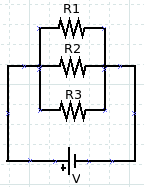
If the resistors are connected as in the figure, the resistors are connected in parallel.

Tha sruth dealain (electric current = electric charge that flows during a time interval) that enters the junction point is the same as the electric current exit from the junction point. There are several junctions so that the total electric current = the amount of electric current flowing in each junction. Mathematically, I = I1 + I.2 + I.3. While the electric potential difference or bholtaids dealain in each junction is the same.

I = V/R so the above equation changes to I = V/R1 + V/R2 + V/R3. The electric voltage is equal, so this equation changes to I = V (1/R1 +1/R2 +1/R3). If the equivalent resistance is 1/R then I = V (1/R). Thus, 1/R = 1/R1 +1/R2 +1/R3.

Leugh tuilleadh

Stòr feachd electromotive emf An aghaidh a-staigh Bholtachd crìochnachaidh

Article about Source of electromotive force emf Internal resistance Terminal voltage

Sruth dealain flows in a closed circuit, from high potential to low potential. When an electric current moves through a component of electrical resistance, there is a reduction in electrical potential energy because electrical energy is used on this resistance. In order for the electric current to continue to flow from high potential to low potential,

there must be a device to add electrical potential energy, the tool is an electromotive force (emf) or more accurately called an electric voltage source. Emf or a voltage source is a component that converts a type of energy into electrical energy, such as batteries, solar cells, or electricity generators.

Leugh tuilleadh

EMFan ann an sreath agus co-shìnte

EMFs in series and parallel 1

EMFan ann an sreath agus co-shìnte

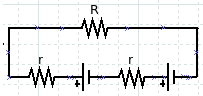
If there are two or more sources of electromotive (emf) connected as shown in the figure, the emf is arranged in series.

An co-ionann bholtaids source (ε) is:

ε = ε1 + ε2 + εn

The equivalent internal resistance (r) is:

r = r1 +r2 +rn

The electric current flowing through the external resistance (R) is:

Leugh tuilleadh

A’ chiad riaghailt aig Kirchhoff

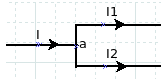
A’ chiad riaghailt aig Kirchhoff 1Tha a’ chiad riaghailt aig Kirchhoff, ris an canar cuideachd riaghailt a’ phuing-cheangail, ag ràdh gu bheil an sruth dealain a thig a-steach do phuing-cheangail mar an ceudna ris an t-sruth dealain a thig a-mach às a’ phuing-cheangail sin. Is e am puing-cheangail ann an cuairt dealain am puing far a bheil dhà no barrachd den dà stiùiriche a’ coinneachadh, leithid puing a san fhigear air an taobh.
Is e I an sruth dealain a thig a-steach don phuing ceangail, agus I1 agus mise2 nan sruthan dealain a tha a’ fàgail a’ phuing-cheangail, I = I1 + I.2Eisimpleir eile, thoir sùil air an fhigear gu h-ìosal.

Leugh tuilleadh

An dàrna riaghailt aig Kirchhoff

Kirchhoff’s second rule states that the change in electric potential on the circumference of a closed circuit is zero. Kirchhoff’s second rule is based on the law of conservation of energy, which states that energy is eternal.

Kirchhoff’s second rule 1To better understand this, imagine the electric charge moving in a closed circuit, as in the figure. When an electric charge passes through an strì an aghaidh dealain (R), the electrical potential energy is reduced because it is used on these resistances. If the electric charge passes through another electrical resistance, the electric potential energy decreases again because it is used again on the resistance. Furthermore, when the electric charge passes through the voltage source from a low potential to a high potential, the electric potential energy increases. When it returns to its original point, the electric potential energy is the same as before, where the change in electrical potential energy is zero. When applying Kirchhoff‘s second rule to an electrical circuit, we use the change in electrical voltage, not the change in electrical potential energy.

Leugh tuilleadh

Cumhachd dealain

Mìneachadh air cumhachd dealain

Tha an cumhachd a chaidh ionnsachadh san obair agus lùth air a dhearbhadh mar an obair a chaidh a dhèanamh rè ùine sònraichte. Is e pròiseas atharrachaidh lùtha a th’ ann an obair agus mar sin faodar cumhachd a thuigsinn mar atharrachadh ann an lùth a thachras rè ùine sònraichte.

Is e cumhachd dealain atharrachadh ann an lùth dealain rè ùine shònraichte. Ann an ath-sgrùdadh air comas dealain, thathar a’ mìneachadh gu bheil atharrachaidhean ann an lùth comasach dealain a’ tachairt nuair a thèid cosgais dealain tro raon. comas dealain eadar-dhealachadh.

Leugh tuilleadh